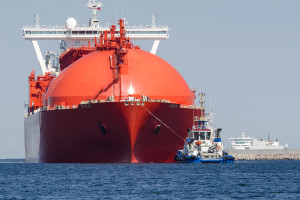
Algeria increased its liquefied natural gas exports to Europe in May 2026, shipping over 1 million tons – a significant jump from 700,000 tons a year earlier. The North African country aims to capitalize on supply disruptions caused by the closure of the Strait of Hormuz and secure long-term contracts with EU buyers.
According to data cited by the portal Algerie360, France received the largest volume – 234,000 tons – followed by Turkey with 203,000 tons and Spain with 200,000 tons. For Spain, this was the first seaborne LNG delivery in over a year, after political tensions eased when the Spanish government refused to allow US military aircraft to use its bases for flights to the Middle East. Other recipients included Italy, the United Kingdom, Croatia, and the Netherlands, which took its first Algerian LNG cargo in two years.
Algeria’s total natural gas production in 2025 reached just over 100 billion cubic meters, half of which was consumed domestically for industrial use and power generation. LNG sales amounted to 9.54 million tons, equivalent to roughly 12.8 billion cubic meters of gas. Combined pipeline and LNG exports to Europe stood at 39.5 billion cubic meters out of 50 billion cubic meters exported overall.
New investments to double gas output
The conflict in the Middle East and the blockade of the Strait of Hormuz halted shipments from Qatar and the United Arab Emirates, creating a supply gap in the European market. Algeria intends to exploit this opportunity by investing hundreds of billions of dollars in developing new fields and boosting production capacity. Its goal is to double annual output to 200 billion cubic meters by the end of the decade.
Part of the investment will also go toward building additional liquefaction facilities, expanding the country’s ability to export LNG by sea. Algeria already operates several liquefaction plants and pipelines under the Mediterranean, and the new infrastructure is expected to strengthen its position as a key supplier to Europe.
Geopolitical shift benefits Algiers
The rapprochement with Spain after a period of strained relations is just one example of how geopolitical realignments are working in Algeria’s favor. The country has also been strengthening ties with other EU member states, offering itself as a stable and relatively close alternative to distant LNG exporters.
With European demand for gas remaining high amid the energy transition and security of supply concerns, Algeria’s push to ramp up production comes at a strategic moment. The nation is betting that long-term contracts with European buyers will underwrite its ambitious expansion plans.
Źródło: WNP.PL, Fot. Wojciech Wrzesien / Shutterstock