Artificial intelligence and data centers are set to drive up electricity demand in Europe, potentially causing significant price increases. The European power grid may struggle to connect numerous new energy-hungry customers in a short time, raising concerns about costs and infrastructure readiness.
The energy sector has found a new driving force: artificial intelligence. While discussions about security and sovereignty continue, the energy demand from AI is now being used to justify investments in new power sources and grid expansion for data centers. During the recent Power Summit in Helsinki, organized by Eurelectric, the topic dominated conversations about grids, energy prices, and the ongoing fuel crisis.
Stephen Fitzpatrick, founder of Ovo Energy and Kaluza, cut through the hype. – It’s no new religion, it’s a business decision (to bet on AI and monitor its development – ed.) – he stated, framing the shift in perspective as purely economic.
A third of new demand
Eurelectric’s latest report on AI reveals that data centers will account for 28 percent of Europe’s growing electricity demand by 2030. Depending on the scenario, this could mean an additional 149 to 287 TWh per year. For comparison, Poland’s annual consumption is around 170 TWh. Few countries or energy companies are prepared for such a surge.
The industry is searching for solutions to make AI investments realistic. Currently, waiting times for grid connections or upgrades in Europe average 7 to 10 years, while building a data center takes only 18 to 24 months. Investors are closely watching EU legislation and permitting processes. Calls are growing for Europe not to miss this opportunity and to unlock possibilities for data centers, both to attract capital and build domestic AI capabilities.
The darker side of the boom
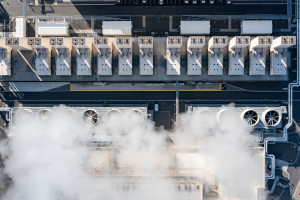
Data centers, depending on cooling technology, require either water or complex heat disposal systems, impacting local environments. They also create few jobs – essentially, they are power-hungry server rooms running 24/7. The boom also obscures costs for local communities. The arrival of a large new consumer always drives up electricity prices, as new connections and stability measures must be financed.
The European Commission’s recent package on technological sovereignty, presented on June 3, lacks provisions for complementary cooperation between the energy sector and AI. However, Eurelectric is already preparing to work with AI solution providers and data center investors. By the end of 2026, they aim to develop rules and recommendations ensuring the energy sector and AI mutually align their plans.
While the language of benefits and opportunities now dominates these discussions, the question of who ultimately pays for the infrastructure remains open. Without public intervention, the costs of AI’s energy appetite may land squarely on the bills of ordinary consumers.
Źródło: WNP.PL, Fot. Hrach Hovhannisyan / Shutterstock