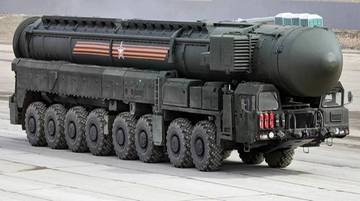
Germany’s top space commander has warned that Russia may be developing technology to place a nuclear warhead in orbit, a move that could paralyze satellite services and render parts of space unusable for decades. Major General Michael Traut of the Bundeswehr Space Command told Politico that such a scenario cannot be ruled out and urged allies to prepare a robust response.
– At the very end of escalation, there is the suspicion that Russia may be working on technology to place a nuclear payload in orbit – said Major General Michael Traut from the Bundeswehr Space Command. When asked if he considered this realistic, he replied: – I cannot rule that out.
Traut explained that a nuclear detonation in space would not resemble a conventional attack on Earth, but its effects could be catastrophic for modern societies and militaries reliant on satellites for communication, navigation, banking, transport, weather forecasting, and military targeting. He referenced the 1962 Starfish Prime US high-altitude nuclear test, warning that a similar event today could disable up to one-third of all satellites in low Earth orbit within weeks and months, exacerbate space debris, and trigger a cascade of collisions known as the Kessler effect. – One could even imagine that certain orbital altitudes would become useless for decades – he said.
A growing threat in Earth’s orbit
The warning comes as Berlin seeks to make space a central pillar of its defense policy. Germany’s new space security strategy states that the Bundeswehr must be able not only to protect German and allied access to space, but also to limit an adversary’s ability to use it. Traut said threats in space have „developed considerably” in recent years, from GPS jamming and laser interference to physical attacks on satellites. He noted that electromagnetic disruptions and laser interference are already an everyday occurrence. – The best example is the jamming of GPS signals in the Baltic region – he said, adding that it affects civil aviation and maritime traffic.
Germany prepares an offensive component
Traut argued that Germany’s response cannot be restrained. – You don’t enter the arena with just a shield – he said. – Effective deterrence always has an active, offensive component. He emphasized that offensive does not mean aggression, but Berlin must be able to take the initiative in a conflict. This includes action against an adversary’s space systems, not necessarily in orbit, but across the broader infrastructure that enables satellite operations, from ground stations to jamming devices.
Germany, he said, will acquire non-kinetic systems including jammers and lasers, as well as inspection satellites, and in the longer term space planes, to protect German satellites, inspect adversary systems, and potentially act against them. Berlin also plans to create a sovereign military satellite constellation under the SATCOMBw 4 program to meet the Bundeswehr’s growing demand for secure communications. Traut said the system should not be seen as a rival to the EU’s IRIS2 secure connectivity constellation. – We do not see IRIS2 as competition, but as a complement – he stated, adding that the German constellation would also relieve the EU system and provide more bandwidth to others. Germany wants partners to be able to use the future network. – The goal is to include as many European partners as possible – he said, especially countries that cannot or do not want to build their own satellite constellation.
Źródło: Polsatnews.pl, Fot. Polsatnews.pl