Poland’s electric vehicle market was supposed to slow down after the end of purchase subsidies. Instead, the opposite happened. Operators are expanding charging networks, new hubs are appearing, and forecasts point to a massive jump in the number of charging sessions by the end of the decade. 'Electromobility has already left the moment when everyone was predicting its demise,’ says Maciej Mazur, president of the Polish Alternative Fuels Association (PSNM).
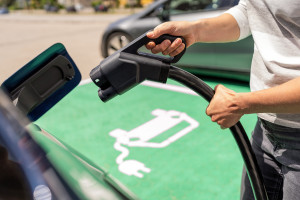
Poland now boasts over 12,500 public charging points at roughly 5,500 locations. The share of fast DC stations and large hubs along major transport routes is growing steadily. 'We are paying less attention to the number of points and more to their quality. We care about the growth of charging hubs and increasingly higher power – 150, 200 or even 350 kW per point,’ Mazur explains.
Just over a decade ago, the first public charger in Poland delivered 16 kW. Today manufacturers talk about charging speeds exceeding 1 MW – a clear measure of the technological shift on the market.
From 16 kW to 1 MW: the technology leap
According to Mazur, the future system will rely on several models at once. Cities still need overnight charging points for residents of apartment blocks. Meanwhile, drivers traveling between major agglomerations expect charging that takes no more than a few minutes. 'We cannot rely on just one solution. This market is very capacious,’ he adds.
Paradoxically, infrastructure in Poland has long developed faster than the number of electric cars. The result is that public chargers remain relatively underused – the current utilization rate is only 3-4 percent, far below the level where operators start seeing real economic benefits. Yet queues and busy chargers are increasingly common at the most attractive locations. 'Historically, infrastructure grew faster than the vehicle market. We are still waiting for the wave of cars that will actually charge,’ Mazur notes.
The paradox of underused chargers and growing queues
This is why charging hubs are becoming more important. From an operator’s perspective, they are far more efficient than single AC stations. Cars stop for a dozen minutes instead of hours, increasing turnover and improving infrastructure utilization. Mazur calls 2025 the symbolic beginning of the hub era in Poland. 'From the operator’s perspective, infrastructure at a hub should work practically non-stop. One car leaves, another pulls in. That is where it is easiest to build the utilization level that makes the investment profitable.’
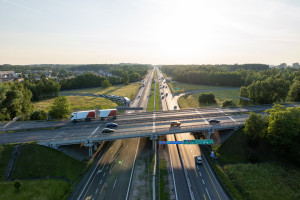
The main barrier today is not demand but access to energy. Especially along highways and expressways, operators must bring power connections across long distances – sometimes hundreds of meters, sometimes several kilometers. 'This is not a problem of the future, it is the present. It is one of the biggest challenges for the industry,’ says Mazur. Without addressing it, further electrification of transport, especially heavy trucks requiring several megawatts per location, will be difficult.
Despite the end of some subsidy programs, EV sales remain higher than a year ago. The average price of a new electric car in Poland is now around PLN 210,000, while the average price of a new car overall is about PLN 190,000 – a gap that has narrowed significantly. More mass-market models are appearing, whereas electromobility was once associated mainly with premium vehicles. The planned production of electric cars in Jaworzno is also seen as an important signal that electromobility is becoming an economic project for Poland.
PSNM forecasts that by the end of 2026 the number of charging sessions on public stations will reach nearly 18 million. 'We were surprised by the scale of growth. From less than 18 million sessions we will go to over 200 million in the next few years,’ Mazur states. That means about 180 million additional charges over the next four years. 'It shows how fast this market is changing. Data on car sales, charging sessions and new investments indicate that electromobility in Poland still has huge growth potential.’
Źródło: WNP.PL, Fot. r.classen / Shutterstock