Bloomberg: Blockade of the Strait of Hormuz may last longer than assumed, despite US-Iran talks. Lack of economic shock on both sides prolongs the conflict, and oil reserves are dwindling.
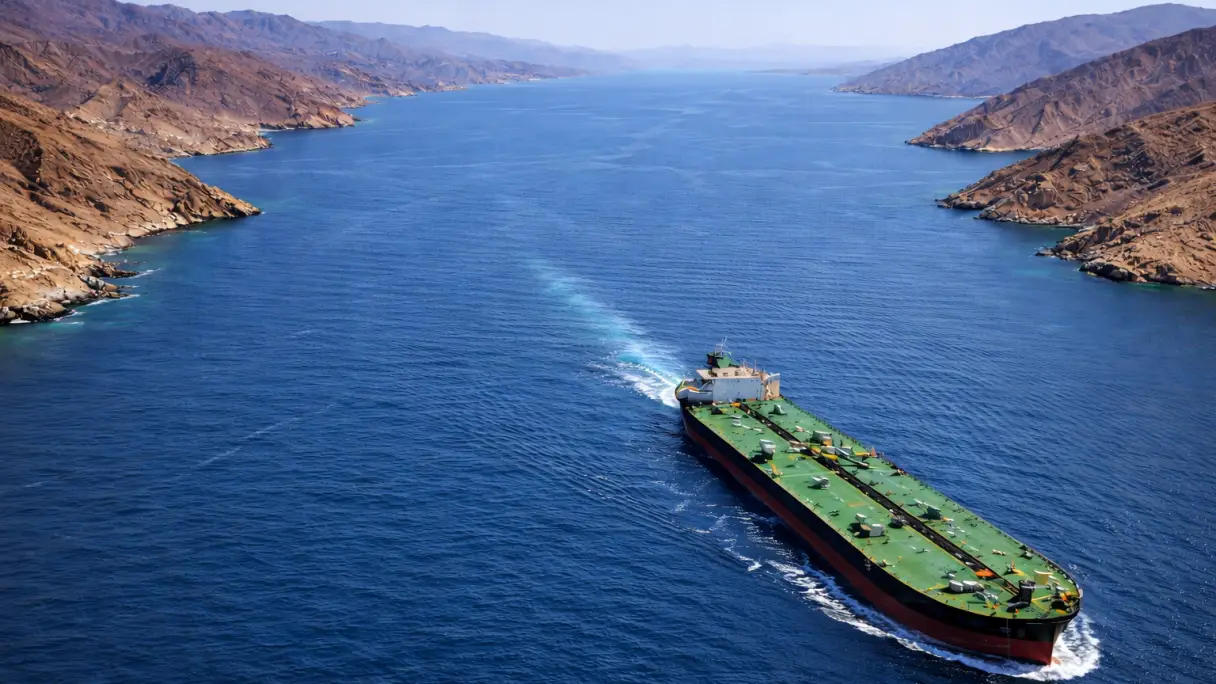
The New York-based agency Bloomberg, examining the results so far of negotiations related to the war in Iran, is considering a scenario that it increasingly sees as realistic: that this route could remain closed for much longer than promised.
A publication on this subject appeared in the first days of June, and given its access to American negotiators and sources linked to the conflict, the conclusions it draws become highly probable.
This is a warning to all who depend on oil and natural gas, not only for energy purposes. According to this analysis, one must prepare for the worst, and the sooner all stakeholders realise this, the better prepared they will be for another crisis, this time affecting the entire global economy.
The signing of an agreement ending the war between Iran and the USA is drawing closer. Hints revealing a hidden agenda and the reasons for the rapprochement are troubling. The US has suddenly abandoned its demand to dismantle Iran’s nuclear programme, which had been the primary goal of its military operation in that country.
A year ago, the former deputy chairman of Russia’s Security Council explicitly suggested that Iran possesses nuclear weapons, or if it denies this, it has every capability to quickly build them. Iran has about 250 kg of uranium enriched to 60 percent, while 90 percent concentration is needed for a nuclear weapon – a level that is relatively easy to reach in the next stage of enrichment. This amount of enriched uranium is enough to construct 5 to 10 atomic bombs. All this has caused the tone of American demands towards Iran to become more conciliatory and aimed at ending the conflict. However, this does not mean the end of the war with Israel, which is not currently the subject of direct negotiations.
Economic nightmare
The agency believes that a prolonged war scenario with Iran will be a nightmare few are considering. After nearly 90 days of the US and Israeli war with Iran effectively closing the maritime route for oil and gas, it is worth considering what seems unthinkable. To guard against catastrophic accusations, the agency calls its analysis on this topic „historical science fiction.”
There are notable facts both for and against catastrophe. It may be that it does not occur, as Washington and Tehran are talking via Pakistani mediators about ending the conflict and reopening the narrow bottleneck that the Strait of Hormuz represents for petroleum-based commodities.
However, successive phases of agreement keep breaking down, prompting actions to bypass this transport route. The United Arab Emirates has accelerated plans to build a second pipeline bypassing the strait, with completion scheduled for 2027. This cautious planning for a worst-case scenario is a clear signal that Abu Dhabi’s authorities believe the waterway could remain threatened for much longer.
Too painful costs
In favour of a quick end to the Iranian conflict is the belief among American business that the Strait of Hormuz will be reopened next month, or at the latest in July. Why? Mainly because the consequences of the opposite – much higher energy prices and severe economic damage – are too painful to contemplate. This is supported by the fact that the closure has not yet inflicted sufficient economic harm on either side to force a compromise.
Cheap war
Bloomberg believes that for US President Donald Trump, the war has so far been relatively cheap, at least regarding what matters most to him: the financial markets.
This is justified by the fact that the S&P 500 index is hovering near an all-time high, gaining nearly 10% since the war began. Gasoline prices have risen, but are lower than the record level of 2022.
The US economy is galloping, with growth forecasts for the second quarter now indicating over 4%. Similarly, Iran has not yet experienced an economic crisis that would force its radical leaders to abandon their red lines in negotiations. Unemployment is rising, food price inflation is rampant, and the currency is plummeting.
Unable to export due to the US naval blockade, Iran has begun to reduce oil production. However, the Islamic Republic has repeatedly demonstrated its enormous capacity to absorb losses, especially when the threat is existential.
Global economics, however, argue for a prolongation of the conflict because the closure of Hormuz has not yet been an energy crisis, as it has been short-lived.
Buffer stocks
The market had huge buffers in the form of accumulated oil and natural gas reserves, which for a time absorbed major disruptions. But with each day, the world’s fuel storage tank is becoming emptier.
Rich countries have used their strategic oil reserves, and the United States has exported part of its crude abroad. Meanwhile, China has managed to significantly reduce its oil imports. Finally, demand has fallen as prices have become unaffordable for poorer countries.
Without optimism
The existing situation in the oil market is prolonging, and about 15 percent of crude oil will disappear from the market. A sustained reduction in consumption of such a large portion would most likely mean a global recession, like the oil crises of 1973 and 1979.
At the conclusion of its analysis, Bloomberg states that a long-term closure of Hormuz is so economically catastrophic that few dare to think about it. Ultimately, a fabricated, short-term agreement that everyone can live with is more probable. However, these options are not very optimistic.