
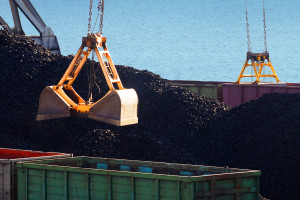
The conflict in the Middle East is driving some countries to restart coal-fired power generation as a safeguard against volatile LNG supplies. Japan is temporarily lifting restrictions on inefficient coal plants to conserve liquefied natural gas and ensure stable electricity supplies.
Japan, the world’s third-largest economy, is turning back to coal as a reliable hedge. The move comes amid soaring spot LNG prices and uncertainty over imports from the Middle East. Tokyo has decided to ease operational limits on older, less efficient coal-fired units, effectively postponing their phase-out.
This shift has immediate consequences for global coal markets. Japan’s coal imports are expected to reach 7.59 million tonnes in May 2026, up from 6.63 million tonnes in April. The country relies heavily on Australia, which supplied nearly two-thirds of its coal imports in 2025 – 100.6 million tonnes out of 153.8 million tonnes total. Indonesia and Canada follow, with 25 million tonnes and 13.7 million tonnes respectively.
Australia gains, smaller buyers lose
Higher demand from Japan is likely to tighten the Asian-Pacific coal market. Australia, with its higher-grade coal, is the preferred supplier. This could come at the expense of smaller buyers like Vietnam and Malaysia, who may face reduced availability and rising prices. Spot market purchases by Japan would put additional upward pressure on Australian coal prices.
– The war in the Middle East should teach us to rely primarily on domestic resources because imports can collapse at any moment – said Bogusław Hutek, head of the Solidarity miners’ union in Poland.
Coal as a buffer against energy crisis
Japan’s strategy mirrors a broader trend. Several countries are now maximizing coal-fired generation to compensate for expensive or uncertain gas supplies. The logic is simple: coal offers a cheaper and more stable alternative when LNG markets are disrupted.
Japan’s policy shift also sends a signal to global investors: the energy transition is not linear. Geopolitical shocks can reverse progress on decarbonisation, forcing even advanced economies to seek secure buffers. The coming months will test how far this coal renaissance will go and what it means for climate goals.
Źródło: WNP.PL, Fot. ANGHI / Shutterstock


