
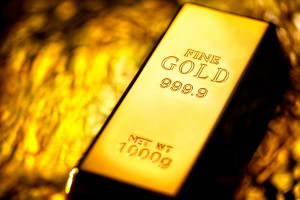
Gold prices have fallen to their lowest level since March 2026, losing over $1,300 per ounce from their peak. Persistent geopolitical tensions in the Middle East, a strengthening US dollar and expectations of the Federal Reserve’s monetary policy decision next week are weighing on the precious metal.
For several weeks, gold has been under strong selling pressure, breaking through key support levels set by analysts. Currently, an ounce costs $4,325.50, down $39.85 or 1.01 percent, and briefly dipped below the psychological barrier of $4,300. Over the past seven days, the price has dropped by 4 percent, by 8.5 percent over the month, and by 16.15 percent over the quarter, although it still shows a 28.15 percent gain year-on-year.
The main reason for the weakening is the escalation of the conflict between Israel and Iran. Israeli attacks on Lebanon and Iran’s response, including long-range missiles fired by Houthi rebels, have dashed hopes for a ceasefire and the unblocking of the Strait of Hormuz. As long as around 20 million barrels of oil per day from Persian Gulf producers do not return to the market, gold will remain under pressure from other commodities, particularly crude oil futures, which are currently more profitable.
Why is gold under pressure?
The current situation is a direct consequence of geopolitical factors. The war between the US and Israel against Iran, now in its third month, has eliminated hopes for a peace agreement. The resumption of oil supplies from the Gulf region is a key condition for easing pressure on precious metals, which in times of uncertainty usually act as a safe haven. However, now investors prefer oil contracts, which offer higher returns.
– Although gold lags behind other commodities, its long-term fundamentals remain intact. The current weakness is related to macroeconomic factors – said Fahad Tariq, an analyst at Jeffries.
Fed policy and the dollar as key drivers
The US economy is also playing a significant role. Annual inflation in April reached 3.8 percent, the highest in three years. The May reading will be released next week. A gallon of gasoline costs $4.16, driving up the cost of living, while unemployment stands at 4.3 percent. All eyes are now on the Federal Reserve meeting scheduled for June 16-17.
The meeting will be led by the new chairman, Kevin Warsh, who received a mission from President Donald Trump to gradually lower interest rates. The Board of Governors will review the updated Summary of Economic Projections and announce monetary policy assumptions for the coming months. If the restrictive stance is maintained, assets that do not generate fixed interest income, such as gold, may become less attractive.
Long-term fundamentals remain intact
Despite the short-term weakness, the precious metal is still up more than 28 percent over the past 52 weeks, with a range of $3,250 to $5,626 per ounce. However, until the Fed signals a clear change in approach and until the conflict in the Middle East is resolved, gold may continue to lag behind other raw materials, which are currently benefiting from supply disruptions and high inflation.
Źródło: WNP.PL, Fot. Brian A. Jackson / Shutterstock


