The Baltic Sea has become a bustling construction zone as Polenergia and Equinor press ahead with their offshore wind farm projects valued at €6 billion. Work on the Bałtyk II and III installations started on 1 May 2026 and is progressing without major setbacks, with around 30 foundation monopiles already driven into the seabed.
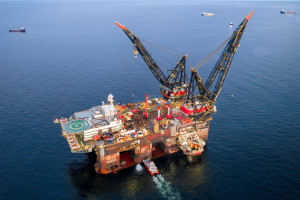
The entire operation revolves around the giant installation vessel Thialf, operated by Heerema Marine Contractors. The ship, over 200 metres long, places monopiles ranging from 50 to 70 metres in length and weighing up to 1,400 tonnes. A total of 100 such foundations will be installed across the two farms, each with a capacity of 720 MW.
Support vessels constantly approach Thialf, delivering transition pieces – the distinctive yellow structures that later carry the turbine towers, nacelles, hubs and blades. The entire offshore fleet includes more than a dozen ships, from monopile transporters to sound measurement vessels and those deploying bubble curtains to mitigate underwater noise.
Fast progress on the Baltic Sea
– In one month we installed about 30 foundations: monopiles together with transition pieces. We have the use of the installation fleet until the end of September. The campaign is on track and we will soon be at its halfway point – said Grzegorz Kotte, advisor to the board for offshore wind at Polenergia.
– The pace of work is very fast, especially considering the scale and complexity of the operation – said Jakub Jarosz, head of communications at Equinor Polska. He added that favourable weather conditions have supported the rapid progress.
Onshore infrastructure and future plans
While offshore work proceeds, onshore preparations are equally advanced. The land-based electrical substation (ONS) is 80% complete, with nearly all equipment already installed. Three out of four cable export ducts under the shore are ready. In July 2026, the first offshore transformer station foundation is planned, with the topside installation scheduled for December. The substation is expected to be energised by the end of the year.
A service base in Łeba is nearing completion, set to open in the second half of 2026. It will house a control room and a Marine Coordination Centre that already manages the movement of construction vessels. Dozens of people will work there permanently once the farms are operational.
– The operational phase will be largely carried out by Polish forces, which is a great contribution to the local supply chain. Even the operation of service vessels will be entrusted to Poles, who will also make up the majority of the base staff – assured Jakub Jarosz. Interest in offshore wind jobs is high, with up to 100 applications per vacancy, many from Poles returning from the UK or Germany.
Poland’s updated National Energy and Climate Plan (KPEiK) raises the ambition to 18 GW of installed offshore wind capacity. The stability of regulations over the long project lifecycle is seen as crucial by the industry.
Źródło: WNP.PL, Fot. Materiały prasowe / Polenergia