The first 15 percent advance of 6.5 billion euros (over 28 billion PLN) from the SAFE program has already reached Polish defense plants. The pace of contract signing and tight deadlines meant that the funds flowed predominantly to large companies. Smaller firms producing niche but critical military systems fear being overlooked by the Ministry of National Defense.
Poland secured over 187 billion PLN in low-interest loans under SAFE to develop its defense industry, military, and economy. This year’s defense budget is just over 200 billion PLN, meaning the country now has effectively two defense budgets. The first tranche of 15 percent advances was transferred within a week of signing agreements, primarily to the largest state-owned defense plants.
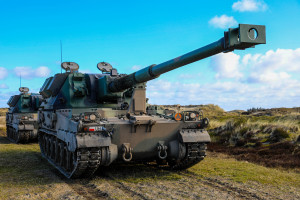
Heavy industry giant Huta Stalowa Wola (HSW), part of the Polska Grupa Zbrojeniowa (PGZ), emerged as the biggest beneficiary, receiving 60 billion PLN. HSW has shifted from a workshop to a modern factory and now has orders “up to the brim.” Another PGZ company, Mesko – producer of the Piorun man-portable air defense systems – will get 6 billion PLN for expanding production of 155 mm shells and multi-base propellant technologies.
Private sector winners and the shadow of smaller players
Among private firms, the largest winner is Grupa WB, Poland’s biggest private defense conglomerate, with contracts worth nearly 11.7 billion PLN for drones, loitering munitions, and communication systems. Advanced Protection Systems (APS), a specialist in anti-drone systems, also gained as a key subcontractor in the large San anti-drone program, partially funded by SAFE and estimated at 15 billion PLN.
However, the rush to sign contracts favored big companies. Smaller innovative firms, such as FlyFocus and BC Arms, are not on the SAFE list. They worry about being marginalized or reduced to subcontractors. FlyFocus, which produces the FF10 Punktor drone and the long-range Striker loitering munition – both battle-tested in Ukraine – is now a subcontractor for several SAFE beneficiaries. – We are not on the SAFE list because it is quite narrow and politically regulated, but as subcontractors our production will still grow significantly – said Albert Świerczyński, co-founder of FlyFocus. – I’d be more worried about the SAFE-listed companies meeting deadlines. That is why they rely on subcontractors like us to fill production gaps.
Unique technologies face uncertain future
BC Arms, the only Polish producer of ballistic plates for women, also expects to become a subcontractor. – We are one of the few in Europe besides Rheinmetall producing plates for women. Our technology is revolutionary – we stop 6-9 armor-piercing shots, while the standard requires just one – explained Krzysztof Urban, chief engineer and proxy at BC Arms. The company has patented technology and a defense ministry award.
The deadlines set by SAFE are tight: all projects must be completed by 2030. Delays could mean losing further tranches or even having to return funds. For small, undercapitalized firms, this pressure is immense. Many fear that despite their innovative products, they will be squeezed out of the market or forced into dependent roles. The Ministry of National Defense insists that additional contracts for smaller firms are under consideration, but for now the first wave of SAFE money has created clear winners and anxious losers.
Źródło: WNP.PL, Fot. WNP.PL