Germany shut down its last three nuclear power plants in April 2023, ending a process that began 25 years earlier with the Atomkonsens. Now, the country is paying the price – higher electricity costs, increased CO2 emissions, and a shift from energy exporter to importer. Experts and politicians alike call the decision a costly, irreversible error.
A quarter of a century ago, on June 14, 2000, the government of Chancellor Gerhard Schröder – a coalition of SPD and Greens – reached an agreement with nuclear plant operators to phase out atomic energy. The German word for it, Atomkonsens, became a landmark of energy policy. The final step came on April 15, 2023, when reactors Isar 2, Neckarwestheim 2, and Emsland were disconnected from the grid. – The Atomkonsens went down in German history as the nuclear consensus – recalls Michał Kędzierski, an analyst at the Centre for Eastern Studies (OSW). That agreement laid the foundation for the 2002 law on the orderly termination of nuclear power use.
The cost of the nuclear phase-out
Economic analyses now paint a grim picture. Researchers from Columbia University estimate the cost of shutting down reactors since 2011 at between 3 and 8 billion euros per year. That cost is borne by German households and industry through higher electricity prices. Scientists from the London School of Economics, the University of California, and Carnegie Mellon University calculated that cumulative avoidable CO2 emissions between 2011 and 2035, if coal plants had been retired instead of nuclear ones, would reach 1.4 gigatonnes. – The cumulative avoidable emissions total 1.4 Gt – their study states. The Polish Economic Institute (PIE) notes that the shutdown was criticized by the Bavarian government and public opinion, especially because the Isar 2 reactor was located in Bavaria.
From exporter to importer
After the final shutdown, Germany’s position in the European electricity market changed dramatically. For decades a net exporter of power, in 2024 it became a net importer, buying 24.8 TWh – 5 percent of its annual consumption. The stability of the German grid also deteriorated, as intermittent renewables like wind and solar could not always compensate for the lost baseload capacity. PIE highlighted this shift in its weekly economic report: – In 2024, Germany had to import 24.8 TWh, or 5 percent of its annual electricity use. Grid instability increased.
Political regret
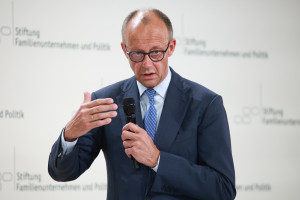
Germany’s chancellor Friedrich Merz recently admitted the mistake. He said he shares the view of European Commission President Ursula von der Leyen that Europe’s rejection of nuclear energy was an error. – I regret that Germany’s decision to withdraw from nuclear power is irreversible – Merz stated. His words reflect a growing consensus among policymakers: the Atomausstieg, once hailed as a green triumph, now looks like a strategic blunder that has weakened German energy security and raised costs for consumers and businesses.
Źródło: WNP.PL, Fot. PAP/EPA/CLEMENS BILAN