
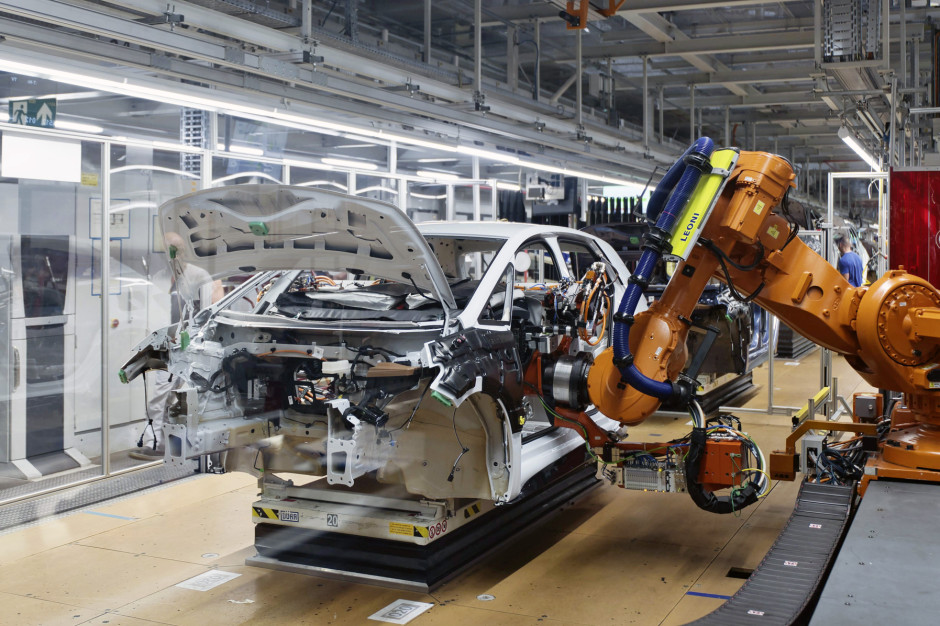
Volkswagen closed the third quarter of 2026 with 1.88 million passenger cars delivered worldwide, a decline of 14.3 percent compared with the same period a year earlier. Battery-electric models accounted for 240,700 of those vehicles, down 4.7 percent. Over the first nine months of the year the group sold 6.01 million cars, nine percent fewer than in 2025.
The steepest fall was recorded in China, where deliveries shrank by 38.5 percent. European brands on that market compete against cheaper locally produced cars whose purchase is backed by loans guaranteed by the state. The Asia-Pacific region lost 12 percent, and the United States also reported a double-digit decline. Central and Eastern Europe was the only area in positive territory, growing 1.4 percent thanks to buyers in the Czech Republic and Poland and to the strong position of Skoda.
Three quarters of shrinking volume leave the German group far below its former rhythm, and analysts quoted around the publication of the figures point to a structural problem rather than a temporary dip. Without restructuring, the company’s automotive business is described as heading for collapse, with the Chinese market no longer available as the engine of growth it once was.
Porsche loses its shine
Porsche, partly controlled by Volkswagen, is living through the same troubles. Its sales over the nine months of this year fell 16 percent to 178,532 units. China decided that result as well, with a drop of 33 percent, while the United States and the Middle East performed just as poorly. The brand has stopped being a synonym for social standing and an object of desire for future drivers.
The management has announced production cuts, higher prices and the return of combustion models and mild hybrids. The goal is to win back more demanding customers and to rebuild margins on sales, a plan that effectively redraws the sports-car project the company has been built on.
Brussels caps Chinese exports at 350,000 cars
In the shadow of the crisis in the European automotive sector, the EU trade commissioner Maros Sefcovic met the Chinese commerce minister Wang Wentao in Beijing. The two sides announced a preliminary deal setting an annual limit of 350,000 hybrid and electric models exported to the European Union. In exchange for access to the Chinese market for olive oil, hard cheeses and other foodstuffs, the caps on car deliveries were raised.
Import growth into Europe, especially of electric models, is helped by subsidy schemes for their purchase run by individual member states. The exact terms of the EU-China agreement remain unknown, and the European Commission has once again demonstrated how it protects the competitiveness of its own firms through a developed system of environmental fees and high energy prices. Building an electric car in China costs 10,000 euros less than in Europe.
Chinese plants on European soil
Two pieces of news illustrate where the market is heading. Geely received approval to take over Ford’s factory in Spain, and BYD announced plans for a new plant in France during the Paris Motor Show. Once Chinese models are assembled on the Old Continent, EU limits and tariffs will no longer carry any weight.
For Volkswagen and Porsche alike, the pressure therefore comes from two directions at once: a home market where the cost base is high, and a Chinese market where local rivals now set the price. The 1.88 million cars sold in the third quarter, the 4.7 percent fall in electric deliveries and the 6.01 million vehicles moved in nine months sketch a group that has yet to find a floor.
Źródło: WNP.PL, Fot. Volkswagen / Materiały prasowe




