
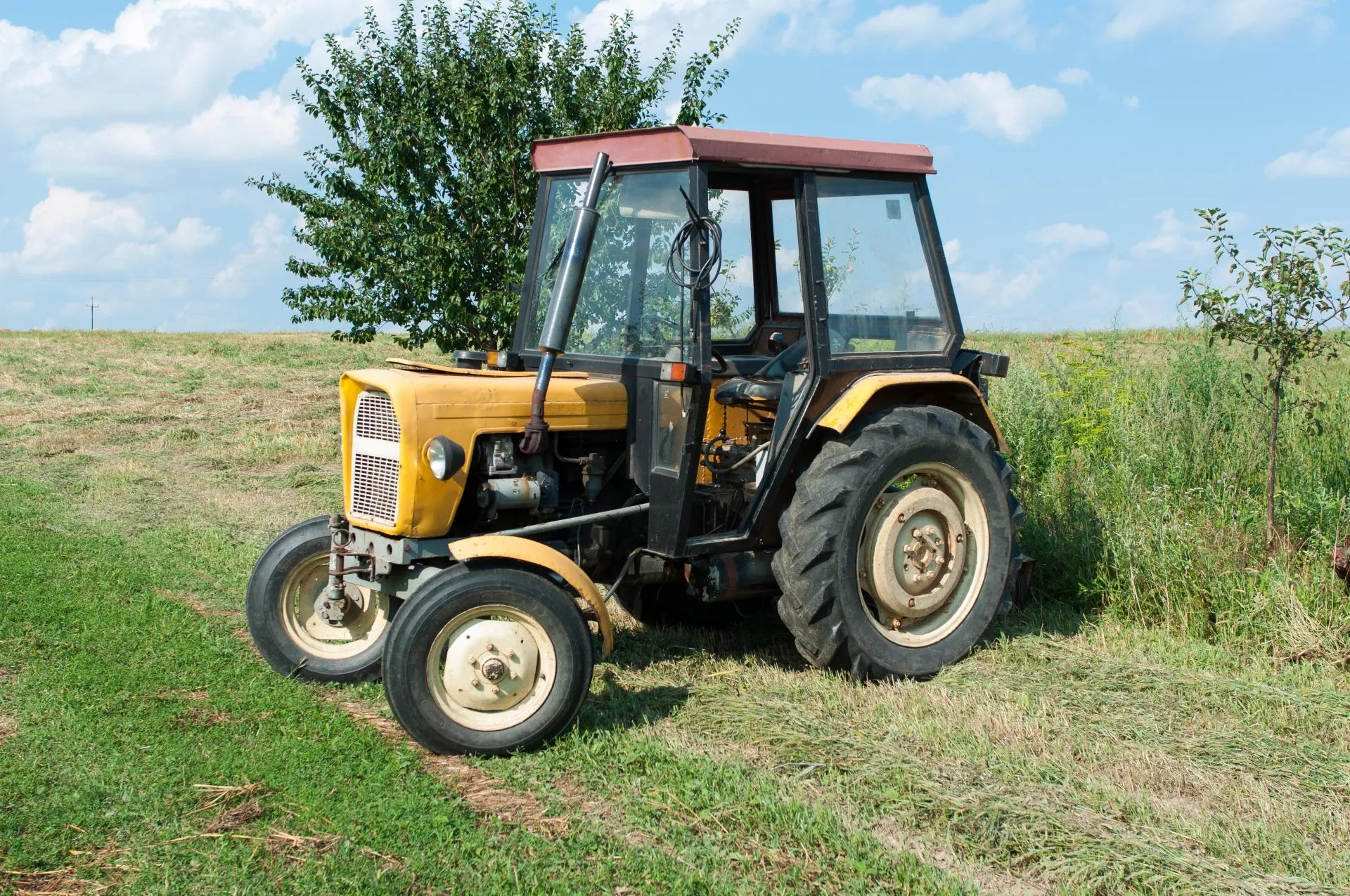
In 1983, around 60,000 tractors rolled out of the Ursus factories in Poland every year. Tractors of this brand worked on state owned farms, agricultural production cooperatives and private farms, while the distinctive red tractor became one of the most recognisable symbols of the Polish countryside. Behind this production scale lay decades of industrial development, thousands of employees and extensive technical facilities. After the political and economic transition, however, the company lost a substantial share of its market, accumulated debt and underwent successive restructuring processes. In 2003, the Ursus Tractor Industry Works declared bankruptcy, and in 2021 a court declared the bankruptcy of a company that later operated under the same name. The history of Ursus shows how difficult it was to transform a major agricultural machinery manufacturer into a business capable of competing in an open market.
The history of Ursus began in Warsaw in 1893. Initially, the company manufactured fittings, including equipment and components used in industrial installations. It developed at a time when modern industrial plants were emerging in the Polish lands divided between the partitioning powers, and mechanisation was gradually changing how the economy operated. The production of metal components and equipment required workshop facilities, technical knowledge and the ability to organise work on a larger scale.
The company did not therefore begin as a tractor factory. Its transformation into an agricultural machinery manufacturer was part of a longer process of industrial development. As demand for engines, machinery and mechanical equipment grew, the company expanded the scope of its operations. During the first decades of the twentieth century, its production capabilities, organisation and importance to domestic industry continued to evolve.
Ursus developed in response to the need to modernise Polish agriculture. Before tractors became widespread, fieldwork was largely carried out using human and animal power. Ploughing, transporting agricultural produce and preparing fields for sowing required considerable labour, while the pace of work depended on the weather, the availability of draught animals and the number of people employed on a farm. Mechanisation made it possible to perform some of these tasks more quickly and on a larger scale.
A tractor was not, however, a standalone solution to every problem on a farm. Its usefulness depended on the availability of fuel, spare parts, compatible implements and servicing. Farmers needed equipment that could be repaired and kept running for many seasons. A domestic manufacturer therefore mattered not only as a supplier of new machinery, but also as part of a wider agricultural support system.
Over the following decades, Ursus became one of the most important companies in the Polish machinery industry. The brand built its recognition through successive tractor models, expanding production and the presence of its machines on farms throughout the country. The tractor became more than an industrial product. For many families, it was an essential working tool on which their ability to cultivate land, transport harvests and carry out seasonal work depended.
Postwar expansion and the mechanisation of the Polish countryside
After the Second World War, the development of Ursus was subordinated to the needs of economic reconstruction and modernisation. Poland needed agricultural machinery, and the state regarded mechanisation as one way to increase food production efficiency. Tractors were intended to replace some of the work previously performed by hand or with horses, while also making it possible to use agricultural machinery more efficiently.
Under the centrally planned economy, Ursus production was tied to state plans for industrial and agricultural development. The scale of operations was determined not only by orders from individual farmers, but also by the needs of state owned farms, cooperatives and institutions supporting agricultural production. This system made it possible to organise large production runs and provided a market for substantial numbers of machines.
An important element of this policy was the development of domestic designs, alongside the use of licences and international cooperation. In the postwar machinery industry, licences could shorten the time between a decision to begin production and the start of manufacturing equipment. They provided access to technical documentation and solutions that could subsequently be implemented in domestic plants. Their effectiveness, however, depended on the ability to maintain quality, secure suitable components and develop products as technology advanced.
Cooperation with the Czechoslovak tractor industry was particularly important for Ursus. An agreement with Zetor was signed in 1961, and tractor production was developed using licences and designs originating in Czechoslovakia. In subsequent years, the Warsaw factory manufactured, among others, tractors from the C 325 and C 330 families, followed by larger models intended for more demanding work.
A licence did not mean that the factory had no technological significance. Launching serial production required production lines to be prepared, processes adapted, quality control established and component supplies organised. A major manufacturer also had to ensure that its tractors could be repaired in different parts of the country. At the same time, the licensing model had its limitations. If a company relied on designs developed abroad for an extended period, its competitiveness depended on licensing terms, its ability to modernise those designs and the pace at which new models could be introduced.
Record production and the millionth tractor
The 1980s were a period when Ursus reached a production scale that proved difficult to sustain once economic conditions changed. In 1983, around 60,000 tractors left the factory each year. In October of that year, the millionth tractor was produced: a C 360 model. The machine was donated to the Centre for the Blind in Laski. The event was documented by the Polish Film Chronicle, which showed the assembly halls, employees and the ceremony marking the milestone.
One million tractors produced represented the result of many years of work at the factory, but it also demonstrated the scale of demand for agricultural machinery in postwar Poland. Tractors were supplied to different types of farms, and their designs took into account working conditions in which durability, ease of operation and repairability were important. On many farms, a tractor had to perform several different tasks, from ploughing and harrowing to towing trailers, operating a mower and powering auxiliary equipment.
One of the best known models was the Ursus C 360. Its popularity stemmed from its versatility and relatively simple design. The tractor was suitable for farms of different sizes, and operating it did not require the extensive facilities needed for larger and more complex machines. The availability of spare parts and mechanics’ familiarity with its design meant that many units remained in service long after production had ended.
For farmers, buying a tractor was a long term investment. The machine was often passed down from parents to children, and its value did not disappear when the warranty expired or a newer model appeared. Farms kept tractors running for decades, replacing worn parts and carrying out repairs themselves. This is precisely why older Ursus tractors can still be seen at work many years after the Warsaw factory closed.
The durability of the machines also had another side from the manufacturer’s perspective. If a tractor could be repaired for a long time, a farm did not need to buy a replacement quickly. In an economy where access to new machinery was sometimes limited, long equipment life was an advantage. In market conditions, however, manufacturers had to do more than supply durable machines. They also needed to introduce improvements regularly, reduce costs and convince customers that a new model was worth the price.
Ursus achieved a very large production scale, but the number of tractors manufactured did not by itself guarantee the company’s future competitiveness. The factory needed investment in new technical solutions, production organisation and product development. High output was an advantage as long as it was supported by demand. Once the market began to contract, extensive production capacity could become a burden.
The Massey Ferguson licence and the cost of modernisation
During the 1980s, Ursus attempted to expand its range with more modern tractors. One important undertaking was the launch of production based on a licence from the British company Massey Ferguson. The first licensed MF 255 tractor rolled off the production line in July 1984. The project was intended to introduce machines incorporating more recent technical solutions, but its implementation required substantial expenditure and encountered financial difficulties. Archival footage from the Polish Film Chronicle dating from 1983 had already reported problems associated with the licensed production investment, including the need to secure additional financing.
A licence could accelerate modernisation, but it was not a cost free way to overcome a technological gap. Introducing a new model required production preparations, the purchase of suitable equipment, the adaptation of components and secure financing. The cost of the licence itself and the organisation of supply chains also had to be covered. In an economy characterised by shortages, such projects could encounter difficulties in obtaining convertible currencies, components and modern production machinery.
At the same time, continuing to rely on older designs also carried risks. Tractors sold on international markets had to meet requirements relating to power, fuel consumption, operating comfort, safety and reliability. Competitors were developing their products, while farms in Western countries had a wider choice of equipment. Even if an older Ursus performed well on a Polish farm, that did not automatically mean its manufacturer could sell it profitably in markets with higher expectations.
The licensing project therefore exposed a fundamental problem facing heavy industry in the final years of the centrally planned economy. The factory needed modern designs, but financing their implementation was difficult. At the same time, failing to modernise could lead to a further deterioration in its market position. If an investment failed to deliver the expected results quickly, it burdened the company with costs that had to be covered through current operations or external financing.
The use of a licence should not, however, be treated as evidence of technological weakness in itself. Many companies around the world developed by purchasing foreign technology, then improving it and gradually building their own expertise. The key question was whether the licence enabled the company to gain experience and develop subsequent products, or remained an expensive project whose financial burden outweighed its benefits.
For Ursus, the problem was that modernisation investments were being implemented during a period of mounting economic difficulties. As the economic system began to change towards the end of the 1980s, the factory had to deal simultaneously with the consequences of earlier decisions, rising costs and new rules governing sales. As it entered a market economy, the company needed not only competitive tractors, but also stable finances and an organisation capable of responding to changes in demand.
1989 changed the rules of the game
Before 1989, Ursus operated in a system in which the state had considerable influence over production volumes, investment priorities and the allocation of resources. Orders came from state owned farms, cooperatives and other entities operating within the centrally planned economy. Prices and sales conditions were not determined solely by free competition, and the company did not have to fight independently for every customer to the same extent as it did after the transition.
After the system changed, this model ceased to work. State support for machinery purchases was reduced, and farmers had to make investment decisions in conditions of greater uncertainty. At the same time, tractors from foreign manufacturers entered the market. Customers could compare prices, technical specifications, financing terms and service availability. For Ursus, this meant competing under conditions that demanded stricter cost control and a faster response to market needs.
The situation facing farms themselves also changed. The economic transition reduced the incomes of some farmers and limited their ability to finance new purchases. A tractor is a capital intensive investment, and the decision to buy one depends not only on its price but also on the farm’s expected revenue. If a farmer is unsure whether grain, milk or other products can be sold profitably, the purchase of a new machine may be postponed while existing equipment remains in use.
For Ursus, these problems coincided with changes in the structure of Polish agriculture. State owned farms, which had represented an important customer group for machinery, were subject to liquidation and restructuring. Not all their assets were taken over by new owners who could have continued purchasing equipment on the same scale. The disappearance of this market segment reduced demand for tractors and other machinery, forcing the manufacturer to seek customers among individual farms, which did not always have sufficient funds.
A change in the customer base did not have to mean disaster in itself. The market of individual farms could have provided a foundation for a modern manufacturer, provided its products met customers’ needs and its prices and financing terms remained competitive. The problem was that Ursus had to adapt to the new market while already struggling with debt and the need to modernise. Falling sales reduced revenue, while a lack of funds made it harder to invest in improvements that could have strengthened competitiveness.
Under these conditions, a cycle can emerge that is difficult to break without external financing or a fundamental change in the business. Lower sales mean less use of production capacity, while the cost of maintaining a large factory does not fall at the same rate as the number of tractors manufactured. Unit costs can therefore rise. If a company cuts prices to retain customers, its margins shrink further. If it raises prices, it risks losing orders to competitors.
Ursus therefore had to confront not only a demand crisis, but also the challenge of adapting the scale of its operations to a new reality. A plant built to manufacture tens of thousands of tractors a year could not switch to a much lower output without incurring costs. It needed to reorganise production, reduce fixed costs, adjust its product range and find capital for development. Each of these steps was difficult, and postponing decisions could deepen the financial problems.
Debt grew faster than the company’s ability to recover
Ursus’s financial problems did not begin only when bankruptcy was declared. As early as 1993, the company entered into an arrangement with creditors intended to help reduce its debt. Another such proceeding became necessary in 1996. Further transformation required commercialisation, meaning the conversion of the state owned enterprise into a wholly state owned company. This process was completed on 1 January 1998.
Commercialisation changed the company’s legal form, but did not by itself resolve its problems. The company still had to finance production, meet its liabilities, secure orders and invest in development. If sales revenue was insufficient to cover costs, a change in ownership structure could not replace effective operational restructuring.
The structure of Ursus’s assets was also important. The vast industrial complex included production halls, warehouses, machining and assembly departments, and technical facilities. This infrastructure was necessary for large scale manufacturing, but after orders declined, some buildings were no longer fully utilised. Maintaining empty halls still cost money, while modernising them required additional investment. Restructuring therefore involved dividing the enterprise into smaller entities and selling some of its assets.
The division could make it easier to separate manufacturing from other functions and allow individual companies to focus on specific tasks. It also carried risks, however. Tractor production depended on cooperation between numerous departments and suppliers, so splitting the factory into several entities could complicate internal settlements and increase coordination costs. If individual parts of the business began operating independently, it became essential to establish who was responsible for supplies, equipment maintenance and production financing.
By 2003, the situation of Ursus Tractor Industry Works was already extremely difficult. Parliamentary documents concerning the company indicated that its debt to the Social Insurance Institution amounted to around PLN 300 million. During the same period, final tractor assembly and production were transferred to a separate company, Fabryka Ciągników Ursus, or Ursus Tractor Factory. This meant that the indebted enterprise and the business involved in manufacturing machinery were no longer the same economic entity.
On 30 September 2003, Ursus Tractor Industry Works SA was declared bankrupt. The company’s assets became part of the bankruptcy estate, and the administrator was tasked with conducting the proceedings and satisfying creditors in accordance with the applicable regulations. This did not, however, mark the end of tractor production under the Ursus brand. This distinction is important because the bankruptcy of the historic company is often confused with the immediate end of every business and factory associated with the brand.
The company’s bankruptcy did not mean the end of the brand
As a result of earlier restructuring, manufacturing operations had been separated from the indebted Ursus Tractor Industry Works. In 2003, Ursus sp. z o.o. was established to continue the tractor related business. Its ownership structure changed over the following years. In 2006, Bumar, a group managing companies in the defence sector, became the company’s sole shareholder. Parliamentary documents from that period described measures intended to improve the company’s difficult economic situation, maintain production and finance purchases of the materials and components required to assemble tractors.
Bumar’s involvement did not, however, lead to a lasting solution to the financial problems. In a response from the Ministry of the State Treasury to a question about Ursus’s situation, it was stated that between 2005 and 2008 the company recorded losses both from operating activities and at net profit level. The causes cited included high manufacturing costs and tractor sales that were too low and continued to decline. The company increasingly financed its operations through liabilities, including debts owed to its owner.
This is one of the most important points in the company’s history because it highlights a problem that went beyond the change in the economic system itself. Even after the business had been separated into a new company, ownership had changed and attempts had been made to finance production, Ursus failed to achieve a lasting balance between costs and revenue. If a company sells too few tractors to cover production and operating costs, additional financing may merely postpone the crisis. Without better operating performance, debt begins to rise again.
In 2011, the manufacturer was taken over by Pol Mot Warfama. The change of ownership created an opportunity to reorganise production and use the brand within a new corporate structure. In the same year, however, the Warsaw factory ceased operations and production was transferred to other plants. This marked the end of tractor manufacturing at the historic industrial complex in the Ursus district, although the brand itself and the sale of machinery did not disappear.
The transfer of production also changed the relationship between the brand and the place where it originated. For decades, the name Ursus had been associated with the Warsaw factory, its employees and its extensive production halls. After restructuring, it primarily referred to a brand and business operated by successive corporate entities. From the customer’s perspective, the important factors were the availability of tractors, their specifications, prices and servicing. From an industrial history perspective, however, it mattered that production had left the place where it had been developed on a large scale over many decades.
The new Ursus tried to find its market
After its acquisition by Pol Mot Warfama, the brand continued to be used in the agricultural machinery business. The company expanded its product range and reported tractor sales in foreign markets, including the Czech Republic, Belgium, the Netherlands and Pakistan. There were also reports of contracts to supply agricultural equipment to African countries. In later years, the company presented plans for new products, including electric delivery vehicles.
Attempts to broaden the business made sense as the traditional tractor market became increasingly competitive. The manufacturer had to seek customers outside Poland and develop products suited to the needs of different types of farms. Exports could increase the potential customer base, but required appropriate sales arrangements, spare parts supplies, servicing and transaction financing. For international contracts, the ability to deliver large numbers of machines on time and maintain consistent quality was also important.
Presence in foreign markets alone did not guarantee profitability. A large contract can generate substantial revenue without delivering an adequate margin if fulfilling it requires expensive financing, component purchases or exposure to currency risk. In industrial manufacturing, what matters is not only the number of units sold, but also the difference between the selling price and the full cost of manufacturing and delivering them.
The financial problems were never permanently resolved. In 2019, a bailiff entered the factory and temporarily seized raw materials, materials and semi finished products. The incident disrupted the company’s day to day operations because tractor production requires a continuous supply of components and the ability to finance them. If production materials are seized as part of enforcement proceedings, a company may struggle to fulfil orders, and delivery delays can damage its relationships with customers.
In 2021, a court in Warsaw declared the bankruptcy of Ursus. This was another bankruptcy in the company’s history, but it concerned a different entity from Ursus Tractor Industry Works, which had gone bankrupt in 2003. Distinguishing between these events is essential to reconstructing the brand’s history accurately. The first bankruptcy did not immediately stop tractor production because the business continued under other corporate structures. The second brought another stage of the company’s operations to an end, after it had attempted to develop the brand under new market conditions.
The factory changed along with the district
The collapse of Ursus’s industrial operations also had consequences for Warsaw itself. For decades, the factory occupied a substantial area and accounted for a significant share of local employment. It influenced the development of nearby housing estates, transport, commerce and social life. The company supported workplace institutions, cultural facilities and organisations connected with its employees.
As production was reduced and more buildings were demolished, the character of the area changed. Industrial land began to give way to new developments, and the former factory ceased to be the main point of reference for the district’s development. This process was not unique to Poland. In many cities, the closure of major industrial plants freed up valuable land, but also meant the loss of jobs and functions that had shaped the local economy for decades.
The factory’s legacy has survived in a limited form. A tractor shaped monument stands in front of the Ursus District Office, while archival documents, photographs, films and employees’ recollections preserve the history of the factory. The State Archives in Warsaw, among others, has published materials relating to the plant and its surroundings. The 2025 edition of the Warsaw Chronicle included studies devoted to the history of Ursus, accounts by factory workers from 1980 and 1981, and the district’s transformation during the twentieth and twenty first centuries.
The surviving materials contain traces of the factory’s former production scale, work organisation and social importance. Particularly valuable are documents showing how the plant operated before the economic transition, what problems emerged during the crisis and how employees’ circumstances changed. Such sources make it possible to study the company’s history without reducing it solely to the date of its bankruptcy or the number of tractors it produced.




