
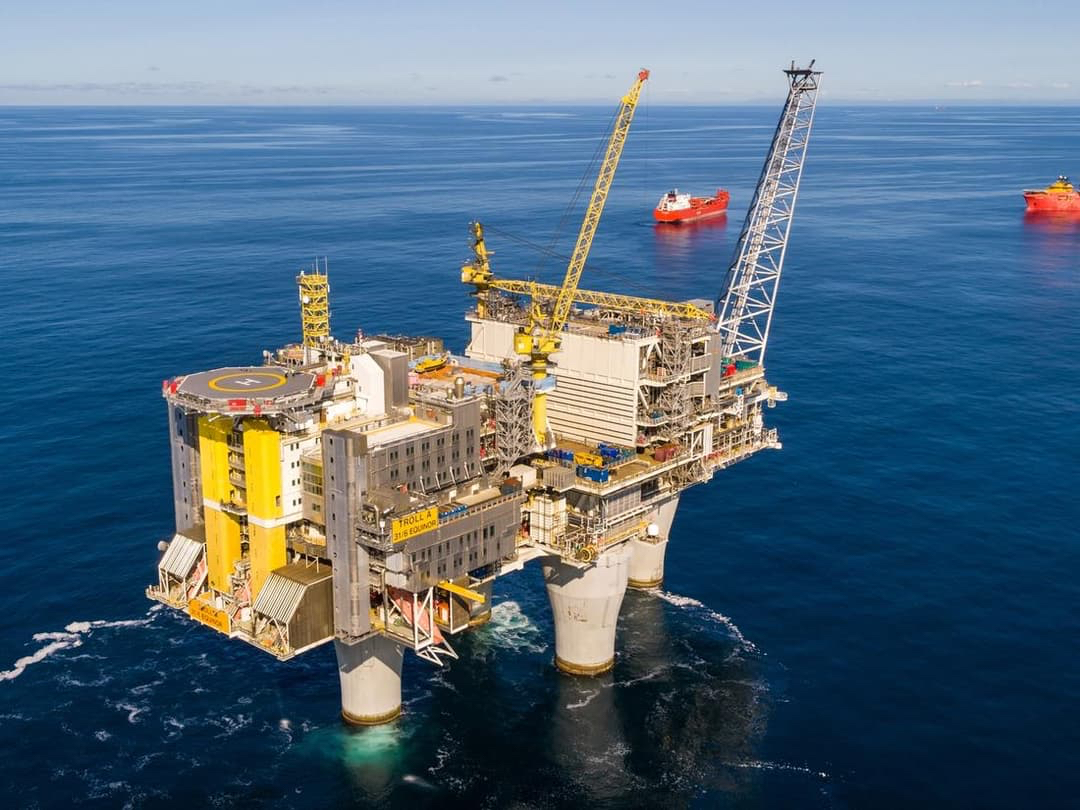
Production began on 22 August 2026 under the subsea Troll Phase 3 Stage 2 project at the Troll field in the North Sea. The project accelerates the production of 55 billion standard cubic metres of gas from the Troll West reservoir, equivalent to nearly two years’ worth of France’s gas demand. The start‑up came just over two years after the partnership’s investment decision and several hundred million Norwegian kroner below budget.
Troll is the largest gas field on the Norwegian Continental Shelf, containing approximately 40 percent of total gas reserves in the region. The Troll A platform, which is celebrating its 30th anniversary this year, together with the Kollsnes processing plant, forms the backbone of Norway’s gas exports to Europe. The Troll partnership comprises Petoro, Equinor, Shell, TotalEnergies and ConocoPhillips. The Troll Phase 3 Stage 2 project builds on the subsea facilities from the Troll Phase 3 project, which came on stream in 2021, reusing design solutions and standards.
The Troll Phase 3 Stage 2 project accelerates the production of 55 billion standard cubic metres of gas from the Troll West reservoir. This volume corresponds to almost two years of France’s gas demand, highlighting the scale of the project and its importance for European energy security. With both the Troll A platform and the Kollsnes plant powered by electricity from shore, the gas is produced with very low carbon emissions, in line with Norway’s climate goals.
– Troll is the backbone of Norway’s gas exports to Europe. This project accelerates production from the reservoir, helping to maintain the current high level of gas exports from Troll and Kollsnes for as long as possible. With both Troll A and Kollsnes powered by electricity from shore, the gas is produced with very low emissions – said Lill Harriet Brusdal, Vice President of Troll and Kvitebjørn.
Maintaining high production levels at the Troll field is crucial for Norwegian gas exports, which play a significant role in securing supplies for European countries. Norway is one of the largest gas suppliers to Europe, and the Troll field is the most important element of this system.
Savings and acceleration
The start‑up of the third phase of the Troll project was originally planned for the end of the year, with an estimated cost of NOK 12.3 billion. However, the project was brought on stream ahead of schedule and several hundred million kroner below budget. The main reasons were smooth offshore operations and a highly efficient drilling campaign.
– We are starting production with excellent HSE results, ahead of schedule and several hundred million Norwegian kroner below budget. The main reasons are smooth offshore operations and a highly efficient drilling campaign, which was completed 25 percent faster than planned – said Trond Bokn, Senior Vice President of Project Development at Equinor.
The drilling campaign, which involved eight wells, was completed in five and a half months by the Deepsea Aberdeen drilling rig from Odfjell, with services from SLB and Baker Hughes. This was 25 percent faster than planned, translating into significant time and cost savings. The rapid pace of work was made possible by proven technological solutions and effective coordination among all parties involved.
Subsea work execution
Templates and manifolds were built by Aker Solutions in Egersund for the main supplier OneSubsea and installed on the field by Ocean Installer. The umbilical, supplied by OneSubsea in Moss, and the MEG line were extended from existing facilities. The 28‑kilometre, 36‑inch diameter pipeline was installed by the world’s largest pipelay vessel, Pioneering Spirit, while the spool pipe was stored at Stord. Randaberg Industries supplied spools and pipeline ends, and Aker Solutions carried out modifications on Troll A.
The project involved many Norwegian companies, demonstrating the significant impact that investments on the Norwegian Continental Shelf have on the local industry. Each element of the supply chain was carefully coordinated to ensure timely and efficient execution of the work. The Troll Phase 3 Stage 2 project has had a significant impact on Norway, helping to maintain gas supply security to Europe, jobs and revenues for society. More than 90 percent of the profits from the Troll field go to the state through taxes and direct ownership of the field via Petoro, making this investment crucial for the Norwegian economy.
Significance for Norwegian industry
The Troll Phase 3 Stage 2 project builds on the subsea facilities from the Troll Phase 3 project, which came on stream in 2021, reusing design solutions and standards. This shortens project time and costs and points the way for future subsea investments on the Norwegian Continental Shelf. Standardisation and repeatability of solutions are becoming key elements of Norway’s offshore oil and gas development strategy.
The project involved many Norwegian companies, demonstrating the significant impact that investments on the Norwegian Continental Shelf have on the local industry. By using local suppliers and subcontractors, the project helped maintain jobs and develop expertise in the Norwegian offshore sector. The drilling campaign, completed 25 percent faster than planned, is an example of efficient subsea project management.
Equinor and its partners are consistently striving to shorten project timelines and reduce costs, which is crucial for maintaining the competitiveness of Norwegian gas in European markets. The experience gained from Troll Phase 3 Stage 2 will be used in future projects on the Norwegian Continental Shelf. The Troll A platform and the Kollsnes processing plant, which are celebrating their 30th anniversary this year, remain the foundation of Norway’s gas exports. Thanks to investments such as Troll Phase 3 Stage 2, their lifespan and efficiency will be extended for years to come. For Europe, which continues to seek stable and reliable gas supplies, Norwegian gas remains a key element of the energy mix, and projects like this strengthen supply security on the continent.




