
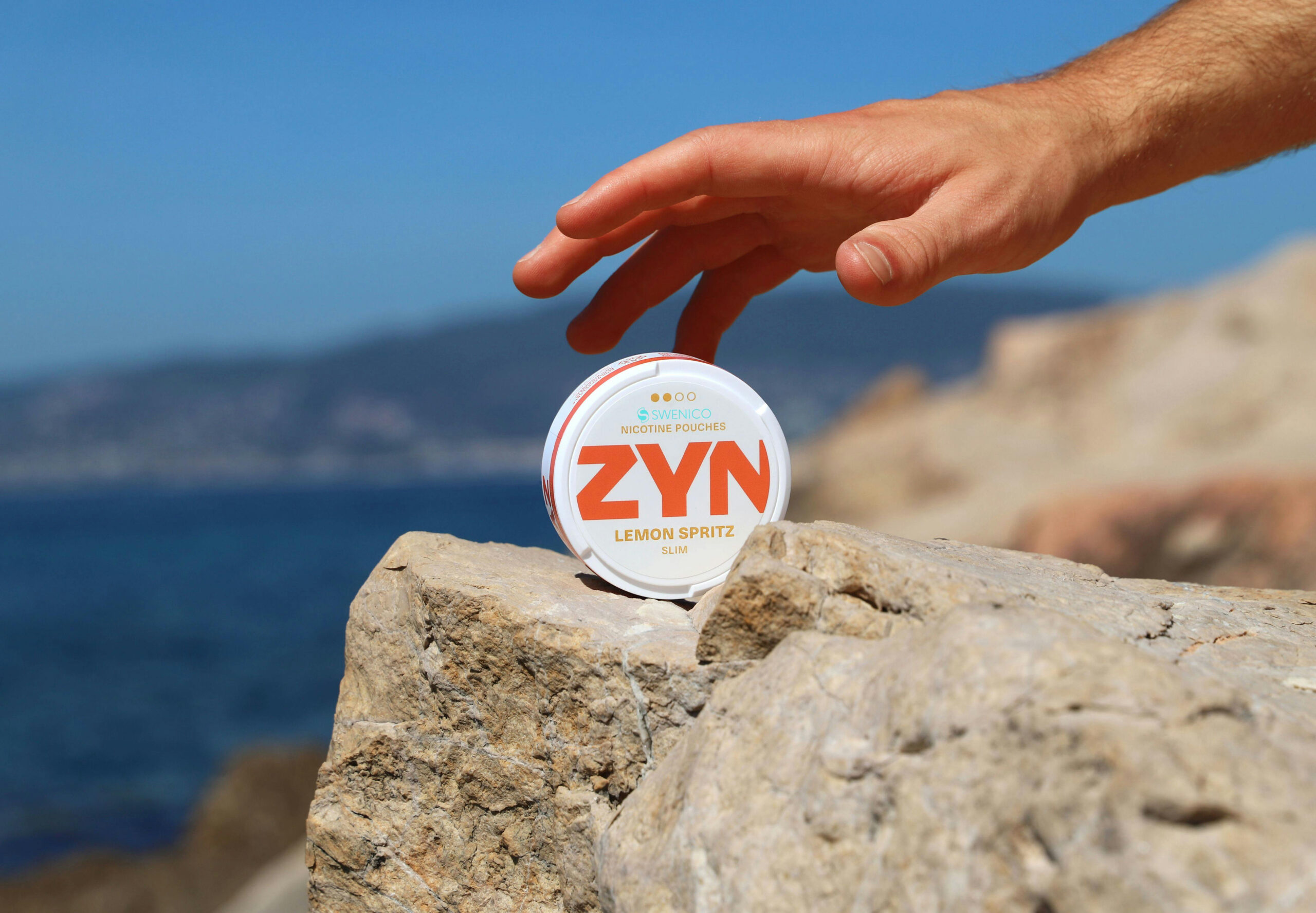
Sweden reduced the share of smokers from 15 percent to 5.4 percent in just 15 years. The EU average is currently around 23 percent. Swedish men have the lowest rate of tobacco‑related deaths in the European Union – 39.6 percent lower than the EU average. In Germany, where the sale of nicotine pouches is effectively banned, field research has shown that 15.8 percent of shops offer these products under the counter, and 13.6 percent of them are counterfeits.
Swedes reduced their smoking rate from 15 percent to 5.4 percent in just 15 years. The EU average is currently around 23 percent. Swedish men have the lowest rate of tobacco‑related death in the European Union – 39.6 percent lower than the EU average. In Germany, where the sale of nicotine pouches is effectively banned, field research showed that 15.8 percent of shops offer these products under the counter, and 13.6 percent of them are counterfeit.
Philip Morris International (PMI), the American tobacco company headquartered in Stamford, Connecticut, founded in 1847 in London, has invested $16 billion since 2008 in the development and scientific research of smoke‑free products. The company employs more than 1,600 people in research and development, including scientists, engineers, technicians and support staff. In the first quarter of 2026, smoke‑free products accounted for 43 percent of PMI’s total net revenues. The IQOS device, launched in 2014 in Italy and Japan, became the number one nicotine brand in markets where it is available, surpassing Marlboro. As of March 2026, PMI’s smoke‑free products were available in 108 markets, and the company estimates that more than 43 million adults worldwide use its smoke‑free products.
Combustion is the main problem
Cigarette smoke is produced by burning tobacco at around 900 degrees Celsius. This process generates more than 6,000 chemical compounds, of which about 100 have been classified by public health authorities as harmful or potentially harmful constituents (HPHCs). It is these compounds, not nicotine, that are the primary cause of smoking‑related diseases such as lung cancer, chronic obstructive pulmonary disease, heart disease and stroke.
– Nicotine is not directly responsible for the cancer, lung disease, and heart disease that kill hundreds of thousands of Americans each year. It’s the other chemical compounds in tobacco and the smoke created by setting tobacco on fire that directly and primarily cause the illness and death – said Scott Gottlieb, Commissioner of the US Food and Drug Administration (FDA) from 2017 to 2019.
The UK National Institute for Health and Care Excellence (NICE) has stated that it is primarily the toxins and carcinogens in tobacco smoke – not nicotine – that cause illness and death. The Royal Society for Public Health (RSPH), the UK Office for Health Improvement and Disparities (OHID) and the US FDA have confirmed that nicotine, while addictive, is not the main cause of smoking‑related illnesses.
Smoke‑free products eliminate combustion
Smoke‑free products such as heated tobacco products (HTPs), e‑cigarettes, and oral smokeless products including nicotine pouches and snus do not burn tobacco. Heated tobacco products heat tobacco to a temperature sufficient to release nicotine and flavours, but low enough to prevent the tobacco from burning. E‑cigarettes heat a liquid solution containing nicotine and flavours to produce an aerosol. Nicotine pouches are made primarily of nicotine and flavours, wrapped in a cellulose pouch placed between the gum and the cheek or upper lip. Snus contains smokeless tobacco in a similar form.
Eliminating the combustion process means there is no smoke, and the levels of harmful chemicals are significantly reduced compared to cigarette smoke. The absence of combustion and the reduction in harmful chemical formation must be scientifically substantiated on a product‑by‑product basis. Most smoke‑free products contain nicotine because – alongside taste and ritual – it plays an important role in encouraging adult smokers to switch completely from cigarettes to smoke‑free products.
The Swedish model of harm reduction
Sweden is the only European Union country with an exemption from the ban on snus – a moist smokeless tobacco pouch placed under the lip. This exemption was granted to Sweden in its 1994 accession treaty. Over 15 years, Sweden’s smoking rate fell from 15 percent to 5.4 percent, while the EU average is about 23 percent. According to World Health Organization criteria, a country can be considered smoke‑free when smoking prevalence falls below 5 percent – Sweden is just above that threshold.
Sweden’s cancer incidence is 41 percent lower than in other European countries, corresponding to a 38 percent lower level of total cancer deaths. Of the 27 EU member states (all except Sweden ban snus), 24 have a tobacco‑related mortality rate twice as high or more than Sweden’s, relative to population size.
– Anything we can do to reduce smoking is good – said Ulf Kristersson, Prime Minister of Sweden, in 2023.
Benjamin Dousa, Sweden’s Minister for International Development Cooperation and Foreign Trade, said in May 2025 that nicotine pouches are not a health product – that is why Sweden regulates them. Dousa added that as long as cigarettes are legal, less harmful alternatives such as nicotine pouches should also be available.
Germany: a ban that does not work
Germany has banned the sale of nicotine pouches, classifying them as food based on state court rulings. However, the German Federal Institute for Risk Assessment (BfR) stated in its October 2022 opinion that for a person who smokes, switching from cigarettes to nicotine pouches could represent a reduction in health risks. The Institute recommended that nicotine pouches should not contain more than 16.6 mg of nicotine per pouch.
– Keeping this model of risk minimisation in mind, switching from cigarettes to nicotine pouches could represent a reduction in health risks for a person who smokes – the BfR opinion stated.
Despite the ban, field research conducted in 24 German cities at the end of 2025 showed that nicotine pouches are available under the counter in one out of six shops (15.8 percent). More than half of the products on offer exceeded the recommended nicotine limit of 16.6 mg (55.9 percent). 13.6 percent of the nicotine pouches sampled were counterfeit. For comparison, counterfeit cigarettes account for only 0.8 percent of the German cigarette market.
The incidence of counterfeits is uneven. In the northern cities of Hamburg, Bremen, Hanover and Kiel, the average counterfeit rate was 33.3 percent. In the Berlin area it was 23.6 percent, and in Leipzig 16.1 percent. In the southern cities of Munich, Augsburg and Nuremberg, the counterfeit rate was lowest at 8 percent. In Cologne it was 17.9 percent, in Stuttgart 13.6 percent, and in Frankfurt 10 percent.
– Bans do not remove products from the market – they remove transparency and accountability – according to a PMI report on illicit trade in Europe.
Belgium and Cyprus 2 approaches, different outcomes
Belgium banned nicotine pouches. Independent field research in Brussels found that one in four shops sold nicotine pouches despite the ban. One in four products were counterfeit, and nearly one third exceeded nicotine levels that would be illegal under any regulated EU framework.
Cyprus, on the other hand, adopted a regulated framework for nicotine pouches, including legal sales under defined criteria, clear product requirements and oversight. As a result, activity was brought back into lawful channels, consumer risk was reduced, and enforcement can focus on criminal networks rather than every retail outlet.
US FDA authorises ZYN
In January 2025, the US Food and Drug Administration (FDA) granted marketing authorisation for 20 ZYN nicotine pouch products. The agency stated that, due to substantially lower amounts of harmful constituents than cigarettes and most smokeless tobacco products such as moist snuff and snus, the authorised products pose lower risk of cancer and other serious health conditions.
– To receive marketing authorisations, the FDA must have sufficient evidence that the new products offer greater benefits to population health than risks – said Matthew Farrelly, Director of the Office of Science in the FDA’s Center for Tobacco Products.
– In this case, the data show that these nicotine pouch products meet that bar by benefiting adults who use cigarettes and/or smokeless tobacco products and completely switch to these products – he said.
The FDA emphasises that nicotine pouches are not risk‑free, and their use by never‑smokers carries adverse health effects. However, adults who smoke and who want to switch completely from cigarettes to nicotine pouches can obtain health benefits, provided they make a complete switch and do not use both products.
– For adults who smoke, switching completely from cigarettes to nicotine pouches may reduce exposure to many harmful chemicals found in cigarettes – the FDA’s relative risk guidance updated in January 2025 states.
– However, it is important that they switch completely from cigarettes to nicotine pouches to get the full health benefit – he said.
Clinical trials confirm effectiveness
A pilot study conducted by researchers at the Yale University School of Medicine, published in June 2025 in PubMed, examined the effect of nicotine pouches on the smoking behaviour of adults. Thirty people participated. Participants in both groups significantly reduced the number of cigarettes they smoked per day over the course of the trial.
The group using higher‑strength nicotine pouches (6 mg) reported numerically greater, though non‑significant, reductions in smoking than the 3 mg group. In the higher‑strength group, 13 percent achieved complete smoking abstinence, while in the lower‑strength group no one stopped smoking. In addition, 67 percent of participants in the higher‑strength group were willing to continue using pouches, compared to 40 percent in the lower‑strength group.
The authors concluded: – Results provide preliminary support for nicotine pouches for cigarette substitution. Compared with lower nicotine strength pouches, higher nicotine strength pouches may have a greater impact on smoking behaviour and adults who smoke may be more willing to use them.
Lynn T. Kozlowski, Professor of Community Health and Health Behavior and former dean of the School of Public Health and Health Professions at the University at Buffalo, commented on nicotine pouches. Kozlowski stated that nicotine pouches do not contain the toxic products from tobacco leaf or its combustion, and they do not involve inhalation into the lungs. While not safe, they are one of the least harmful ways to ingest nicotine. Cigarette smokers who use nicotine in pouches as a complete substitute for nicotine in cigarettes would greatly reduce the health risks from smoking.
– Understanding that no tobacco or nicotine product is safe is appropriate – said Lynn T. Kozlowski.
– Consumers also need to understand that inhaled smoke from cigarettes is much more dangerous than non‑combusted products, including nicotine pouches – he said.
Derek Yach, former Executive Director for Noncommunicable Diseases and Mental Health at the World Health Organization, wrote in The Lancet in April 2024 that WHO should embrace tobacco harm reduction. Yach noted that alternative products such as e‑cigarettes and nicotine pouches have marketing authorisations from the US FDA and the support of governments, and that well over 120 million people use such alternatives.
Bernhard‑Michael Mayer, Professor of Pharmacology and Toxicology at the University of Graz, commented on the Dutch government’s consultation on a proposed ban on nicotine pouches. Mayer stated that the health risk of nicotine pouches is comparable to that of medicinal nicotine products (such as patches and gum). He added that discouraging smokers from using nicotine pouches by warning about nicotine addiction is unwarranted and misleading.
– The morbidity and mortality of smokers are caused by inhalation of toxic combustion products but not by their dependence – wrote Bernhard‑Michael Mayer.
– The addictive potential of nicotine pouches does not justify the de facto ban on these products – he said.
New Zealand and Japan. Success through alternatives
New Zealand has integrated tobacco harm reduction into its tobacco control policy by differentiating regulations for combusted and non‑combusted products, and encouraging smokers who cannot quit to switch to less harmful alternatives (HTPs and e‑cigarettes). As a result, smoking prevalence in New Zealand dropped by 52.8 percent between 2013/14 and 2022/23.
Casey Castello, New Zealand Associate Health Minister (served 2023‑2026), said in September 2024 that the government is anti‑smoking but not necessarily anti‑nicotine. Castello added that for a long time, safer forms of nicotine have been accepted as an important tool in getting people to stop smoking tobacco – from nicotine patches through to vaping.
Japan has seen a significant reduction in cigarette smoking since the introduction of heated tobacco products in 2014. From 2011 to 2015, cigarette sales declined annually by 1.8 percent, but this rate accelerated fivefold after the roll‑out of HTPs. By 2022, smoking prevalence had reached a record low of 10.6 percent.
Philip Morris International’s transformation
PMI has been transforming its business model for over a decade. In 2025, 77 percent of PMI’s commercial efforts and 99.7 percent of R&D expenditures were dedicated to smoke‑free products. By 2030, PMI aims for smoke‑free products to account for two‑thirds of total net revenues.
The company also set targets for about 60 markets where more than half of net revenues will come from smoke‑free products, including about 40 markets where the share will exceed 75 percent.
– Our ambition is bold: we are building PMI’s future on smoke‑free products that – while not risk‑free – are a far better choice than continued smoking – reads PMI’s Value Report 2025.
The report also shows that combustible tobacco shipment volume decreased by 28.9 percent in 2025 compared to the 2015 baseline. In markets where smoke‑free products have been available for at least three years, the decline was 36.9 percent. As of 2025, PMI held 5,000 patents related to smoke‑free products granted in IP5 jurisdictions since 2015.
– For more than a decade, PMI has pursued an industry‑leading shift away from cigarettes – a transformation that goes far beyond product innovation to encompass how we allocate capital, engage stakeholders, and measure success – the report states.
PMI has committed to zero deforestation in its tobacco and paper‑ and pulp‑based product supply chains by 2026. The company also aims to sustain a living income for at least 95 percent of contracted tobacco farmers supplying tobacco to PMI each year through 2030. Another target is to achieve a child labour prevalence below 0.1 percent across the tobacco supply chain by 2030.
In the area of circularity, PMI aims to commercialise at least one smoke‑free consumable with a plastic‑free filter for each of its heat‑not‑burn technologies by 2030. The company also targets at least 10 percent recycled content in its smoke‑free electronic device portfolio by 2030.
What next for tobacco policy in Europe?
The Dutch government conducted a consultation on a proposed ban of nicotine pouches. France proposed a ban that drew objections from the Swedish and Romanian governments. The Swedish government, through its trade ministry, stated in a detailed opinion to France that the proposed ban could have negative public health consequences, because cigarettes and smoking tobacco pose a greater health risk than smokeless tobacco and nicotine products. The opinion noted that to the extent that snus replaces the consumption of cigarettes, the Swedish government assesses this as a positive development from a public health perspective.
Romania stated in its detailed opinion to France that nicotine pouches represent a lower‑risk alternative to traditional cigarettes and can contribute to smoking reduction. The Czech Republic has adopted an approach of regulating addictive substances according to their degree of harmfulness.
Jindřich Vobořil, the Czech National Anti‑Drug Coordinator, said in 2023 that excise taxes on nicotine pouches or heated tobacco should be significantly lower than on cigarettes, as their health impact is markedly smaller.


