
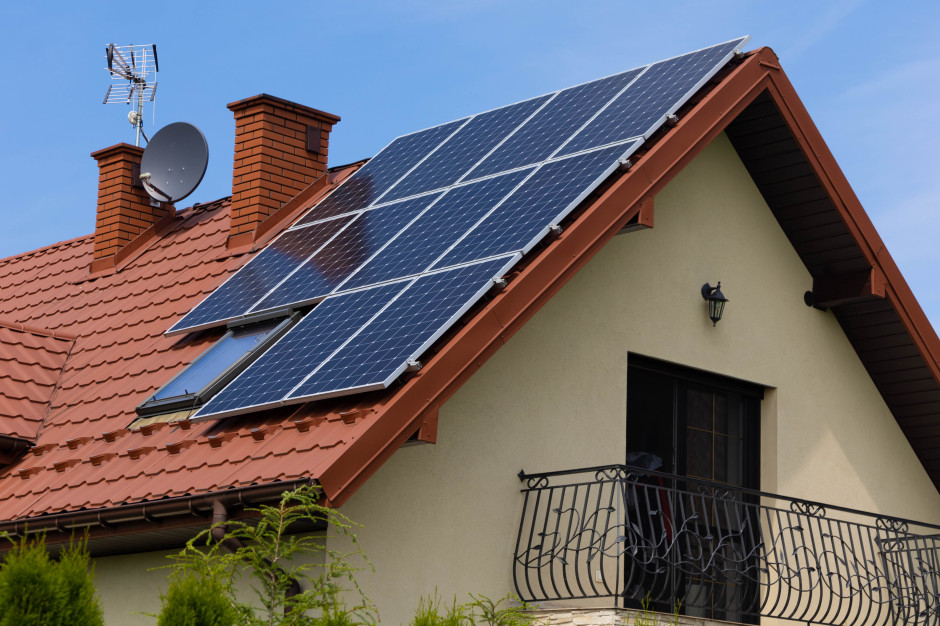
Poland’s solar boom keeps rolling, yet the power rating of a home photovoltaic array is decided by annual electricity consumption, not by the number of square metres under the roof. With more than 1.6 million micro-installations already connected, the most common question for newcomers is how much capacity to order.
Figures from the Energy Regulatory Office (URE) show that at the end of 2025 the country had over 1.6 million micro-installations drawing on renewable sources, with a combined installed capacity of nearly 13.9 GW. Micro-installations are the smallest renewable systems, defined as those with a total installed capacity of up to 50 kW.
Sizing an array begins with one number: annual household electricity use. That value is easy to obtain from the power supplier. Where it is not to hand, an estimate can be built from a handful of variables, such as whether electricity covers only lighting and appliances or also space heating and water heating, the insulation standard of the building, the number of occupants and the efficiency of the installations.
Matching power to consumption rather than floor area
Owners of 70, 150 and 200 sq m houses can work with indicative demand levels, though the real figure hinges on whether a heat pump or electric heaters run on the same supply. Tauron publishes a photovoltaic sizing calculator on its website: a user enters annual electricity consumption and the tool returns the amount of power an installation could generate.
Such results are illustrative only. An installation company will always carry out detailed calculations based on the building’s location and roof profile, so the final choice is worth discussing with a professional installer.
Households whose systems generate more electricity than they consume can look at adding a battery. Storage lets them draw on their own production at times when the panels cannot work at full output.
Battery subsidies enter the picture
The climate ministry has announced a new support programme for the purchase of home energy storage, with a maximum grant of PLN 19,000 per storage installation. Buyers qualify if they purchased a battery from 1 November 2025. The call for applications opens on 20 October, with paperwork to be filed with the National Fund for Environmental Protection and Water Management.
In the middle of 2026 the Polish power system held 150,000 energy storage units. In the ministry’s view, the subsidy scheme could lift that figure to 200,000 by the end of the year.
Źródło: WNP.pl, Fot. Shutterstock/Colour Reactor Rzeszow




