
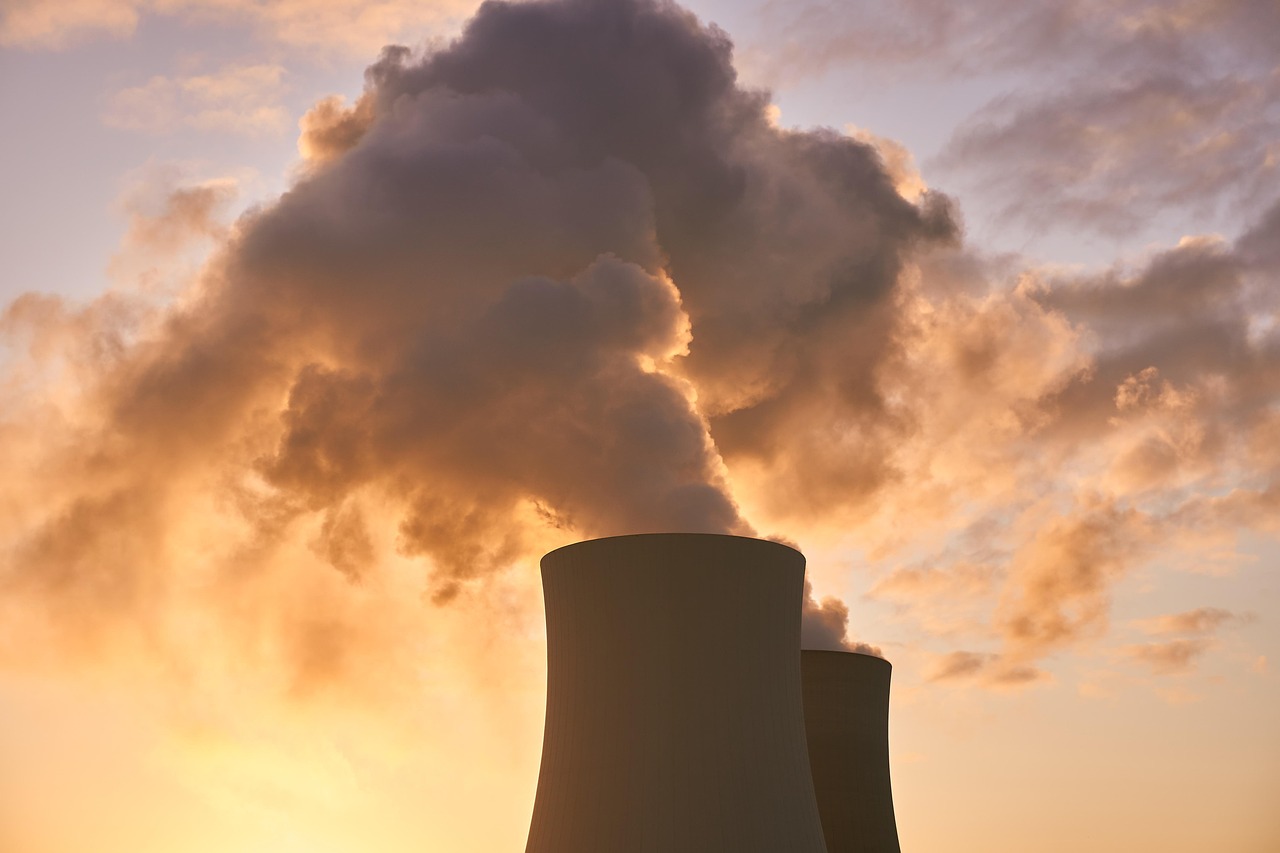
Slovakia has just started up a reactor whose construction began before the dissolution of Czechoslovakia, at a time when Poland was building its Żarnowiec plant. Why has one country returned to its project after decades and is now completing the investment, while the other is essentially building its nuclear programme from scratch? The Mochovce 4 reactor, with a capacity of 471 MW, achieved first criticality on 6 August 2026. The reactor is not yet producing electricity. The unit is expected to cover approximately 13 percent of Slovakia’s electricity consumption. The Mochovce 3 and 4 project has cost €6.47 billion.
First criticality does not mean the start of electricity production. On 6 August at 22:10, a controlled, self-sustaining chain reaction was achieved in the Mochovce 4 core for the first time, and 21 minutes later the reactor reached minimum controllable power level. The unit is now undergoing further tests and a power start-up, during which output will be gradually increased. The process is scheduled to conclude with a 144-hour trial at full power.
The history of Mochovce 3 and 4 is not a story of fast or cheap nuclear power. Work on the units began in 1986, and in 1992 the project was halted due to financing problems. Work on completing the investment resumed years later; the third unit was connected to the grid in 2023, and the fourth is now undergoing start-up. Costs have also risen significantly. In its 2024 report, Slovenské elektrárne stated the budget for the entire Mochovce 3 and 4 project at €6.47 billion. The Slovak case thus primarily demonstrates consistency in maintaining the nuclear direction, rather than being an investment model that can be presented as an example of fast or cheap construction.
Poland also had VVER-440 reactors
Poland’s counterpart to this story was located on Lake Żarnowiec. Construction work began in 1982, and after obtaining a permit from the National Atomic Energy Agency in 1985, proper work on the units commenced. The plant was to use four VVER-440 reactors, belonging to the same broad family of pressurised water reactors as the units at Mochovce.
The paths of the two projects diverged at the beginning of the 1990s. Slovakia halted Mochovce, but did not liquidate the project. In Poland, the Council of Ministers adopted a resolution on 17 December 1990 to put the Żarnowiec Nuclear Power Plant under construction into liquidation. Dismantling and sale of some equipment later began, and the continuity of the large-scale nuclear programme was broken.
Choczewo is a completely new project
Today’s Poland, however, is not only at the declaration stage. Three AP1000 reactors with a total capacity of up to 3,750 MWe are to be built in Lubiatowo-Kopalino in the Choczewo municipality.
In March 2026, the investor submitted an application to the National Atomic Energy Agency for a permit to construct the nuclear facility, and in July it received permission for the second stage of preparatory works, including levelling and development of the future construction site. The draft update of the Polish Nuclear Energy Programme envisages first nuclear concrete in the fourth quarter of 2028 and the start of commercial operation of the first unit in 2036.
This date remains an element of the planned schedule rather than a guaranteed deadline – the document published in June was sent for further government work. Poland is simultaneously creating a new supply chain, contractor base and competencies around American AP1000 technology.
Slovakia already preparing next unit
The difference in continuity is best illustrated by Bratislava’s further plans. Slovakia is preparing a new large unit in Jaslovské Bohunice with a capacity of up to about 1.2 GW, with start-up being considered around 2040-2041. On 24 August, Prime Minister Robert Fico also announced steps to take over 100 percent of shares in JESS, the company preparing the project. Mochovce 4 does not prove that a nuclear power plant can be built quickly. It does, however, show the importance of programme continuity over successive decades, even if costly delays and investment halts occur along the way. Poland and Slovakia began their projects in a similar era and with similar technology. Today, Slovakia is completing an investment started before the dissolution of Czechoslovakia and preparing its next large reactor, while Poland is building its large-scale nuclear programme practically from scratch.
Photo: Pixabay




