
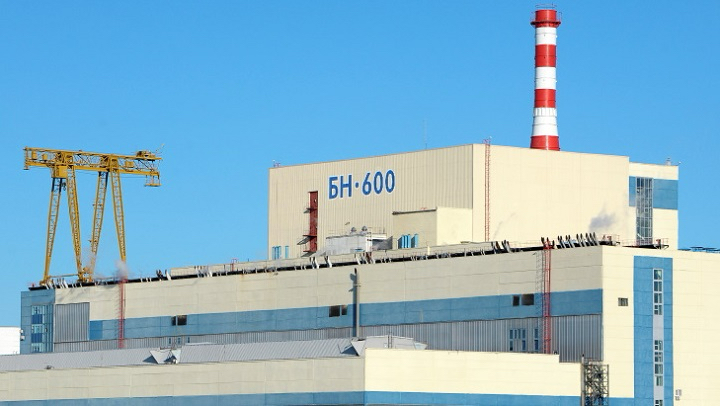
Reaktory na neutronach prędkich (FNR) mogą spalać długożyciowe odpady jądrowe i efektywniej wykorzystywać uran. Rosja, Indie i USA przyspieszają prace, ale technologia jest droga i skomplikowana.
Information appearing in the West about the use of waste‑free nuclear energy contains contradictory messages on the subject. They highlight innovative technical solutions enabling the reactor to operate without waste and without uranium supplies for their operation.
This kind of nuclear energy perpetual motion machine has many drawbacks, however, which is why it is constantly being tested, researched and experimented with in the West.
Among the technical difficulties in operating this reactor are its more complex design and the high cost of its construction, which discourages investors from financing it. The problem of waste becomes secondary to the general mastery of this issue.
Similarly, the lack of uranium supplies for this type of solution in the current quantity does not pose a threat either, as there is no shortage of deposits in the world; at most, there are no takers for their exploitation.
Fast neutrons
The technology of this type of reactor is based on fast neutrons and is popularly called fast neutron reactors. A report by the World Nuclear Association from mid‑March this year dispels previous doubts about their commercial use.
It emphasises that fast neutron reactors (FNRs) are a step forward in technological development compared to conventional power reactors and have a chance to become widespread.
They offer the prospect of much more efficient use of uranium resources and the ability to burn actinides, which would otherwise be long‑lived components of high‑level nuclear waste.
Positive experience
More than 400 years of cumulative operating experience have been gained. Generation IV reactor projects are largely FNRs, and international cooperation on FNR projects is a priority. Several countries have R&D programmes on advanced fast neutron reactors, and the IAEA’s INPRO programme, involving 22 countries, emphasises fast neutron reactors in connection with a closed fuel cycle.
In France, one scenario envisages replacing half of the current nuclear capacity with fast neutron reactors by 2050. Russia is a leader in the development of fast reactors.
It operates the only commercial‑scale fast reactors and is building a 300 MWe lead‑cooled fast reactor demonstrator. It has also installed lead‑cooled fast reactors on its seven Alfa‑class submarines, resulting in 70 years of experience with this class of reactor.
Renewed interest
Renewed interest in fast reactors has been noted due to their ability to fission actinides, including those that can be recovered from conventional reactor fuel. The fast neutron environment minimises neutron capture reactions and maximises actinide fission.
This means fewer long‑lived nuclides in high‑level waste (fission products are preferred because of their shorter lifetimes).
The fast neutron environment is also essential for fissioning even uranium isotopes, not only U‑238 but also others that may be significant for recycled uranium.
The aforementioned report contains extensive statistics on all kinds of active fast reactors and related research facilities from 1969 to the present day. Out of 10 active fast reactors of this type, Russia has 5, India and China have 2 each, and Japan has 1.
In the second half of May this year, the TASS news agency reported that Russia will build another nine fast reactors by 2042. Rosatom, which is implementing this plan, says its goal is to develop next‑generation nuclear energy technology based on fast reactors with a closed fuel cycle.
The key facility is the lead‑cooled BREST‑OD‑300 reactor, with a fuel fabrication and processing module and a spent fuel reprocessing module, being built at the Experimental and Demonstration Energy Complex in Seversk, Tomsk Oblast.
US acceleration
The Americans have decided to significantly accelerate the commercial application of their fast reactors. The US Department of Energy announced a month ago that national laboratories are supporting research and development on a wide range of new, advanced reactor technologies that could revolutionise the nuclear industry.
These innovative systems are expected to be cleaner, safer and more efficient than previous generations. The start of these changes in US nuclear energy is to be the implementation of three fast reactor projects by 2030.
Indian reserves
After more than two decades of delays, redesigns and technical changes, the 500 MW prototype fast breeder reactor (PFBR) at Kalpakkam in Tamil Nadu state reached criticality on 6 April 2026, becoming India’s first operating fast breeder reactor (FBR) and a long‑awaited milestone in the country’s three‑stage nuclear power programme.
Criticality is the point at which a sustained, controlled nuclear fission chain reaction begins. The FBR is particularly attractive to India because the reactor generates more fuel than it consumes while producing power. This will allow India to use its vast thorium reserves to produce uranium, which will be used in the final stage of the three‑stage nuclear power programme.
High priority
The European Sustainable Nuclear Industrial Initiative (ESNII), under the Sustainable Nuclear Energy Technology Platform (SNETP), gives fast neutron reactors (FNRs) high priority for sustainable nuclear energy production in Europe. Given the extensive European and international operational experience, the ESNII roadmap recognised the sodium‑cooled fast neutron reactor as the most mature technology for deployment, and the Advanced Sodium Technological Reactor for Industrial Demonstration (ASTRID) as the SFR prototype.
ASTRID is a Generation IV system being developed in France under European and international industrial and R&D cooperation programmes, including the ASTRID R&D Cooperation (ARDECo). Two alternative FNR technologies to be investigated in the longer term are the lead‑cooled fast reactor (LFR) and the gas‑cooled fast reactor (GFR).


