
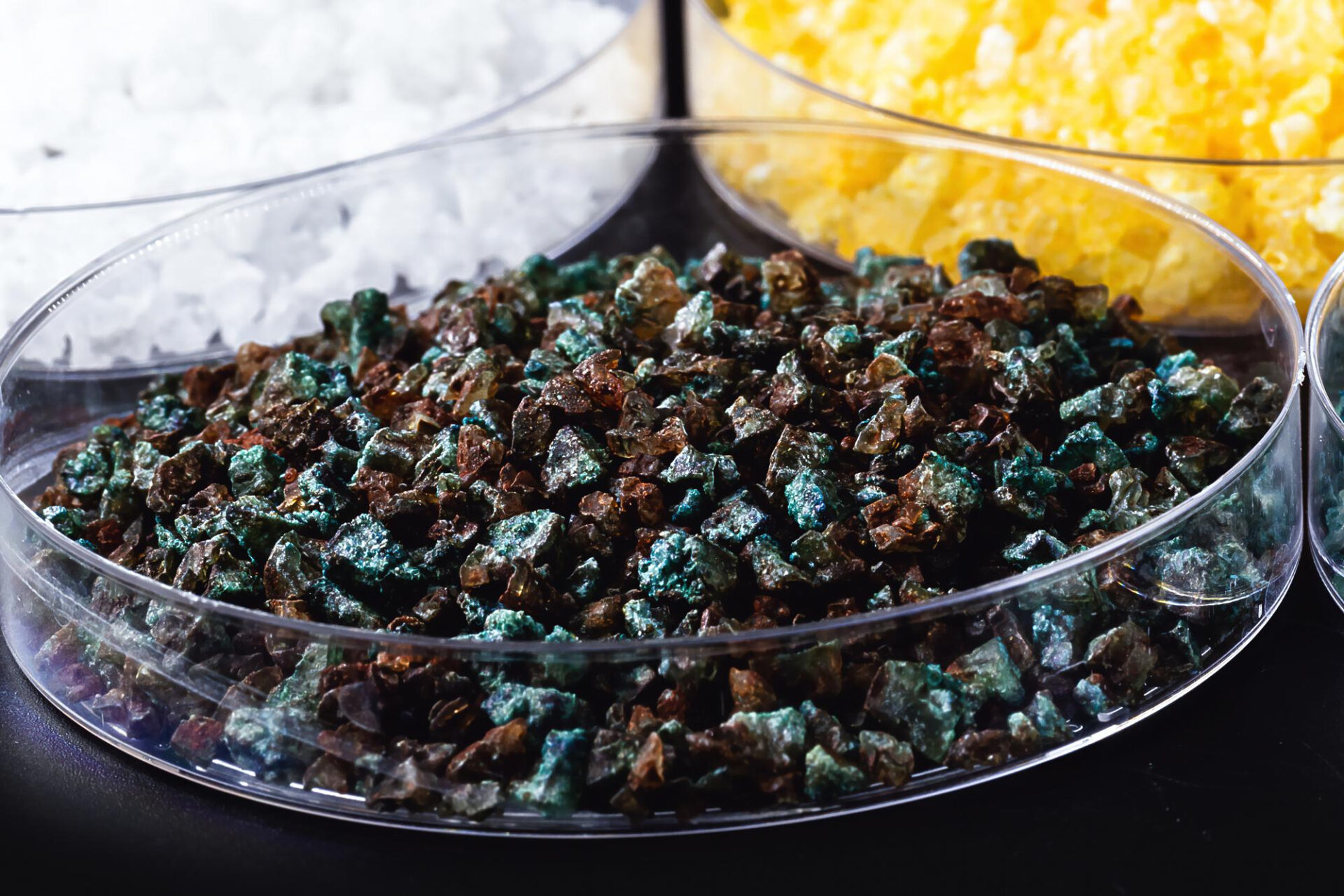
Economic rivalry between the world’s largest powers is increasingly focusing on access to strategic raw materials. Rare earth metals, lithium, nickel, graphite and cobalt are becoming the foundation of modern industry, energy and technological transformation. For Europe, the growing dependence on China, which controls a significant part of global processing of these raw materials, is becoming a problem.
For many years, developed countries assumed that globalisation would ensure stable and cheap access to most raw materials. Today, this model is breaking down. The pandemic, trade tensions and the technological war between the United States and China have shown that control over raw materials can be just as important as control over technology.
The modern economy is becoming increasingly material-intensive. Electric cars, energy storage, wind turbines, data centres, semiconductors and defence infrastructure require huge amounts of strategic metals. The problem is that the extraction and processing of many of them is heavily concentrated geographically.
China has built the greatest advantage. Beijing has for years invested not only in mining, but above all in processing capacity. It is this element that gives China a real geopolitical advantage today. In many segments of the global market, Europe and the United States are dependent on Chinese refineries and plants processing raw materials used in modern industry.
Europe discovers the scale of strategic dependence
For the European Union, the problem of raw material dependence is becoming one of the biggest economic challenges of the next decade. Europe’s energy transition and the development of electromobility are increasing demand for lithium, nickel, manganese, graphite and rare earth metals. At the same time, the EU has limited own extraction and processing capabilities.
This creates a risk that is not only economic but also political. In the event of escalating trade tensions or geopolitical conflicts, access to key raw materials could be restricted. For industry, this would mean higher costs, production problems and greater investment instability.
Therefore, Brussels is increasingly actively developing a raw material security policy. Diversification of supplies, development of recycling and building European processing capacity are becoming strategic goals. Europe is trying to reduce the situation where the green transition simultaneously leads to a new kind of economic dependence.
The green transition increases pressure on the raw materials market
The energy transition is radically changing the structure of global demand for raw materials. Wind farms, electricity grids, energy storage and electric cars require many times more metals than traditional fossil fuel-based infrastructure.
This means that competition for access to raw materials will systematically increase. The problem is not only the quantity of available resources, but also the pace of development of new mines and processing capacity. Mining projects require huge capital outlays and often many years of preparation.
Geographical concentration remains an additional challenge. The Democratic Republic of the Congo accounts for a significant portion of global cobalt mining, Indonesia is increasing control over the nickel market, and China dominates the processing of rare earth metals and graphite. In practice, this means industry’s growing dependence on regions with elevated political risk.
Poland can benefit from the new industrial order
For Poland, the restructuring of global supply chains may mean significant investment opportunities. Europe will need new raw material processing plants, battery component production and recycling of strategic materials.
Poland already plays an important role in the European lithium-ion battery sector. The development of this market may increase the importance of the domestic chemical, logistics and processing industries. Recycling of strategic materials, which could become one of the pillars of European material independence, will also become increasingly important.
At the same time, Poland remains exposed to the effects of global raw material instability. High metal prices and supply constraints can affect production costs in automotive, electronics and machinery industries.
Raw materials become a tool of geopolitical influence
The most important change is that strategic raw materials are ceasing to be purely an economic category. Increasingly, they are becoming an instrument of international policy and great power rivalry.
Countries with control over extraction or processing gain the ability to exert economic pressure and build technological advantage. This is why the US, the EU and China today treat raw material policy as an element of national security.
In practice, this means that the coming years will bring increased investment in mining, recycling and securing access to strategic materials. The competition for raw materials may become as important as the earlier competition for oil and gas.
For Europe, the key will be finding a balance between climate transition, industrial competitiveness and economic security. Without its own raw material base, maintaining a strong industrial position may become increasingly difficult.


