
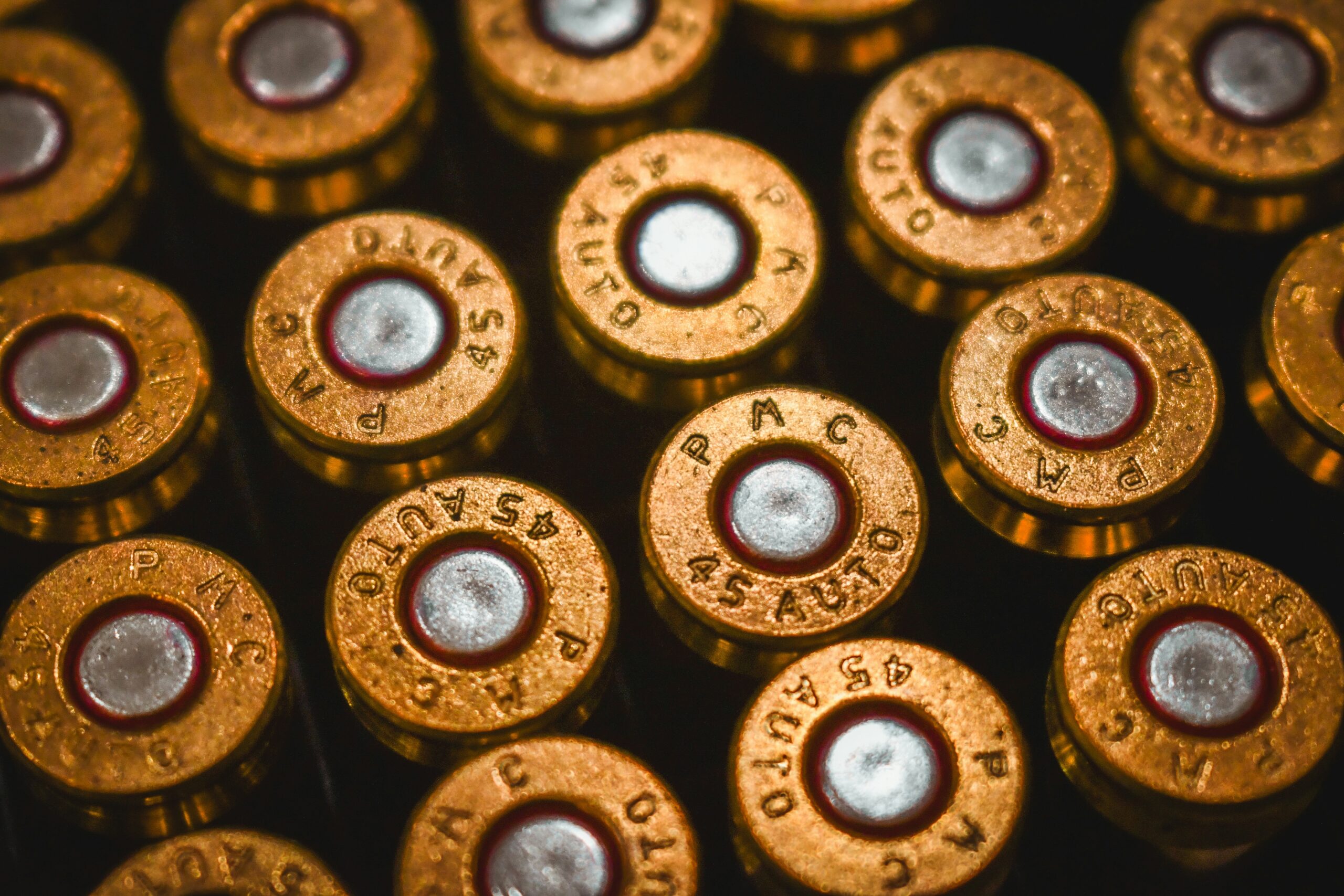
The Polish ammunition industry is gaining importance in 2026 that can be described as crucial for the security of the entire Central and Eastern European region and NATO’s eastern flank. Poland received EUR 43.7 billion from the EU’s SAFE programme to modernise its army and develop its defence industry, making the country the largest beneficiary of this instrument.
Before the outbreak of the full-scale war in Ukraine in 2022, the Polish ammunition industry, like most of its European counterparts, operated under conditions of years of declining orders and neglected investment. For the past three decades, Europe had been ordering ammunition in quantities that the president of the Polish Armaments Group called homeopathic, meaning that production capacity shrank and military depots were systematically emptied. There were shortages not only of shells themselves but also of propellants, explosives, bodies and ignition elements, and the entire supply chain depended on a few external suppliers. Poland, which was an importer of ammunition at the start of the war, has in just three years travelled a long road towards regaining production capacity and then towards planning to become a security exporter.
The situation changed dramatically after 2022, when the daily rate of artillery shell firing by both sides of the conflict exceeded all previous expectations. It is estimated that at the peak Russia fired several tens of thousands of shells a day, while Ukraine fired around ten thousand. Europe’s previous production capacity of several tens of thousands of shells per year proved completely insufficient. NATO countries realised that without rebuilding production capacity on the continent, any potential conflict with Russia on the eastern flank would be lost because of a lack of ammunition, not because of a lack of soldiers or equipment.
Poland, which was an importer of ammunition at the start of the war, has in just three years travelled a long road towards regaining production capacity. The government allocated a record 4.8 percent of GDP to defence, more than any other NATO country except the United States. The Polish Armaments Group and other defence industry entities received huge capital injections for modernisation and expansion. Over the past several months, Poland has launched or accelerated the implementation of a dozen giant investments in large-calibre ammunition production, especially 155 mm calibre, which has become a symbol of modern artillery.
Giant investments in key plants
The process of rebuilding ammunition capacity in Poland rests on several key pillars. The largest of these is the Mesko S.A. plant in Skarżysko Kamienna and Pionki, which received total funding of PLN 651 million to expand its production capacities. These investments include, among others, the construction of modern production capabilities for multi‑base propellants and large‑calibre and artillery ammunition components. At the same time, projects called Project 400 and Project 44.7 are being implemented, with completion scheduled for 2025 and 2026 respectively. Thanks to them, Mesko will gain the ability to produce modified and multi‑base propellants, which is crucial for reducing Poland’s dependence on propellant supplies from abroad. In 2026 the company is to achieve significantly greater production capacities for ammunition and missiles and to acquire key competencies that Poland has so far lacked.
The second key centre is the Dezamet S.A. Metal Works in Nowa Dęba. In 2025, the company received PLN 1.358 billion from the Capital Investment Fund to implement a project to expand its production capacity for 155 mm large‑calibre ammunition. In February 2026, Dezamet received more than PLN 150 million of support under the Polish Investment Zone, to support investment in expanding ammunition production and strengthen the defence industry potential in Podkarpacie.
The company’s investment outlays related to the new project, i.e. expanding the offer with new types of 155 mm shells and production capacity for manufacturing shell bodies, will amount to PLN 450 million. In May 2026, the Ministry of National Defence signed at Dezamet one of the largest arms contracts implemented under the SAFE programme. The contract with the PGZ‑AMUNICJA Consortium, of which Dezamet, Mesko, Nitro‑Chem, Gamrat and Belma are part, concerns the delivery of several hundred thousand rounds of 155 mm artillery ammunition, and its value exceeds PLN 13.5 billion net.
The third centre for rebuilding Poland’s ammunition potential is Niewiadów Polska Grupa Militarna. The company, which recently debuted on the Warsaw Stock Exchange, received PLN 250 million of secured financing to build a modern 155 mm large‑calibre ammunition factory at its plant in Niewiadów. According to the schedule, the assembly of technological lines is to begin in the third quarter of 2026, and series production is to start before the end of the year. Ultimately, Niewiadów plans to achieve a production volume of up to 180,000 ammunition sets per year, with first deliveries possible as early as the second half of 2026.
Modernisation and independence from imported propellants and explosives
One of the biggest challenges for the Polish ammunition industry, and at the same time one of the key strategic goals, is to become independent of imports of key components, primarily propellants and explosives. Until now, Poland has largely relied on propellant supplies from Germany, Spain and other Western European countries, as well as from outside the European Union, which in a crisis situation could prove to be a bottleneck.
In 2024, Mesko launched the production of modified propellant, and in 2026 production of multi‑base propellant, a key component of artillery ammunition, will begin. Projects 400 and 44.7 are of fundamental importance for the company’s development, for reducing Poland’s dependence on foreign supplies and for strengthening the country’s defence potential. After their completion, Mesko will be able to produce propellant both for its own needs and potentially for export to other countries in the region that are struggling with similar problems.
At the same time, investments are under way at the Nitro‑Chem plant in Bydgoszcz and the Gamrat Special Production Plant in Jasło, which specialise in the production of explosives and ammunition components. Both plants are part of the PGZ‑AMUNICJA consortium and have received support under the SAFE programme.
The financial foundation
The huge investments in the Polish ammunition industry are made possible by two parallel streams of financing. The first is the EU SAFE (Security Action for Europe) programme, which aims to support member states in increasing their defence capabilities. Poland is the largest beneficiary of this instrument. Under an agreement signed in 2026, it will receive EUR 43.7 billion, or more than PLN 180 billion, for the modernisation of the army and the development of the domestic defence industry. The funds are provided in the form of preferential loans, and Poland was the first EU country to sign a framework agreement, which allowed for the rapid launch of procurement and investment procedures.
In mid‑2026, the government completed the first stage of signing contracts under SAFE. By 30 May 2026, 29 contracts had been signed with Polish defence companies for a total amount of PLN 78 billion, and the plan was to sign 40 contracts worth a total of PLN 100 billion. In total, under the SAFE programme, about PLN 23.8 billion is to go to Polish industry for artillery and missile ammunition, most of which has already been allocated.
The second pillar of financing is the National Ammunition Reserve, a multi‑year programme established by a resolution of the Council of Ministers of 29 March 2023, which ordered the creation of strategic ammunition stocks for the Polish Armed Forces. The implementation of the concluded contracts will allow the Polish Army to quickly achieve the required artillery capabilities.
As Deputy Prime Minister and Minister of National Defence Władysław Kosiniak‑Kamysz stressed, the previous government did nothing with that resolution, did not buy any ammunition for the Polish army, did not buy any production capacities and did not build any manufacturing capacities. His government, now having funds from SAFE and domestic funds, has begun an intensive rebuilding of both stocks and production capacities.
Polish ammunition as part of the European security system
The Polish ammunition industry is not building its capacities in isolation. On the contrary, one of the key strategic goals is integration with the European and transatlantic security system through industrial and technological partnerships with leading players in the defence market.
In February 2026, Niewiadów Polska Grupa Militarna signed a framework agreement with the American corporation Northrop Grumman concerning the joint production of 155 mm artillery ammunition. The agreement sets out the rules of cooperation, specifies issues of technology and certification, and prepares the ground for large, repeatable deliveries to European customers.
The Niewiadów plant is becoming an important link in a wider supply chain in which Polish industry is not only to assemble but also to co‑create competencies in the manufacture of modern artillery ammunition. One of the most innovative elements of this cooperation is the planned use of ADI technology, i.e. austempered ductile iron, a specially hardened ductile iron whose strength parameters are comparable to steel. This allows the production cycle to be shortened and provides great scaling flexibility, which is crucial in conditions of heightened demand.
At the same time, the Polish Armaments Group is tightening cooperation with the Czechoslovak Group (CSG). In 2026, the two groups signed a Framework Cooperation Agreement, which opens the way to joint development and production projects, focusing on engines for unmanned aerial vehicles and missiles, the ammunition segment and modern land platforms. The agreement enables joint participation in defence programmes carried out under the European Union and NATO, which can significantly strengthen security in the region and on NATO’s eastern flank.
Deputy Minister of State Assets Konrad Gołota stressed the importance of this cooperation, saying that it supports the building of such alliances within the European Union, and that good cooperation between defence ministries and industries guarantees that stability and development of the region are built in a coherent manner.
Dezamet, in turn, signed an agreement with the Swedish company Saab, confirming its intention to enter into potential cooperation on the production of mortar ammunition. Under a licensing agreement, Dezamet could acquire the rights to produce and sell selected Saab Bofors Dynamics Switzerland products in Poland, which would allow the launch of production of another key type of ammunition in the country.
Niewiadów has also established cooperation with British partners, under which a British‑Polish joint ammunition initiative is to produce as many as 130,000 155 mm shells per year for the Polish army. The agreement covers not only the physical production of shells but also technology transfer and knowledge exchange, allowing Polish engineers and workers to build skills and institutional knowledge that sustain ammunition production capability, rather than just operating a licensed production line.
New factories and production capacities
The scale of Poland’s effort to rebuild ammunition capacity is best reflected by concrete figures and schedules of the investments being carried out. In Kraśnik, at the Mesko branch, a 155 mm artillery ammunition factory is being built, with completion of construction work and launch of full lines scheduled for 2027. The investment involves the expansion and modernisation of a production hall to approximately 9,000 square metres, and upon completion will allow the production of up to 150,000 155 mm ammunition bodies per year. This is one of the largest projects of its kind in Central and Eastern Europe.
In Niewiadów, a 155 mm ammunition factory is being built that is ultimately to produce up to 180,000 ammunition sets per year, with first deliveries possible in the second half of 2026. At the same time, a second strategic project is being developed, the construction of a 40 mm grenade launcher ammunition factory, which will cost about PLN 70 million and is to allow serial production to start in mid‑2027. The new line will produce ammunition for both automatic grenade launchers and hand launchers, and the target production capacity is to be nearly half a million rounds per year. The key technology partner is the Singapore company ST Engineering, which will supply licensed production technology for a period of at least 30 years.
Under Poland’s announced National Ammunition Plan, it is envisaged to create three new ammunition factories, and the total amount of support for the key companies, Mesko, Dezamet, Nitro‑Chem and Gamrat, is PLN 2.4 billion.
Poland as an ammunition hub for Central and Eastern Europe
The importance of the Polish ammunition industry for the security of the region goes far beyond the ability to supply its own army. Poland, thanks to its investments, geographical location and international relations, is becoming a natural production and logistics hub for the entire eastern flank of NATO.
Poland is the largest and most dynamic defence market in the Central and Eastern European region. Defence spending of 4.8 percent of GDP, compared with the NATO requirement of just 2 percent, places Poland at the forefront of the Alliance and attracts the attention of the biggest players in the global defence industry. The region is moving from a model based on purchasing ready‑made weapons to building its own production and technological capacities, and Poland is the leader of this process.
Polish ammunition factories are designed with flexibility and redundancy in mind. The Niewiadów Ammunition Ring initiative is a complementary system of industrial cooperation with partners from Poland and other European countries, aimed at ensuring stable production capacities and security of supply of key components. This model, covering the full technological chain for the production of 155 mm artillery ammunition sets compatible with NATO standard artillery systems, is important not only for Poland but for the entire Alliance. In a crisis situation, if any member state lost its own production capability, Polish plants could take over part of its needs.
Poland actively participates in European defence cooperation instruments, including the SAFE programme and projects carried out under the European Union and NATO. The joint agreements with the Czechoslovak Group, Saab, Northrop Grumman and British partners not only bring benefits to Poland but also create a network of mutual dependencies and safeguards. In the event of conflict, supply chains for ammunition between countries of the region can be flexibly redirected where needs are greatest.
Poland is developing dual‑use technologies, i.e. civilian solutions adapted for military applications. Dual‑use infrastructure, such as ports, rail nodes, pipelines, data centres and energy networks, serves both civilian and military functions, and its efficiency directly translates into the ability to respond quickly and support allies. The Polish ammunition industry, located in various regions of the country, benefits from this infrastructure, making it more resilient to disruptions.
Although securing the needs of the Polish Armed Forces is today the priority of the Polish ammunition industry, the first signs of growing export potential are already appearing. The Polish defence industry has a chance for major exports. Polish unmanned aerial vehicles and loitering munitions will go to Canada and Romania, San anti‑drone systems to Norway, and the Ratownik vessel to Sweden. In the ammunition segment, especially in 155 mm calibre, global demand is huge, and Poland, thanks to new production lines, can become an important supplier to other NATO countries, especially those that do not have their own production capabilities.
The revenues of the Polish Armaments Group in 2024 exceeded USD 3 billion. In 2026, for the first time, they are to exceed PLN 20 billion, and exports are to reach PLN 1.9 billion. Export successes of such products as the Piorun (already in the US, Norway, Sweden), Krab, Borsuk and Baobab show that the Polish defence industry is gaining recognition on international markets. Interest has also been expressed by, among others, Germany.
Poland, with its huge domestic orders financed by SAFE, can negotiate prices on raw material and semi‑finished product markets, and then offer ammunition at competitive prices to other Alliance countries. In this way, it is becoming not only a consumer but also a supplier of security, which is a new quality in Polish defence policy.
Fot. Unsplash


