
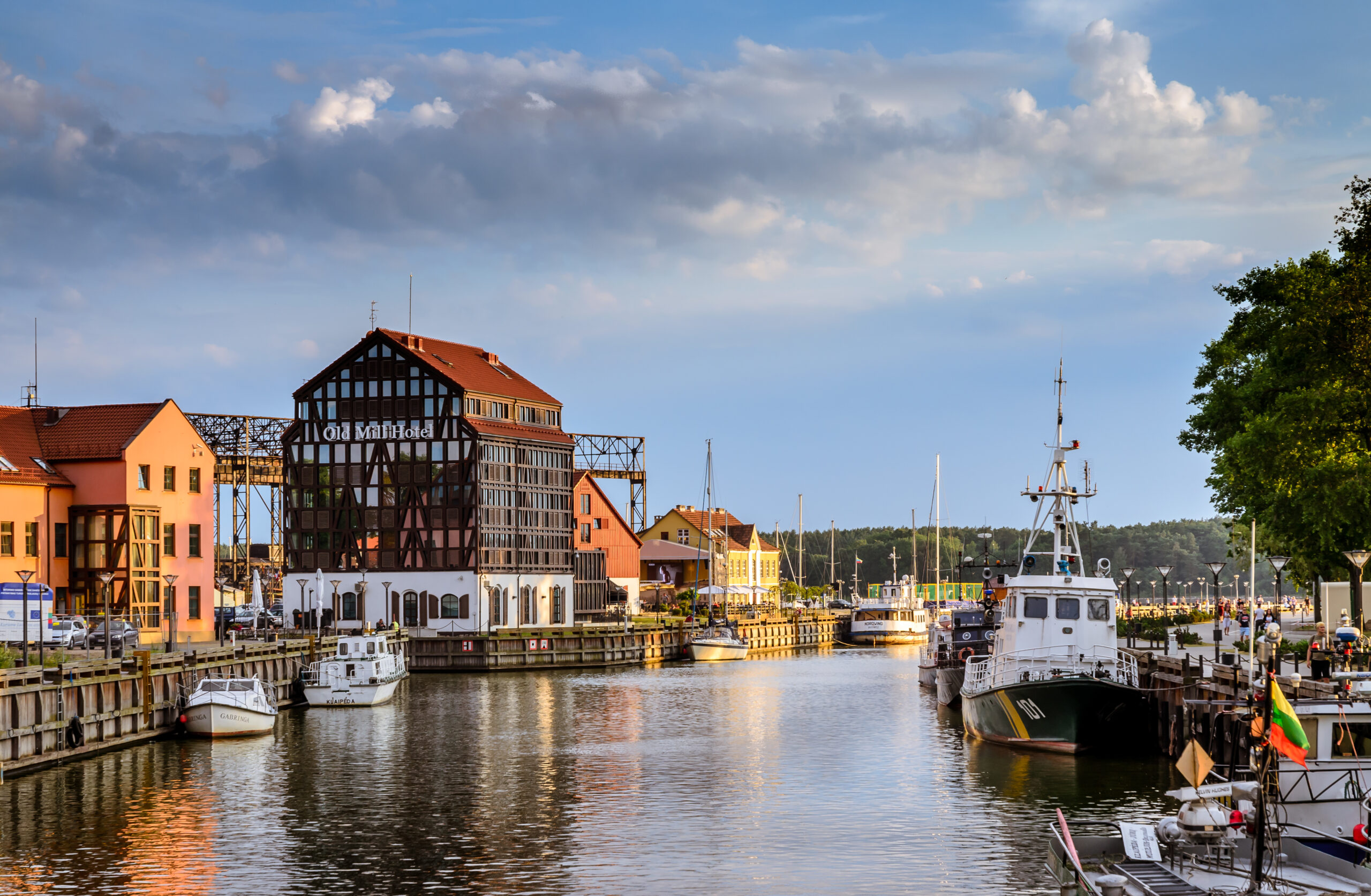
The port of Klaipėda in Lithuania needs a new terminal for cruise ships, because the current quay is already too small for their growing numbers and is unable to handle the increasing tourist traffic. The Lithuanian authorities have already made decisions on this matter, recognising the need to adapt infrastructure to dynamically changing market conditions. More and more large cruise ships are calling at Lithuania’s maritime gateway, as the port of Klaipėda is often called, and their sizes are systematically growing, which requires modernisation of the quays.
When the quay for cruise ships in the port of Klaipėda was built in 2003, it was assumed that it would be able to accommodate ships up to 295 metres in length. Meanwhile, this year a 317‑metre cruise ship called at the port and docked with difficulty at the quay that was too short. Cruises of 325‑metre giants are already being announced, which means the current infrastructure will become completely unsuitable for handling the largest vessels. Port Director General Algis Latakas announced this at a special press conference, stressing the urgent need for expansion.
This is also confirmed by transport specialist Professor Vytautas Paulauskas from Klaipėda University, who draws attention to the systematic increase in the number of cruise ships calling at the port. Hence the idea of expanding the passenger terminal by adding a second berth for the simultaneous handling of two cruise ships. Until now, only one berth was available, which limited capacity and extended waiting times for mooring. Around 70 cruise ships have already called at Klaipėda this year, and next year the number of these floating hotels is expected to exceed 100, an increase of more than 40 percent.
The cruise ships calling at Klaipėda mainly sail on Baltic itineraries, with a typical cruise starting in Germany, then calling at Gdańsk, Klaipėda, Riga, Tallinn, Helsinki and Stockholm. This makes the Lithuanian port an important point on the region’s tourist map, and its development has a direct impact on the popularity of the entire Baltic route. Recently, the 238‑metre cruise liner Borealis, sailing under the Bahamian flag, docked in Klaipėda for the first time, bringing 1,163 tourists, mostly from the United Kingdom, who were able to admire the beautiful old town of Klaipėda during their walks. In accordance with tradition, the ship’s captain was presented with the honorary badge of the port of Klaipėda.
Cargo port also developing
The port of Klaipėda is also Lithuania’s only maritime gateway to the world and one of the few ports in northern Europe that does not have ice problems, ensuring year‑round operation. It also has the only gas terminal in the Baltic states and regular ferry connections with Kiel, Stockholm and other European cities. Annual cargo throughput here already reaches 40 million tonnes, placing Klaipėda among the region’s largest ports.
Fears of a crisis in the Lithuanian port following the loss of Belarusian goods after the imposition of sanctions have proved unfounded. As Professor Vytautas Paulauskas emphasises, after the start of Russia’s aggression against Ukraine and the imposition of EU sanctions on Belarus and Russia, the transit of Belarusian goods through Klaipėda practically ceased. They were replaced by goods going to Lithuania or exported by it, which allowed high throughput volumes to be maintained.
In addition, containers from China arrive at the port and are then shipped, on smaller vessels, to other Baltic countries. In tonnage terms, this is now no less than before the sanctions, and throughput currently reaches 40 million tonnes per year, a figure close to the pre‑war level. If the sanctions were lifted and Belarusian goods returned to Klaipėda, further expansion of the cargo part of the port would probably be necessary.
New regulations for security
The Lithuanian Seimas has already approved the reorganisation of the Klaipėda State Seaport proposed by the Ministry of Transport and Communications. The law aims to improve the investment climate and strengthen national security guarantees. The adopted law stipulates that the port will remain open to domestic and international shipping, but only as long as this does not conflict with state security interests.
In the event of threats or changes in the geopolitical situation, shipping in the port of Klaipėda will be restricted or suspended. The project is also aimed at increasing Klaipėda’s competitiveness, improving the port’s operational efficiency and strengthening national security. The new regulations are also intended to ensure that port areas and infrastructure are used in accordance with their intended purpose.
To this end, the legal framework for port infrastructure charges and land lease has been changed – strategic issues have been assigned to the government’s competence, while technical matters have been entrusted to the Ministry of Transport and Communications. The expansion of the passenger section does not mean a decline in the importance of cargo transport; on the contrary, both sectors are developing in parallel, which testifies to the growing role of Klaipėda as a key logistics hub on the Baltic Sea.
Fot. Wikimedia Commons




