Poland has recorded a higher growth rate in air cargo than traditional aviation powers such as Turkey and France, thanks largely to a surge in e-commerce imports from China. While the percentage increase is impressive, the volumes remain modest compared to European leaders like Germany. The data was presented at the TIACA Executive Summit 2026 in Warsaw, the first time Poland hosted this global gathering of the air cargo industry.
According to WorldACD Market Data, China’s e-commerce exports grew by 7 percent globally in the first months of 2026, but European imports soared by 30 percent year-on-year. Poland, Hungary and the Czech Republic are the main beneficiaries of this trend in Central and Eastern Europe. Poland’s air cargo now accounts for about 1.4 percent of the European Union total, yet its recent growth has outpaced that of much larger markets.
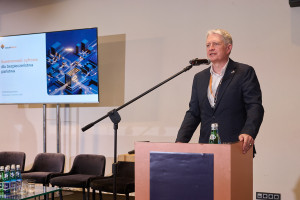
Michał Grochowski, head of LOT Cargo, explained the phenomenon bluntly: – The answer is very simple: e-commerce. That is all. E-commerce is the main driver of growth in our market – he said at the summit.
Chinese e-commerce drives growth
The bulk of the increase comes from parcels shipped directly from Chinese warehouses to Polish consumers. Mariusz Kuczek, cargo director at Katowice Airport, noted that the potential is concentrated in a few countries. – The greatest potential is concentrated in several countries, especially Poland, Hungary and the Czech Republic. This is important because airlines, forwarders and logistics integrators need sufficient demand to launch regular operations, invest in infrastructure and develop dedicated cargo solutions – he stated.
Hungary’s Budapest Ferenc Liszt International Airport handled 426,519 tonnes of freight in 2025, a 42.3 percent increase year-on-year, following a 49 percent jump the previous year. József Kossuth, head of cargo at Budapest Airport, attributed the success to the absence of a national carrier: – The lack of a national carrier in Hungary means the state does not have to rigidly protect such an entity in terms of traffic rights. As a result, Budapest airport can broadly open up to foreign carriers and grant them traffic rights without restrictions – he said.
Budapest leads the region
Poland’s Warsaw Chopin Airport recorded 137,000 tonnes in 2025, a 17 percent increase. Long-term forecasts suggest Polish airports will handle 0.38 million tonnes by 2032 and exceed 1 million tonnes around 2041. Yet Germany, the European leader, currently handles more than double that figure and continues to account for over 20 percent of all European air freight.
Grochowski pointed to a structural weakness: – In Poland we have many manufacturing plants financed by foreign capital. However, these factories often have no decision-making power over sales, logistics and supply chains. Decision-makers are abroad and they decide to ship the products made in Poland from foreign airports, using foreign carriers – he explained.
LOT Cargo faces strategic dilemma
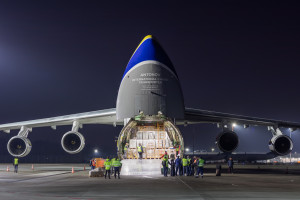
LOT Cargo remains Poland’s largest air freight player, but its market share is only around 20 percent. The company relies mainly on belly cargo in passenger aircraft. For years industry representatives have urged LOT to acquire a freighter aircraft. During the Warsaw summit, Grochowski was asked directly whether LOT would finally introduce a freighter. He admitted the company is analysing the possibility, but stressed the risk. – By introducing freighters, you transfer business risk to another level. Everyone must be aware of that. The advantages are clear: we have the entire deck at our disposal, without height restrictions; we can transport dangerous goods that normally cannot be carried with passengers. But the question is whether we already have sufficient potential to take the risk of such a purchase – he said.
Kuczek argued that Central Europe must take a larger share of the value chain. – Central Europe should capture a larger part of the value chain: through its own cargo hubs, direct connections, regional consolidation and handling of specialised transports. It is not about replacing Frankfurt or Amsterdam, but about reducing excessive dependence on them – he added.
Poland also struggles with data transparency. The Civil Aviation Authority publishes cargo statistics with long delays, leaving the industry without reliable, regularly updated market information. This gap makes strategic planning harder for both domestic and foreign players.
Źródło: WNP.PL, Fot. Materiały prasowe / GTL SA / Piotr Adamczyk