Poland’s air cargo sector has recorded a remarkable growth rate, surpassing traditional aviation heavyweights such as Turkey and France in percentage terms over recent months. The main driver behind this surge is the booming e-commerce import from China, but the country still faces a huge gap in absolute volumes and structural barriers to overcome.
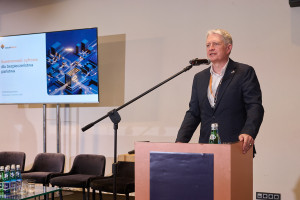
Data presented by WorldACD during the TIACA Executive Summit 2026 in Warsaw showed that Poland’s air cargo tonnage grew significantly compared to other European nations, even as the global market was disrupted by the crisis in the Middle East. The Polish market, however, accounts for only about 1.4% of total EU air cargo.
Ken de Witt Hamer, president of WorldACD Market Data, highlighted that while countries in the Gulf region saw a collapse in traffic, Poland and its Central European neighbours benefited from a shift in trade routes and rising demand for fast deliveries from Asia.
Chinese e-commerce drives the boom
The simplest explanation was given by Michał Grochowski, head of LOT Cargo: “The answer is very simple: e-commerce. That’s all. E-commerce is the main engine of our market’s growth.” According to WorldACD, global e-commerce exports from China rose 7% year-on-year in early 2026, while in Europe the increase reached 30%.
Poland, Hungary and the Czech Republic are leading this growth in Central and Eastern Europe. However, Hungary’s Budapest airport remains far ahead, handling 426,519 tonnes of freight in 2025 – a 42.3% increase. József Kossuth, cargo director at Budapest Airport, attributed the success to the lack of a national carrier, allowing the airport to open up freely to foreign operators.
LOT Cargo and the need for a freighter
In Poland, LOT Cargo controls about 20% of the market, but its business model relies almost entirely on belly cargo in passenger aircraft. During the summit, Grochowski was asked publicly whether the company would finally acquire a dedicated freighter. He admitted that the decision depends on profitability and market risk: “When you direct large volumes of cargo to one place, you need to be sure there is a market for it. If not, you have a big problem.”
Mariusz Kuczek, cargo director at Katowice Airport, stressed that Central Europe should not merely feed established western hubs like Frankfurt or Amsterdam. “We need to capture more of the value chain through our own cargo hubs, direct connections and regional consolidation,” he said. Poland’s long-term forecasts predict 0.38 million tonnes by 2032 and 1 million tonnes only around 2040 – still less than half of Germany’s current throughput.
Źródło: WNP.PL, Fot. Materiały prasowe