More than half of Polish industrial and technology companies are already conducting or plan to launch research and development work related to dual-use technologies within 12‑24 months. Ninety percent of companies consider dual-use technologies important for their development. Firms from the AI, space, drone and sensor sectors want to benefit from defence procurement.
The data comes from a survey conducted by Ayming, as reported by Rzeczpospolita. Ayming is an international consulting firm headquartered in Paris, founded in 1986, specialising in tax optimisation and R&D grants. The survey covered Polish industrial and technology companies, though the exact number of respondents and the data collection period were not disclosed. Dual-use means technologies that can be used for both civilian and military purposes.
Rzeczpospolita stresses that this is not about ammunition production or creating strictly military products, but about civilian solutions that can be quickly adapted for defence applications. These include cybersecurity, artificial intelligence, advanced sensor technology, autonomous systems and space technology.
Since Russia’s invasion of Ukraine in 2022, Poland has increased defence spending to about 4 percent of GDP. In the 2026 budget, about PLN 160 billion was allocated to the military. Part of these funds goes to Polish companies through equipment and technology orders. Examples include the NAREW air defence programme, under which Polish industry supplies radars and fire control systems, and the WISŁA Patriot system programme, where PGZ and Polish companies are involved in producing ground infrastructure components.
Space and AI as main beneficiaries
In the context of dual-use technology, the space sector is particularly important. This sector in Poland is growing in strength, and with the commercialisation of these innovations, its role in defence is also strengthening. Satellite solutions for monitoring and state security are a prime example.
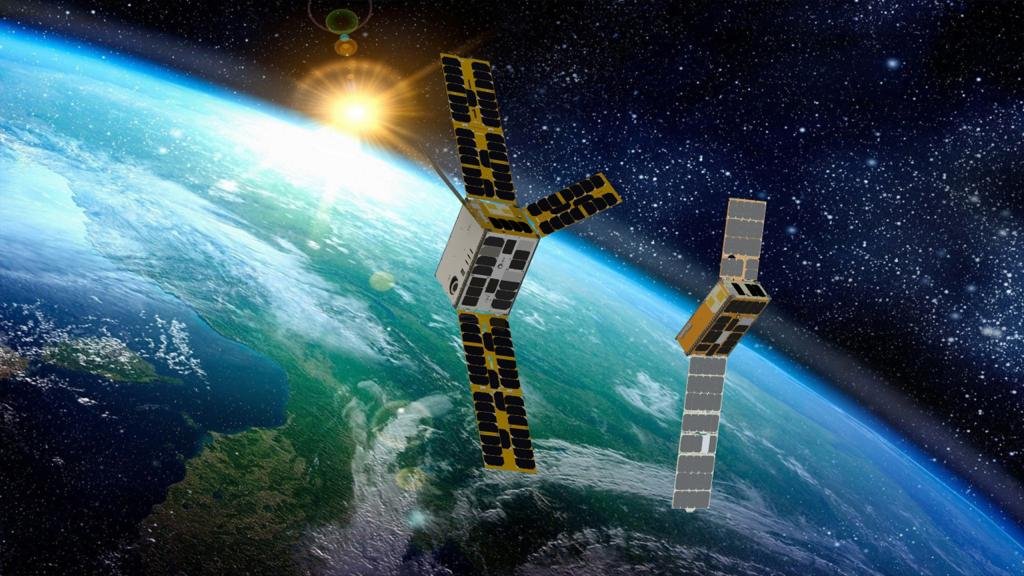
Poland has been a member of the European Space Agency (ESA) since 2012. Polish companies such as Creotech Instruments, the Space Research Centre of the Polish Academy of Sciences (CBK PAN) and Scanway are developing satellite technologies, including microsatellites for Earth observation. In 2025, Creotech delivered the EagleEye satellite for the Polish Space Agency, which can be used both for maritime traffic monitoring (civilian) and military reconnaissance. Artificial intelligence is used in analysing satellite images, object recognition and mission planning.
– Satellite solutions for monitoring and state security should be mentioned here – writes Rzeczpospolita.
Four business models
Ayming asked respondents: „What role will the dual-use area play in your company in the coming years?” Forty-one percent of companies said it would be a permanent, additional business line. Twenty-seven percent said it would involve single projects and market testing. Twenty-four percent said it was one of the company’s key growth directions. Eight percent chose „hard to say.”
This means that 65 percent of companies see dual-use technologies as a permanent or key source of revenue (41% plus 24%), while another 27 percent treat them as an experimental area. Only less than 10 percent have no opinion. This shows that Poland’s technology industry is seriously considering cooperation with the military and defence sector.
Polish examples
One example is WB Electronics from Ożarów Mazowiecki, which produces unmanned aerial vehicles (drones) and communications systems. Its FlyEye drones are used by the Polish military for reconnaissance, but the technology can also be used to monitor fires or natural disasters. Another example is Hardliner (part of WB Group), which produces sensors and anti‑drone systems.
In the space sector, Creotech Instruments from Piaseczno develops satellite platforms based on the CubeSat standard. Its satellites can be used for scientific research (civilian) or reconnaissance (military). In 2025, Creotech signed a contract with the Polish Space Agency to supply two Earth observation satellites.
Artificial intelligence is being developed by companies such as Tooploox (Wrocław) and Nethone (Warsaw), which work on image recognition and data analysis algorithms. These algorithms can be used in urban monitoring systems (civilian) or command and reconnaissance systems (military).
The European Union supports the development of dual-use technologies through programmes such as the European Defence Fund (EDF). Under the EDF, €8 billion has been allocated for 2021‑2027 for joint defence research and development projects. Polish companies can apply for funding for their dual-use projects.
The Polish government has also launched the „National Programme for the Development of Defence Technologies” to support domestic companies in creating innovative solutions for the military. In 2025, about PLN 500 million was allocated from this programme for dual-use projects.