
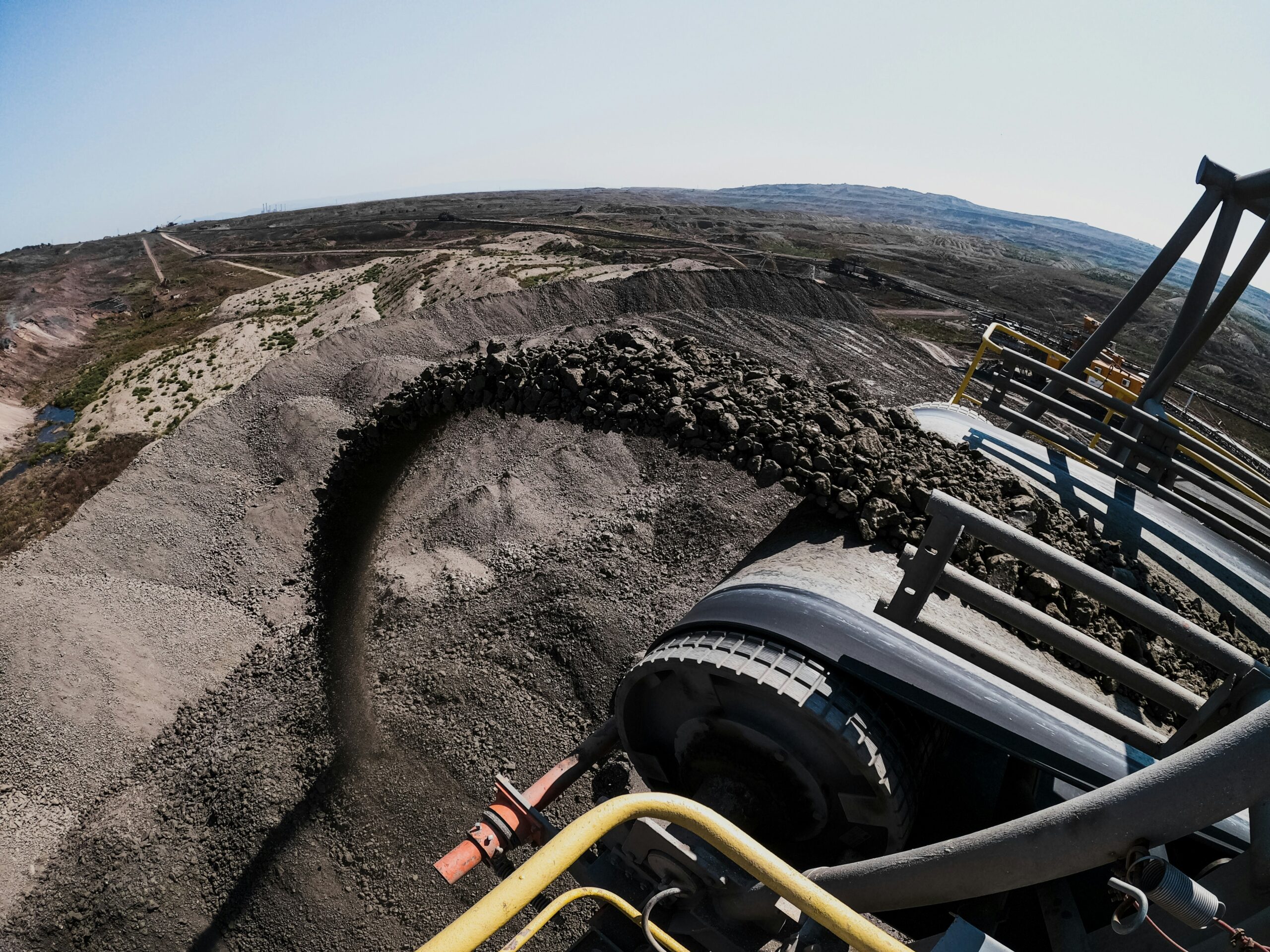
The official timetable states that Poland’s last hard coal mine will close in 2049. However, a growing number of analyses and market forecasts indicate that economics may prove stronger than political declarations. Some experts predict that by 2030 only three or four mines will remain in the country, and the full phase‑out of coal in the power sector could occur around 2035. Rising extraction costs, pressure from the EU Emissions Trading System (ETS), the rapid growth of cheaper renewable energy sources and falling demand for coal from power plants make it increasingly unrealistic to keep an unprofitable sector running until the middle of the century.
For decades, hard coal and lignite were the basis of Poland’s energy security and one of the pillars of the Silesian region’s economy. As recently as 2015, coal’s share in electricity production in Poland was about 80 percent. In just eight years, by 2023, it fell to a record low of 61 percent, a reduction rate twice as fast as in previous periods. This process accelerated even further in subsequent years, leading to unprecedented changes in the structure of the country’s energy mix.
The key document setting the time perspective for Polish mining is the social agreement initialled in April 2021 by government and trade union representatives. This document assumes the gradual phase‑out of thermal coal mines by 2049, with the state budget subsidising the reduction of production capacity in mines throughout this period. The agreement also provides statutory job guarantees for currently employed miners until retirement, or social protection in the form of pre‑retirement leave paid at 80 percent of salary, and one‑off severance payments of PLN 120,000.
The agreement also includes investments in clean coal technologies worth a total of over PLN 16 billion, as well as the establishment of a special Silesia Transformation Fund with an initial capital of PLN 500 million and guarantees for another PLN 1 billion. However, the agreement’s entry into force was conditional on the European Commission’s approval of state aid for mines, including subsidies for capacity reduction and financing of social safety nets.
The year 2049 was chosen as the target date primarily for social, not economic, reasons. It was meant to limit the risk of a sudden shock in Silesia and to spread the transformation over a period long enough to allow gradual retraining of workers and diversification of the region’s economy. Mining remains an important political and social sector, especially in the Silesian Voivodeship, where most mines are concentrated and where tens of thousands of people work in the extractive and mining‑related industries.
Sharp decline in output and changing market realities
Data on actual hard coal production in Poland in recent years, however, paint a picture far removed from political declarations. According to analyses by the Instrat Foundation, hard coal production in Poland fell by as much as 20 percent in three years. The situation of the Polish Mining Group (PGG), the largest mining company in Europe, looks particularly dramatic. In 2024, PGG produced 17.3 million tonnes of coal – a full 4 million tonnes less than the previous year, representing an 18 percent drop, the largest in its history.
The company controls about 45 percent of domestic thermal coal output, operates seven mines and employs about 36,000 people. At the same time, PGG receives the largest subsidies from the state budget, showing how costly it is for public finances to keep an unprofitable sector afloat. In the first half of 2024, hard coal production in some months fell below 3.11 million tonnes, the second‑worst result in history.
These data confirm that even with the formal maintenance of the phase‑out schedule until 2049, the actual rate of production decline is much faster. Coal mining in Poland is in serious retreat, and the reasons for this state of affairs are structural, not cyclical.
Coal demand forecasts
The key argument for speeding up the exit from coal is the forecast for future demand for this fuel in Poland’s power sector. Currently, Poland uses about 40 million tonnes of coal annually for power plants and combined heat and power plants. According to Instrat Institute forecasts, by 2030 this demand may already be only 15 million tonnes.
Even more detailed calculations are contained in the latest, more ambitious version of the National Energy and Climate Plan (NECP), prepared using models developed by the Energy Market Agency and the National Centre for Emissions Balancing and Management. According to these forecasts, coal consumption in power plants reached 24 million tonnes in 2023, with another 13 million tonnes in district heating and CHP plants. The NECP model calculated that in 2030 power plants will burn only 16‑17 million tonnes, and total thermal coal consumption will be just 25 million tonnes. In 2035, power plants are to burn 8 million tonnes, and in 2040 only 3 million tonnes.
For comparison, under the social agreement assumptions, coal production in 2030 was still expected to exceed 30 million tonnes. The gap between actual trends and political declarations is therefore huge. The new forecasts mean that within just a few years, coal demand will fall so drastically that keeping most of the currently operating mines running will become economically unjustified.
Pressure from the EU ETS
The EU Emissions Trading System (EU ETS) is one of the strongest factors accelerating the exit from coal in Poland. Polish power plants, which still largely rely on coal, must buy emission allowances on the exchange, and these costs are then passed on to electricity consumers. In March 2025, allowance prices were in the range of about €65‑72 per tonne, but forecasts indicate they could rise to €98 per tonne in 2025 and even €188 per tonne in 2030.
For coal‑fired power plants, which emit huge amounts of CO₂ per unit of electricity generated, this means a dramatic increase in operating costs. Coal‑fired power generation is thus losing competitiveness not only to renewables but also to gas‑fired plants, which emit much less CO₂ per unit of energy produced. As allowance prices rise, coal plants operate for shorter hours and generate less electricity, further reducing demand for coal from mines.
An additional burden is the planned implementation of ETS2, which is to cover emissions from building heating and transport. Poland, together with nine other EU countries, is demanding a review of the ETS system and an extension of free allowances for industry beyond 2034, arguing that the current system threatens the competitiveness of the European manufacturing sector. Prime Minister Donald Tusk has been seeking changes to ETS1 in Brussels and a postponement of ETS2 implementation until at least 2030. The delay of ETS2 implementation until 2028, already agreed earlier, is presented by the government as a negotiation success, but it is merely a postponement of inevitable changes.
The end of the coal era on the horizon
The most spectacular evidence of the accelerated transformation of Poland’s energy sector is data on the development of renewable energy sources. The year 2025 brought a historic breakthrough – for the first time in Poland’s history, renewables produced more electricity in a month than coal‑fired power plants. In June 2025, RES accounted for 44.1 percent of total electricity production, while hard coal and lignite together produced 43.7 percent of electricity. The second quarter of 2025 was the first in history in which coal’s share in the energy mix fell below 50 percent, reaching 45.2 percent – compared to 56.4 percent in the same period of the previous year.
For the whole of 2025, coal’s share in electricity production was 52.6 percent. This means that for six months of 2025, coal’s share remained below 50 percent, an unprecedented situation. Renewables accounted for 31.5 percent of electricity production, natural gas for 14.1 percent, and other fossil fuels for 1.8 percent. In absolute terms, hard coal still ranks first in the energy mix (57.3 terawatt‑hours), ahead of lignite (33.5 TWh), natural gas (24.3 TWh), onshore wind (23.6 TWh) and photovoltaics (20.5 TWh).
The biggest driver of the transformation is photovoltaics, which at the end of April 2025 reached an installed capacity of 22.3 GW, accounting for 64 percent of all RES capacity. For comparison, in 2019, installed PV capacity was only 1.3 GW – it has thus grown almost 18‑fold in six years. In 2025, 4.8 GW of new PV capacity was added, and this growth rate has been maintained for the fourth consecutive year. The second largest is wind power with a capacity of 10.2 GW (29.3 percent of RES capacity). In June 2025, average wind generation was 2.9 GW, a 93 percent increase compared to June 2024.
At the end of 2025, the share of RES in installed capacity exceeded 50 percent, another historic milestone. The achievable capacity of wind and other renewables increased from about 26 to 37 GW, with average annual national demand of about 30‑35 GW. This means that Poland already has the potential to cover all electricity demand from renewables in favourable weather conditions, although in practice it is necessary to maintain stable, dispatchable coal and gas capacity for periods without wind and sun.
Declining importance of coal in the power sector and the future of mining
The key problem for mines is that coal combustion in power plants is falling not only due to the growth of renewables, but also due to the increasing role of natural gas. In 2024 and 2025, the largest increase in the energy mix was recorded precisely for natural gas (over 2 percentage points). This is related, among other things, to the commissioning of new gas‑fired units in the summer of 2024 and further declines in gas prices on world markets. In 2025, hard coal generated 57.3 TWh of electricity (a drop of 1.8 TWh compared to 2024), and lignite 33.5 TWh (a drop of 2.6 TWh). Coal‑fired generation was replaced by energy from gas and photovoltaic installations.
In practice, this means that coal‑fired power plants are operating for fewer hours and are mainly started during periods of peak demand or when weather conditions are unfavourable for RES generation. The economic models of coal‑fired power plants, which assume baseload operation for thousands of hours a year, are breaking down. The shorter the plant operates, the higher the unit cost of generation, because fixed costs (depreciation, maintenance, servicing) are spread over fewer megawatt‑hours produced. This, in turn, makes even more power plants unprofitable and in need of shutdown.
Forecasts by Forum Energii indicate that after 2025, coal will leave the Polish power system in waves. As successive coal units become unprofitable and are shut down, demand for coal from mines will decrease, forcing further restructuring and closure of mining operations. This process is self‑reinforcing – falling coal demand raises unit extraction costs, making coal even less competitive against other energy sources, which in turn accelerates the decline in demand.
Three to four mines in 2030
Given these trends, more and more experts and analytical institutions are questioning the feasibility of keeping mining going until 2049. The Instrat Foundation, which analyses the energy transformation, directly assesses that if the pace of mine closures is dictated by the market rather than by state budget subsidies, by 2030 only three to four hard coal mines will remain in Poland.
Experts argue that declining demand for hard coal makes a revision of the mine closure dates set out in the social agreement simply necessary. The current provisions, assuming coal extraction still until mid‑century, are unrealistic given current trends. According to Instrat forecasts, coal demand in the power sector will fall from the current about 40 million tonnes to just 15 million tonnes in 2030. With such low demand, there is no economic justification for keeping a dozen or so mines operating, especially the most costly ones with the worst geological conditions.
Michał Hetmański, president and co‑founder of Instrat, commenting on the situation of the Polish Mining Group, points out that thermal hard coal mining must slim down by several mines so that those that remain active can extract coal at a lower unit cost and in line with demand. Therefore, restructuring measures and an update of the old mine closure schedule, which does not foresee major changes until the late 2030s, are necessary.
Similar conclusions flow from analyses prepared for the National Energy and Climate Plan. According to the ambitious climate policy scenario adopted by the government, hard coal consumption in the power sector is to fall by half by 2030, and by 2035 power plants will burn only 8 million tonnes of coal. With such low consumption, production at a level enabling a dozen or so mines to operate is impossible. In practice, this means that the transformation of Polish mining will have to be significantly accelerated, regardless of political declarations and agreements with trade unions.
Transformation of Silesia
The biggest and most painful challenge of an accelerated exit from coal is the transformation of the Silesian Voivodeship, a region that for decades developed around extractive and heavy industry. That is why the transformation concerns not only the energy sector but the entire economic model of the region – the labour market, industrial investment, infrastructure and services.
Under the social agreement, miners employed in mines subject to phase‑out are to receive statutory job guarantees until retirement or social protection in the form of pre‑retirement leave (paid at 80 percent of salary) and one‑off severance payments of PLN 120,000. For the currently employed approximately 36,000 PGG employees and thousands of employees of other mining companies, the transformation will mean the need to change profession, retrain or use social safety nets.
The European Union has allocated billions of euros to the Just Transition Fund, which is to support coal‑exit regions. This fund is financed from EU funds and aims to finance new investments, training and the development of alternative industrial branches in post‑mining areas. The Silesian Voivodeship Transformation Fund has also been established, to which over 60 proposals from companies and local governments concerning the transformation of the region have already been submitted.
Investments are aimed at diversifying economic activity and creating new jobs in sectors such as modern services, information technology, logistics, battery and electromobility component production, as well as aerospace and space industries. As a result, according to the project assumptions, 16 large companies are to diversify their activities, and 1,324 people are to be provided with employment in new sectors. Whether these numbers are sufficient given the scale of the challenges facing the region will become clear in the coming years.
Political positions and possible scenarios
The topic of accelerating the coal exit and changing the social agreement is currently the subject of political discussion. Deputy Energy Minister Szymon Majewski stated in February 2026 that the social agreement with mining could be changed, adding that „no ready‑made scenario exists” for the sector’s transformation. This statement is the first signal from the government that the official mine phase‑out schedule until 2049 may be revised.
At the same time, President Karol Nawrocki called for Poland to leave the ETS system, citing the system’s impact on energy prices and the resulting outflow of industry abroad. Similar ideas are voiced by Przemysław Czarnek, candidate for prime minister of the main opposition party PiS. Confederation circles have also been postulating this for many years. Although politically resonant, these postulates are unrealistic due to EU mechanisms – leaving the ETS would effectively mean leaving the European Union, and such a solution is not in the programme of any major political force.
More realistic are the actions of Donald Tusk’s government, which is seeking changes to the ETS1 rules and a postponement of ETS2 implementation until at least 2030. Ten EU countries, including Poland, are demanding a review of ETS1 and an extension of free allowances for industry beyond 2034, arguing that the current system threatens the competitiveness of the European manufacturing sector. These actions are aimed at mitigating the effects of the transformation, not stopping it.
Orlen, Poland’s largest energy group, has declared its desire to exit coal by 2035. By 2030, Orlen wants to reduce emissions by 25 percent in its refining, extraction and power sectors. This is a declaration from a key energy player indicating that even without changing the official mine phase‑out schedule, the largest coal consumers will gradually reduce their consumption, forcing a supply‑side restructuring.


