
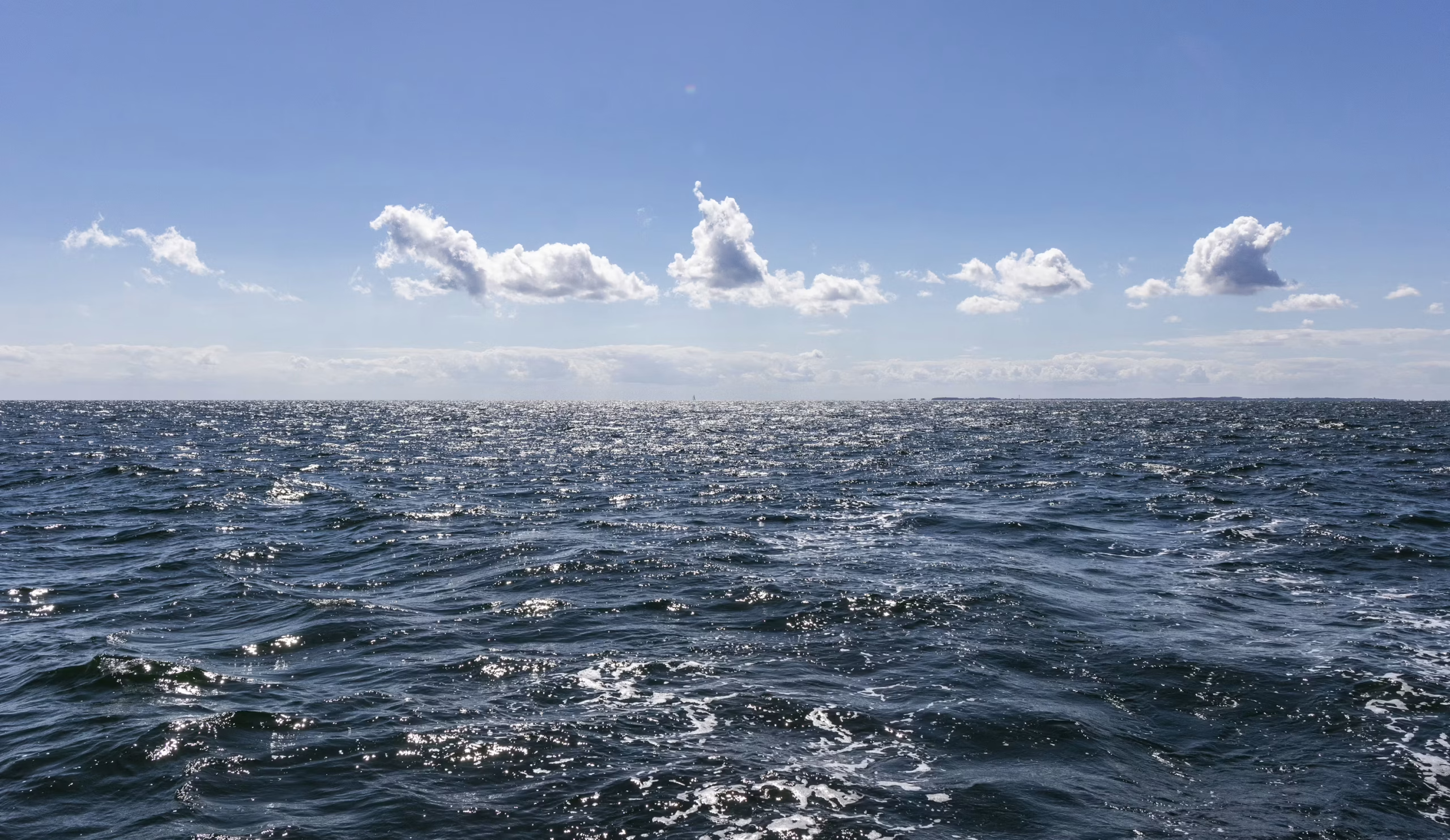
The Baltic Sea has ceased to be a calm, peripheral body of water. Today it is one of the hottest spots on the geopolitical map of Europe, an arena of confrontation between NATO and Russian interests, a laboratory of hybrid warfare and the heart of the Old Continent’s energy transformation.
The military security architecture in the Baltic in 2026 is fundamentally different from what it was just a few years ago. The accession of Finland and Sweden to NATO has made this body of water almost an internal sea of the Alliance, radically changing the balance of power in the region. Poland, which for decades was NATO’s eastern flank, today finds itself at the centre of a new security architecture, where communication, energy and military routes of key importance to the entire Alliance intersect. The new security architecture in the Baltic is based, among other things, on the Polish-Swedish alliance, which includes building joint capabilities, joint procurement, cooperation and training.
Poland and Sweden are cooperating in the area of Baltic security, which is a response to the growing threats from the Russian Federation. Deputy Prime Minister Władysław Kosiniak-Kamysz emphasised that the Baltic Sea is not only a transport and trade route, but is also one of NATO’s most sensitive areas in terms of threats. This is a clear signal that responsibility for the security of the waters is shared among the most important regional players.
Despite these advances, Poland does not have a single, coherent strategic document for the Baltic that would integrate all aspects of security. The Polish Foreign Policy Strategy for 2026-2030, adopted in March 2026, points to Russia’s war against Ukraine as the most serious challenge and emphasises the need to strengthen the eastern flank of the EU and NATO, but it does not constitute a comprehensive Baltic strategy. Meanwhile, other countries in the region have such documents. Germany in 2026 presented its first military strategy, in which it announced the transformation of the Bundeswehr into the strongest conventional army in Europe, and Sweden has been developing the concept of total defence for years.
Poland, despite being one of the key players in the region, still does not have a separate, comprehensive strategy for the Baltic, which puts it in a worse position than its regional partners, who have clearly defined objectives and tools for achieving them. This lack of a strategic document is particularly evident in crisis situations, when Poland must make decisions based on ad hoc analyses rather than a long-term vision of its place in the region.
Energy security as the heart of transformation and a source of vulnerability
Poland’s energy security is to a huge extent dependent on the Baltic Sea. As Deputy Minister of Energy Konrad Wojnarowski stressed, critical infrastructure in the Baltic is extremely vulnerable to modern threats, and even a short interruption in energy supplies from the sea can paralyse hospitals, transport, water supply systems and industry. The Baltic is today the heart of Polish energy – gas and oil flow through it, wind farms are being built, and in the future key components for the construction of a nuclear power plant will be delivered by sea.
Paralysis of the Baltic could therefore mean paralysis of Polish energy, making the protection of this infrastructure one of the state’s most important tasks. Poland is successively developing gas import infrastructure – the LNG terminal in Świnoujście made it possible to make Poland independent of Russian gas, and the planned floating FSRU unit in the Gulf of Gdańsk is to strengthen Poland’s role as a regional gas hub. At the same time, offshore wind energy is being developed in the Baltic, which is to be one of the country’s main sources of energy. In the Polish part of the Baltic, we are already nearing the completion of work related to the launch of the first offshore wind turbines, which makes the Baltic not only a source of energy but also a strategic area whose protection requires coordinated planning at national and international level.
However, the lack of a coherent strategy for the Baltic means that activities in the area of energy security are carried out in a fragmentary manner, by various ministries and institutions. Deputy Minister Wojnarowski listed the most important elements of Poland’s maritime bloodstream: offshore wind energy, the LNG terminal, the FSRU, the Naftoport in Gdańsk and the fibre-optic network. Each of these elements is protected separately, but there is no document that would integrate their protection strategy into a single, coherent whole.
Hybrid threats such as attacks on submarine cables or jamming of satellite navigation signals require an integrated approach. Poland needs a strategy that will define how the individual elements of critical infrastructure in the Baltic are to be protected, what the priorities are and what mechanisms of cooperation between services are to be activated in crisis situations. Without such a document, the protection of energy infrastructure in the Baltic will remain reactive rather than proactive, which in the face of growing hybrid threats is an unsustainable position.
A key challenge is also ensuring the continuity of energy supplies in crisis situations. In the event of an attack on underwater energy infrastructure, Poland must have emergency plans in place that will allow for the rapid restoration of supplies or their replacement from other sources. Currently, such plans are developed on an ad hoc basis, which creates the risk that in a real crisis the state’s response will be too slow and uncoordinated.
A strategy for the Baltic should therefore contain emergency scenarios for all key elements of energy infrastructure, specifying which of them are priorities and what actions should be taken in the event of their damage. The strategy should also specify how Poland will cooperate with regional partners in ensuring the continuity of energy supplies, for example through the use of energy interconnectors with the Nordic and Baltic states, which can constitute alternative energy transmission routes in crisis situations.
The presidency of the CBSS as an opportunity to shape the regional agenda
Poland holds the presidency of the Council of the Baltic Sea States until the end of June 2026, which gives it a unique opportunity to shape the regional agenda. In May 2026, the foreign ministers of the Council of the Baltic Sea States signed the Sopot Declaration in Sopot, concerning the security of the region, the protection of critical infrastructure, countering Russian hybrid activities and further support for Ukraine. The head of Polish diplomacy, Radosław Sikorski, stressed that the countries of the region must be prepared for hybrid actions aimed at Europe’s security.
The Sopot Declaration is an important step towards strengthening regional cooperation, but it does not replace a national strategy. Poland, as the leader of the CBSS presidency, has the chance to develop cooperation mechanisms that will continue after the end of its term, but without its own, coherent vision of its place in the region, the presidency may remain merely an episode rather than the beginning of lasting change in the region’s security architecture.
At the same time, as a report by the Centre for Eastern Studies prepared for the Ministry of Foreign Affairs indicates, several dozen organisations are responsible for cooperation in the region today, which leads to a dispersion of responsibility and makes effective action difficult. Poland has a plan to improve this coordination, but the list of recommendations in this matter was prepared on the order of the Ministry of Foreign Affairs. The CBSS presidency is a test for Polish diplomacy – whether Poland can use this period to build lasting cooperation mechanisms that will survive after the end of its chairmanship.
The answer to this question depends to a large extent on whether Poland has its own, coherent vision of its place in the region. Without an internally coherent strategy, the presidency may remain merely an episode rather than the beginning of lasting change in the region’s security architecture. Using the presidency to initiate work on a Polish strategy for the Baltic could be one of the most important achievements of this period, creating a foundation for Poland’s long-term engagement in the region.
The CBSS presidency is also an opportunity to promote Poland’s economic interests in the Baltic. Poland can use this period to strengthen cooperation in the area of offshore wind energy, maritime transport and fisheries, as well as to promote Polish ports as logistics hubs for the entire region. However, this requires a coherent strategy that will define what Poland’s priorities are in these areas and how it intends to implement them.
The three coastal voivodeships are proposing specific actions to support the Polish presidency, but there is no national document that would give direction to these actions and integrate them with the broader objectives of foreign and security policy. The European Union’s strategy for the Baltic Sea region, based on three thematic pillars – protecting the sea, increasing regional integration and increasing prosperity – provides a framework, but does not replace a national strategy that would take into account specific Polish interests and priorities.
Hybrid challenges require new tools
The Baltic Sea has become one of the main areas of Russian hybrid operations. The Polish Institute of International Affairs regularly publishes analyses documenting diversionary and sabotage operations in the Baltic. These activities include jamming of satellite navigation signals, attacks on underwater infrastructure, sabotage and the use of the so-called shadow fleet – vessels operating outside international standards.
Russia uses a mix of grey zone tactics, testing NATO unity and the ability of the region’s states to respond in a coordinated manner. These operations are carried out in a way that makes it difficult to assign responsibility and prevents adequate retaliatory action, making them particularly dangerous for the stability of the region. The shadow fleet, consisting of vessels of unclear affiliation and purpose, is used to attack energy cables and gas pipelines, which poses a serious threat to the energy security of the entire region. According to data presented during the CBSS meeting, more than 630 vessels associated with this practice have already been covered by sanctions.
In response to these threats, in January 2026 the president signed the so-called Safe Baltic Act, which enables the Polish military to protect critical infrastructure (such as cables and pipelines) also outside territorial waters. This is an important step towards increasing defence capabilities, but it is not yet a comprehensive strategy. On 29 May 2026, the Sejm also passed an amendment to the Crisis Management Act and some other laws, which further strengthens the legal framework for responding to threats. Poland also cooperates with regional partners in monitoring the Baltic and exchanging information on suspicious vessels. These activities, although important, are carried out in an ad hoc manner and do not create a coherent system of defence against hybrid threats.
The lack of a coherent strategy for the Baltic means that Poland reacts to hybrid threats in a reactive rather than proactive manner. A document is needed that will define what the main hybrid threats in the region are, what the mechanisms for their detection and counteraction are, and how Poland will cooperate with regional partners in this regard.
The strategy should also define what the limits of tolerance for hybrid actions are and what retaliatory steps are envisaged in the event of escalation. Without such a strategy, Poland will remain on the defensive, reacting to successive provocations rather than shaping the rules of the game in the region. In particular, the strategy should include cooperation with the Baltic and Nordic states in exchanging information about suspicious vessels and coordinating patrol activities, as hybrid threats are cross-border in nature and require a coordinated response at regional level.
The Baltic as a development opportunity waiting for a plan
The Baltic Sea is not only a security challenge but also a huge economic potential. Poland’s maritime policy is conditioned and defined by the European Union’s Integrated Maritime Policy, which combines sectoral policies in order to make the most of the potential arising from the coastal location of member states.
Better management of maritime and coastal areas, including the resources of the Baltic Sea, will contribute to improving the prosperity of residents of coastal regions. Poland has a chance to become one of the leaders of the maritime economy in Europe, but this requires a coherent strategy that integrates the development of ports, the shipbuilding industry, offshore wind energy, tourism and fisheries. The economic potential of the Baltic is enormous, but its utilisation requires coordinated planning that would take into account both development objectives and the protection of the marine environment.
The three coastal voivodeships are proposing specific actions to support the Polish presidency of the Council of the Baltic Sea States, but there is no national document that would give direction to these actions. The European Union’s strategy for the Baltic Sea region, based on three thematic pillars – protecting the sea, increasing regional integration and increasing prosperity – provides a framework, but does not replace a national strategy.
Poland needs a strategy that will define how it wants to use its maritime potential for economic development, what the investment priorities are and how maritime policy is to be coordinated with security and energy policy. Without such a document, actions taken in the area of the maritime economy will remain fragmentary and uncoordinated, and Poland will not fully utilise its coastal location, which in the context of the energy transition and the growing importance of maritime transport is becoming one of the country’s key competitive advantages.
The development of seaports is one of the key elements of the economic strategy for the Baltic. The ports of Gdańsk, Gdynia and Szczecin have the potential to become logistics hubs for the whole of Central and Eastern Europe, but this requires investment in infrastructure that will allow for the handling of larger vessels and increased transhipment capacity.
The strategy should define which investments are priorities and how they are to be financed, as well as what the expected effects of these investments are in terms of employment growth and added value in the coastal regions. Equally important is the development of the shipbuilding industry, which after years of crisis is experiencing a renaissance thanks to orders for offshore wind units and for the Polish Navy, but needs a long-term development vision that would go beyond individual contracts.
Elements of a needed strategy for the Baltic
Poland needs a strategy for the Baltic that will define Poland’s strategic objectives in the region over the next 10-15 years in the areas of security, energy, economy and regional cooperation. The strategy should identify the main threats to Polish interests in the region, including military, hybrid, cyber and energy threats, and define what instruments – diplomatic, military, economic, legal – and what resources – financial, human, infrastructural – are needed to counter them.
The document should define the mechanisms for inter-ministerial cooperation between the Ministry of Foreign Affairs, the Ministry of Defence, the Ministry of Energy, the Ministry of Infrastructure and other ministries responsible for Baltic policy, as well as defining with which regional partners Poland wants to cooperate and in which areas, including the Baltic states, the Nordic countries, Germany, and within NATO and the European Union.
The strategy should be an operational document, not just a declaration of intent. It should contain specific milestones and measurable progress indicators that will allow for the assessment of the effectiveness of actions and possible adjustment of directions. The schedule for implementing individual objectives should be realistic and take into account available resources and changing geopolitical conditions. In particular, the strategy should define investment priorities in the area of energy security, port development and maritime infrastructure, as well as in the area of cybersecurity and protection against hybrid threats. The strategy should also be linked to the state budget in order to ensure funds for its implementation, as well as to NATO and EU defence planning processes to ensure coherence between Polish actions and those of its allies.
The strategy for the Baltic should also take into account aspects of marine environmental protection and sustainable development. The Baltic Sea is one of the most polluted bodies of water in the world, and its protection requires coordinated action at the regional level. The strategy should define how Poland intends to combine economic development goals with environmental protection, for example by promoting sustainable fisheries, protecting marine areas of particular natural value and reducing pollution from maritime transport and industrial activity. The integration of maritime policy with environmental policy is essential for the long-term sustainability of Poland’s activities in the Baltic and for preserving its resources for future generations.
Fot. Unsplash




