
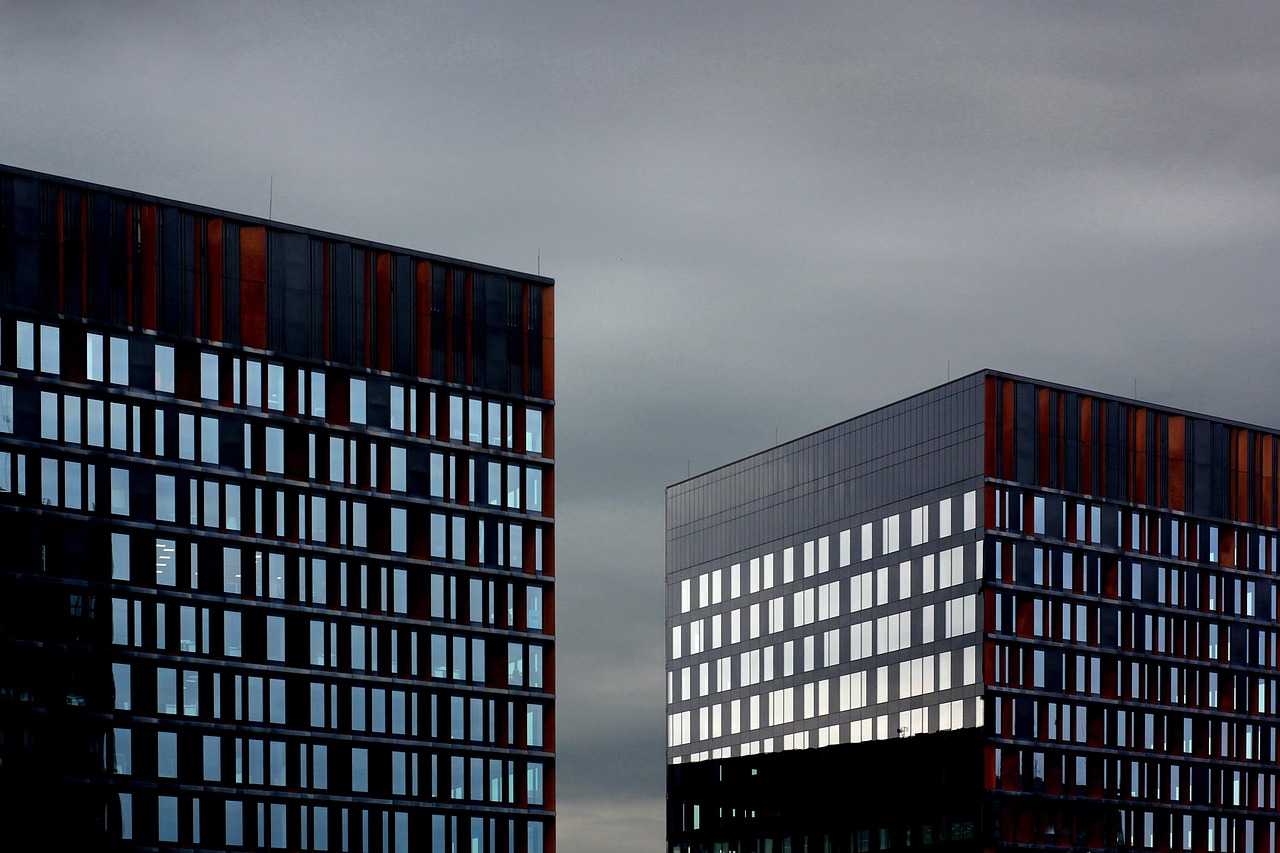
In the centres of European cities, approximately 9.5 percent of office space currently stands empty, and in many locations that figure reaches 11 percent or more. At the same time, there is a shortage of millions of homes, and property prices are rising at a pace unaffordable for the average citizen. The pandemic, which permanently changed the model of work, made offices no longer essential, while housing became a scarce commodity. In response to this paradox, a growing number of investors, developers, and local authorities are beginning to see empty office buildings as an opportunity to solve the housing crisis.
Since the pandemic, the office market in Europe has undergone a fundamental shift. Hybrid working, which has become permanently embedded in many industries, has reduced the demand for traditional office space, leading companies to downsize their leased space or abandon long term rental agreements in favour of more flexible solutions. In the first quarter of 2026, leasing activity across 18 major European markets fell by 3 percent compared to the five year average, with total leased space in the first half of 2026 reaching 3.64 million square metres.
This represents a year on year decline of 9 percent, showing that the downward trend is not a temporary fluctuation but a lasting structural change. Simultaneously, office supply continues to grow as new projects initiated before the pandemic are gradually completed, creating a growing imbalance between supply and demand. The average vacancy rate in Europe reached 9.5 percent by the end of March 2026, a rise of 30 basis points compared to the previous year. However, this figure does not fully capture the problem, as it masks significant differences between locations.
In central business districts, home to the most modern Grade A buildings, the vacancy rate is just 5.6 percent, whereas on the peripheries, where older, less attractive office stock is located, the share of empty space already reaches 11.2 percent. It is precisely these older buildings, often dating from the 1990s and early 2000s, that are most suitable for conversion. They are less competitive in the office rental market, but their construction often allows for relatively straightforward adaptation to residential use, especially when they are conveniently located in city centres with good transport links and essential infrastructure.
A balance that does not add up
At the same time, the housing crisis in Europe has reached an unprecedented scale. The shortage of affordable housing has become one of the main social problems across the European Union, with rising property and rental prices making it increasingly difficult for many people to afford decent living conditions, particularly in large urban agglomerations where demand has outstripped supply for years. The conversion of empty office buildings into housing is seen as a solution that could bring relief on both fronts. It reduces vacancies and increases housing supply while revitalising city centres that, after working hours, turn into dead zones devoid of residents and social life.
In many European cities, especially in business districts, streets empty out after the workday ends, shops and services close, creating an unwelcoming atmosphere and lowering quality of life, while vast spatial potential that could serve residents is wasted. Converting office buildings into housing not only addresses the shortage of residential units but also restores urban life to districts dominated for decades by offices and institutions. This contributes to more sustainable and liveable cities where people can live, work, and spend leisure time in the same area.
Europe’s largest business district is turning into a neighbourhood
One of the most spectacular examples of office to residential conversion is Paris’s La Défense district, Europe’s largest office complex. As reported by the BBC, within this cluster of glass towers that for decades symbolised the power of French business, a process is underway to transform empty offices into homes. Hybrid working, which has become permanent in French companies, has left many towers in La Défense largely vacant. French authorities have decided to capitalise on this potential by converting office towers into housing to alleviate the severe housing crisis in the Paris metropolitan area, where property prices are among the highest in Europe and access to housing has become one of the most serious social problems.
The process is not straightforward. Converting glass office towers to residential use requires extensive renovation of building services, adaptation of ventilation and air conditioning systems, and reconfiguration of interior layouts originally designed for hundreds of workers, not families or single occupants. Despite these challenges, the first projects in La Défense are already underway, and Parisian authorities see them as an opportunity to revive a district that, after working hours, turned into a lifeless space. This problem has plagued this part of the city for years.
The BBC compares these efforts with similar initiatives in London and Washington, asking whether office to residential conversion can help solve housing shortages and revive declining business districts. The answer appears to be positive, as in each of these cities, early successes and growing interest in this model of urban space transformation are emerging. Paris is not an isolated case. In France, as in other countries, awareness is growing that empty office buildings are a wasted resource that can be used to combat the housing crisis.
A report prepared by the Buildings Performance Institute Europe for the European Commission indicates that conversions are not only feasible but can achieve high standards of quality and energy efficiency, delivering social benefits by integrating new housing in well connected urban areas. The French government is also considering introducing tax incentives and administrative simplifications to accelerate the conversion process and encourage developers to undertake such projects, which, though demanding, can bring significant economic and social benefits.
Germany backs conversions
Germany, facing one of the most severe housing crises in Europe, has decided to support office to residential conversions with concrete funding. On 1 July 2026, the federal subsidy programme „Gewerbe zu Wohnen”, which means Commercial to Residential, was launched by the Federal Ministry for Housing and the KfW bank.
It offers grants of up to 30,000 euros for each newly created residential unit in a building previously used for commercial purposes. The total budget for the programme in 2026 is 300 million euros. To qualify for the subsidy, renovation works must improve the building’s energy efficiency to the Effizienzhaus 85 Erneuerbare Energien standard, which is an energy efficient home powered 85 percent by renewable energy. The aim is not only to increase housing supply but also to improve quality and reduce emissions associated with building operation.
For historic buildings, less stringent requirements apply, as their specific construction often makes it impossible to meet the highest energy standards without compromising architectural character. The programme thus accounts for the diversity of the building stock and does not discriminate against historically valuable properties.
The programme is aimed at a wide range of beneficiaries, including private individuals, housing associations, companies, and municipalities. The subsidy covers 30 percent of eligible costs, up to 30,000 euros per unit, based on a calculation basis of 100,000 euros per unit. This represents significant support for investors, who often face high adaptation costs when converting office buildings to residential use. Importantly, costs related to energy efficiency improvements can be co financed through other programmes, such as the Federal Funding for Efficient Buildings, meaning total support may be substantially higher and cover a larger share of investment outlays.
The new programme has attracted considerable interest, as German cities like Frankfurt, Berlin, and Munich are struggling with massive housing shortages while also recording high vacancy rates in older office buildings. This creates ideal conditions for conversion. As Melanie Kehr from KfW stated, there is a clear paradox in the centres of German cities. On one hand, there are empty offices and vacant retail spaces. On the other, there is enormous demand for housing. The new programme aims to actively promote conversion, create additional living space, and support climate conscious urban development that reduces emissions and prevents urban sprawl into suburban areas.
Poland riding the wave of change
The trend of office to residential conversion has not bypassed Poland. In Warsaw, the largest office market in Central and Eastern Europe, the vacancy rate at the end of the second quarter of 2026 stood at 8.5 percent, with the city centre significantly lower at around 4.8 percent, while outside the centre it reached 12.2 percent. This means that over 500,000 square metres of office space in the capital lie vacant.
The buildings most suitable for conversion are older office blocks from the 1990s and early 2000s, which no longer meet modern standards of energy efficiency and workplace comfort. Upgrading them for office use would be costly and unprofitable given declining demand for such space. In Poland, more and more developers and investors see conversions as an opportunity to profitably utilise properties.
As reported by Business Insider, changes in work models, falling demand for office space, and rising housing needs mean that office building owners are increasingly considering transforming their properties into hotels, aparthotels, and apartments. This allows them to exploit existing potential without incurring the huge costs of new construction.
According to experts, converting an older office building to residential use can be up to half as fast as building a new development from scratch. Many structural elements, such as the building frame, floors, or staircases, can be reused without major alterations, significantly shortening the project timeline and reducing costs. An example is Warsaw’s Lipowy Office Park, where two office buildings were converted into student housing. This demonstrates that conversions can effectively adapt space to changing market needs and create attractive offers for different target groups.
Another example is the planned conversion of Atrium 1, also known as Atrium One, one of the characteristic office buildings in central Warsaw, which is to be transformed into apartments. This project would be one of the largest of its kind in Poland and could serve as a catalyst for similar investments nationwide. According to experts from Colliers, the first step in assessing conversion feasibility is to check the local zoning plan. If the plan precisely defines permitted functions and prevents change, the only solution may be an Integrated Investment Plan, which allows for a flexible approach to land use and adaptation to current market needs.
Challenges of conversion
Despite growing interest, office to residential conversion is neither a simple nor straightforward process. Transforming a building designed for hundreds of workers into functional residential units involves a host of technical, legal, and financial challenges that can deter less experienced investors. Above all, not every architectural form is suitable for conversion. Deep, windowless interiors typical of open plan offices, central lift cores, and lack of adequate natural light are just some of the barriers that can prevent an office building from becoming an attractive place to live. Homes require access to daylight, ventilation, and appropriate spatial layouts that promote everyday comfort.
Building regulations also pose a significant challenge, as they are often designed with new buildings in mind, not adaptations of existing structures. Investors frequently have to negotiate exemptions or derogations from standard requirements with authorities, prolonging the process and increasing costs. In some cases, this can even prevent projects from going ahead on formal grounds. The BPIE report for the European Commission indicates that the success of conversions depends on streamlined permitting, favourable purchase prices, tailored financing, and collaboration between the public and private sectors. Only an integrated approach can overcome barriers and make conversions a common tool in housing policy.
Despite these obstacles, conversions offer many benefits. They are more environmentally sustainable than new construction, avoiding emissions associated with new builds and preventing urban sprawl into suburban areas. This protects valuable green spaces and limits urbanisation. Additionally, converting empty office buildings into housing can revitalise city centres where office vacancies had begun to create dead zones after working hours. New residents attract shops, services, and social activity, contributing to more diverse and friendly neighbourhoods. According to experts, office to residential conversion is not a silver bullet that will solve all problems. However, it is an effective strategy for increasing housing availability, reducing environmental impact, and revitalising districts. Combined with other actions, such as building new homes or regulating the rental market, it can deliver significant results over the next few years.
The future of conversions in Europe
In the coming years, office to residential conversion is likely to gain further significance, driven by three forces. These are persistently high vacancy rates in older office buildings, the escalating housing crisis, and growing pressure for sustainable urban development aimed at reducing emissions and using existing space more efficiently. More and more local authorities see conversions as an opportunity to revitalise centres and increase housing supply without having to develop new land. This is particularly important in densely populated regions where vacant plots for new projects are scarce. The success of programmes such as Germany’s „Gewerbe zu Wohnen” and the growing number of completed projects in Paris, London, and Warsaw show that conversions are not only possible but can be effective tools of urban policy, combining social, environmental, and economic goals.
Photo: Pixabay




