
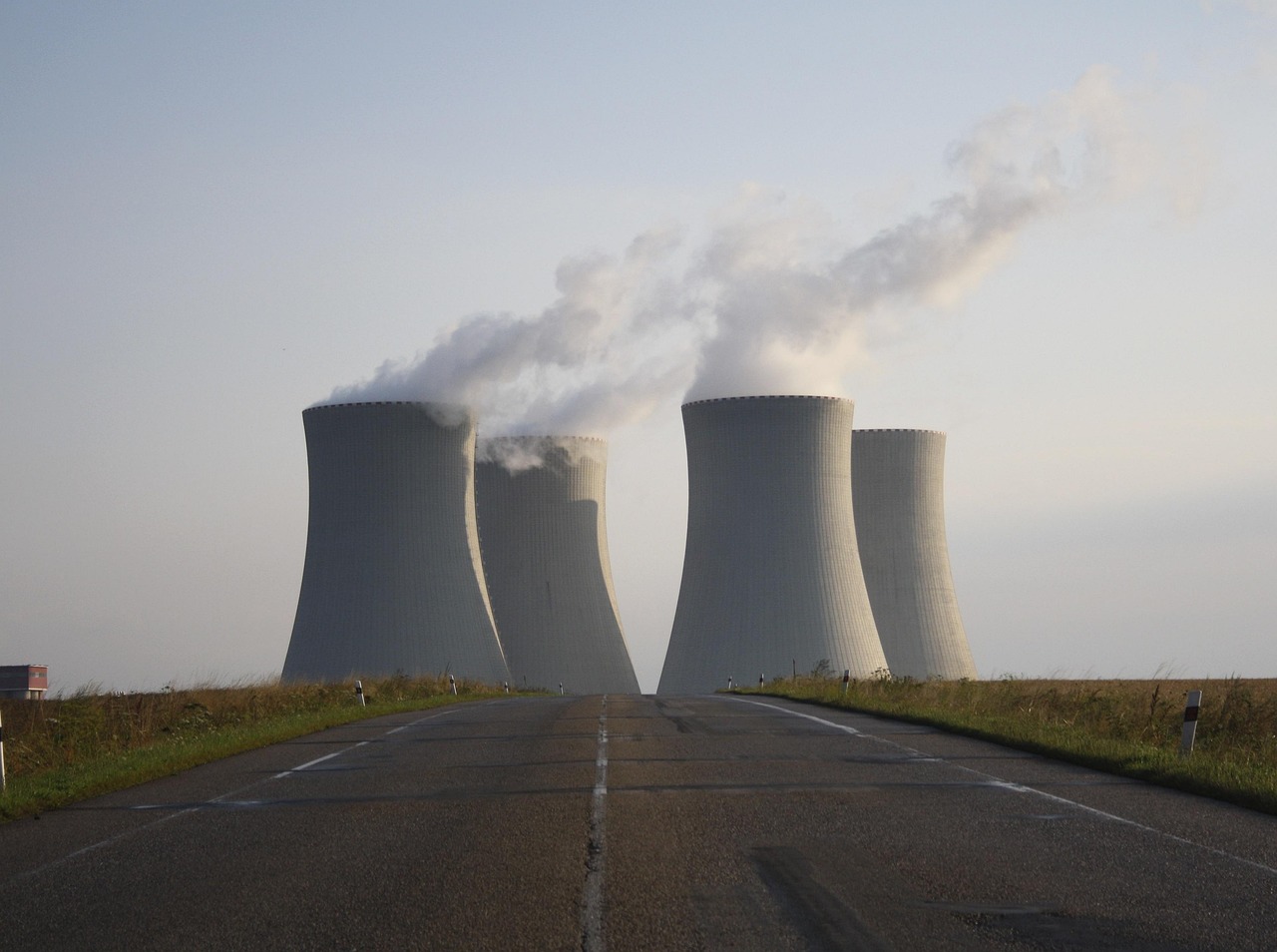
In 1990, nuclear power provided one-third of Europe’s electricity. Today, its share has fallen to 15 percent, and Europe pays three times more for gas than Americans and the Chinese. After decades of withdrawal from nuclear energy, the Nuclear Alliance now brings together 16 countries, and for the first time, the EU budget includes funds for nuclear power.
For decades, nuclear energy was a politically inconvenient topic in Europe, pushed to the margins of public debate by growing concerns over safety and costs. The Fukushima disaster in 2011 seemed to seal the fate of nuclear power on the Old Continent, and Germany announced a radical decision to completely abandon this technology. However, 2026 brings a completely new reality. In the face of the energy crisis triggered by the war in Ukraine, instability in raw material supplies from the Middle East and rising gas prices, politicians and experts are rediscovering the benefits of emission-free and stable energy from nuclear power. In 1990, nuclear energy accounted for about one-third of electricity supply in Europe, and today its share has fallen to an average of 15 percent. According to European Commission President Ursula von der Leyen, this has made the continent completely dependent on costly and unstable imports of fossil fuels, placing it at a disadvantage compared to other regions of the world. More than half of the energy used in Europe comes from imports, mainly oil and natural gas, meaning the continent lacks resilience to unexpected supply constraints. In this new reality, nuclear energy is returning as a potential tool for ensuring energy independence.
Consumers and businesses in Europe pay energy prices three to four times higher than their counterparts in the United States or China, making European industry increasingly less competitive internationally. In response to these challenges, the European Union budget for 2028-2034 includes, for the first time in history, a proposal to finance nuclear energy from EU funds, representing an unprecedented signal of Brussels’ changing approach to this technology.
At the beginning of 2026, there were 163 nuclear reactors in operation in Europe with a net installed electrical capacity of 148,789 MWe, and many countries have announced plans to build new units or extend the lifespan of existing ones. The Nuclear Alliance, currently comprising 16 European Union member states, including Poland, France, Sweden, Finland, the Netherlands and Italy, meets regularly to coordinate actions in support of and development of nuclear energy on the Old Continent. Its members are calling on the European Commission to recognise nuclear energy as a key element of the energy transition and to ensure its equal treatment with other emission-free energy sources.
The Nuclear Alliance as a new political force in the European Union
The Nuclear Alliance, which initially brought together eleven countries, has grown to sixteen members over the past two years, reflecting growing interest in this technology among European decision-makers. The signatories have been joined by Italy, which after years of withdrawing from nuclear power has announced a return to this technology, as well as Slovenia and Croatia, which are considering building a joint nuclear power plant at the Krško location.
The Alliance has become a platform for exchanging experience, coordinating positions and jointly pressing European institutions to ensure appropriate support for nuclear projects. Its members meet regularly at ministerial level, and their demands are finding increasing understanding in Brussels, especially in the context of the energy crisis and growing awareness that without nuclear power, achieving climate goals will be much more difficult.
The Alliance’s meetings focus on three main areas: harmonising regulatory procedures for new reactors, facilitating access to EU funding and supporting research into new technologies such as small modular reactors. Alliance representatives emphasise that nuclear energy is not only emission-free but also stable and independent of weather conditions, making it an essential complement to variable renewable sources such as wind and solar. Unlike coal or gas-fired power plants, nuclear reactors emit trace amounts of carbon dioxide during operation, and their fuel, although requiring specialist processing, is relatively cheap and available from many sources around the world, reducing the risk of dependence on a single supplier.
Members of the Nuclear Alliance emphasise in their joint declarations that the development of nuclear energy is not only a matter of energy security but also economic competitiveness, as it provides stable and predictable energy prices for industry for many years. In 2026, the Alliance began work on a joint strategy for developing competencies and workforce for the nuclear sector, aimed at counteracting the shortages of qualified workers that are one of the greatest challenges for new projects. The member states of the Alliance have also committed to exchanging experience in radioactive waste management and decommissioning of old reactors, with the aim of developing uniform safety standards across the Union.
Challenges facing the nuclear renaissance
Despite optimistic declarations, the path to a nuclear renaissance in Europe is bumpy and strewn with many obstacles that could delay or even derail the most ambitious plans. The greatest challenge remains investment costs, which in the case of new third-generation reactors such as the French EPR reach astronomical sums. The construction of the first EPR block at Flamanville in France, which began in 2007, was only completed in 2024, and its cost increased from the initially assumed 3.3 billion euros to 23.7 billion euros, representing more than a sevenfold budget overrun.
Similar problems occurred with the projects at Olkiluoto in Finland and Hinkley Point in the United Kingdom, where delays reached several years and costs repeatedly exceeded original estimates. These experiences discourage private investors from committing capital to new nuclear projects, forcing governments to provide guarantees and preferential loans, which burdens state budgets and raises controversy among free market advocates. Experts point out that the key to reducing costs is standardisation of designs and the construction of many identical blocks within a single programme, as China has done, building dozens of new reactors over the past two decades based on a standardised technology.
In Europe, however, there is a lack of political will for such an integrated approach, and each country implements its projects in isolation, preventing economies of scale. An additional challenge is lengthy administrative and regulatory procedures, which in some countries can take up to a dozen years before the first concrete is poured.
An example is the United Kingdom, where the licensing process for a new project takes an average of 10 to 15 years, significantly extending the investment horizon and increasing the risk of changing market conditions. Another problem is the shortage of qualified personnel, as decades of neglect in the nuclear sector have led many universities to abandon nuclear engineering courses, and experienced engineers are retiring.
New technologies. Small modular reactors as Europe’s hope
In response to the challenges associated with building large-scale reactors, increasing attention is being drawn to small modular reactors (SMRs), which are intended to be cheaper, safer and faster to build than their traditional counterparts. SMRs are reactors with a capacity of up to 300 MWe, which are entirely manufactured in factories and transported to the construction site as ready-made modules, significantly reducing construction time and reducing the risk of cost overruns.
Unlike traditional reactors, which are built on site and require enormous amounts of labour and materials, SMRs can be assembled more quickly, and their modular design allows for easy scaling of power depending on needs. In the United States, the Nuclear Regulatory Commission has already issued permits for the construction of the first commercial SMR reactors, and in Europe several projects are at various stages of advancement.
In Poland, Orlen Synthos Green Energy, in cooperation with GE Hitachi, is conducting advanced work on the implementation of BWRX-300 reactors, and in Romania, the American company NuScale Power plans to build the first SMR-based power plant in Europe. However, sceptics point out that SMR technology has not yet been proven in commercial operation, and its actual costs may turn out to be higher than those declared by manufacturers.
Safety regulations in Europe are more stringent than in the United States, which could delay the certification process for new designs. Despite these concerns, interest in SMRs is growing, especially among countries with smaller energy systems that do not need large-scale power plants but want to reduce their dependence on fossil fuels. The European Commission has included SMRs in its raw materials and energy strategy, allocating funds for research into this technology under the Horizon Europe programme, as well as under the new Energy Security Fund.
Representatives of the Nuclear Alliance emphasise that SMRs could be particularly useful in district heating, where they could replace outdated coal-fired combined heat and power plants in large cities, while providing stable and cheap heat for households and industry for many years. In Finland, advanced work is underway on using SMRs to heat cities in the capital region, which could become a model for other European countries struggling with smog and high heating costs. The implementation of these projects may, however, take several more years before the first commercial installations begin supplying energy to the grid.
France and Poland as leaders of the nuclear return
Among the countries of the Nuclear Alliance, France and Poland play a particularly important role, representing two different models of nuclear energy development, but sharing a conviction about the strategic importance of this technology for energy security and the achievement of climate goals. France, which has based its energy policy on nuclear power since the 1970s, currently operates 56 nuclear reactors, which cover approximately 70 percent of the country’s electricity demand. Although most of these reactors are over 30 years old, the French government has decided to build six new EPR2 blocks to replace the oldest units and ensure the maintenance of a high share of nuclear power in the energy mix until the middle of the 21st century.
The first of the new reactors is to be built at Penly, with construction to begin in 2027 and first power to flow in 2038. France is also investing in the development of SMR technology and research into fourth-generation reactors, which is expected to ensure its position as a leader in nuclear energy for decades to come. Poland, which is only just beginning its adventure with nuclear power, has chosen American AP1000 technology for its first nuclear power plant in Pomerania. Construction of three AP1000 blocks at the Lubiatowo-Kopalino site is to begin in 2028, and the first reactor is to start operating in 2036. Poland is also planning to build a second nuclear power plant in Bełchatów or Konin, as well as developing small modular reactors in cooperation with GE Hitachi.
Both countries are aware of the enormous challenges associated with implementing these projects, including the need to ensure adequate funding, qualified staff and social support. France’s experience with the construction of the EPR reactor at Flamanville, where costs increased more than sevenfold and work was delayed by over ten years, serves as a warning for Poland, which faces similar challenges. Experts emphasise that the key to success is effective project management and cost control, as well as transparent communication with the public, which often fears nuclear technology due to memories of the Chernobyl and Fukushima disasters. Despite these challenges, both France and Poland treat nuclear energy as an investment in long-term energy security and economic competitiveness, and their experiences could be a valuable lesson for other European countries considering a return to nuclear power.
Europe is changing course. Is the nuclear renaissance inevitable?
The change in European energy policy towards nuclear power appears to be a fait accompli, although its pace and final shape remain the subject of intense political disputes. More and more member states, including those that just a few years ago declared their withdrawal from nuclear power, are returning to this technology or extending the lifespan of existing reactors. Belgium, which planned to phase out nuclear energy by 2025, has decided to extend the operation of two reactors to ensure supply stability in the face of the energy crisis.
In the Netherlands, preparatory work has begun for the construction of a new nuclear power plant, and in Sweden, the public debate is leaning towards expanding existing capacity, even though the country is one of the leaders in renewable energy. Italy, which abandoned nuclear power in a referendum after the Chernobyl disaster in 1987, announced in 2025 a return to this technology, planning to build several reactors based on modern solutions. Even Germany, which announced its withdrawal from nuclear power in 2011, has begun to discuss the possible extension of the operation of its three remaining reactors, which just a few years ago seemed politically impossible.
These changes are driven not only by energy security considerations but also by growing awareness that achieving climate goals without nuclear power will be extremely difficult, if not impossible, for some countries. Environmental organisations that for years opposed nuclear power are beginning to recognise its role in decarbonisation, although they still emphasise the need to ensure the highest safety standards and proper management of radioactive waste. The European Commission, in its latest strategic documents, recognises nuclear energy as an important element of the energy transition, and in the new financial perspective for 2028-2034, it provides funds to support nuclear projects, representing an unprecedented opening from Brussels.
At the same time, the European Union is working on new regulations on nuclear safety and waste management, aimed at harmonising standards across the Community and increasing citizens’ trust in this technology. Despite these positive trends, the nuclear renaissance in Europe is not a foregone conclusion. Much depends on whether new projects are completed on time and within budget, which in the case of previous investments was rare.
Photo: Pixabay




