
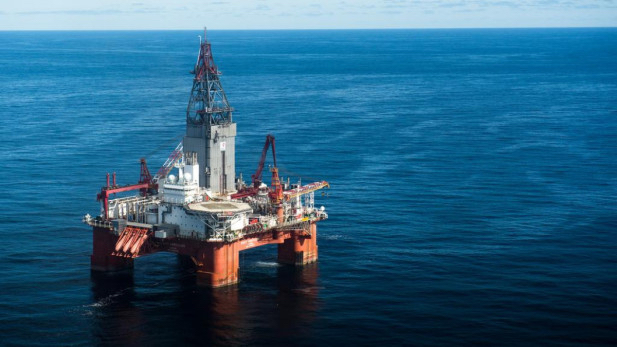
The latest report from the Norwegian Petroleum Directorate, published on August 20, 2026, delivers shocking forecasts for the future of one of Europe’s largest energy suppliers. Without the discovery of new, major fields, oil and gas extraction on the Norwegian continental shelf could fall to nearly zero by 2050. In the most optimistic scenario, production by mid-century would be a third lower than today, but in the pessimistic one, it would drop to just 5 percent of current levels. Norway is currently extracting more hydrocarbons than it is finding new reserves, and key fields such as Troll and Johan Sverdrup will begin to show natural production declines as early as after 2026. Discoveries from the past decade are too small to replace output from fields that have been producing for years. This is not a distant future – it is a process that will accelerate in just four years and could end in economic catastrophe for Norway and a weakening of energy security for all of Europe.
For decades, Norway was synonymous with a stable and reliable supplier of oil and gas to Europe, since the start of production in 1971, around 9 billion standard cubic metres of oil equivalent have been extracted and sold, making the country one of the most important players on the global energy commodities market.
Around 7 billion remain on the Norwegian shelf, but half of these resources have not yet been discovered, meaning Norway faces a huge challenge, because to maintain current production levels it must constantly find new fields, and the reality is brutal.
The average resource addition over the last decade has been only 50 million standard cubic metres of oil equivalent per year, which is a drop in the ocean of what is needed, because as Kjersti Dahle, Director of New Projects at the Norwegian Petroleum Directorate, emphasises, discoveries from recent years are too small to replace production from existing fields. Decisions made now will determine how the Norwegian shelf develops in the coming decades, and if there is no breakthrough in exploration, the decline in production is inevitable and unavoidable, because every year more hydrocarbons are extracted than new resources are discovered.
The most alarming signal in the Norwegian Petroleum Directorate’s report is the forecast of declining production from the two largest and most important fields on the Norwegian shelf, Troll and Johan Sverdrup, because after 2026 production from these fields will begin to decline, meaning the backbone of Norwegian exports is starting to weaken.
Troll, one of the world’s largest subsea gas fields, has for years been the foundation of Norway’s gas supplies to Europe, because its output and reliability were a guarantee of stability for customers across the continent. Johan Sverdrup, the third-largest oil field in Europe, at its peak supplied around 2 percent of the world’s oil supply, making it one of the key assets of the Norwegian oil sector.
Equinor, the field’s operator, announced in February 2026 that production from Johan Sverdrup will fall by more than 10 percent this year, which is not a temporary anomaly, because it is the natural process of field depletion that has been predicted for years, but is now becoming a fact that changes the face of the Norwegian extraction industry. Production from these fields will remain at similar levels for a few more years, but after 2030 the decline could become rapid and irreversible, because the physical depletion of resources is a process that cannot be stopped or reversed, only delayed through new discoveries and investment in extraction technologies.
Troll and Johan Sverdrup are losing momentum
The Norwegian Petroleum Directorate has prepared three production scenarios up to 2050, all showing a decline, differing only in pace and scale – in the high scenario, production in 2050 could amount to roughly two-thirds of the current level, which is an optimistic vision that assumes intensive exploration, rapid start-up of discovered fields, and maximum use of existing infrastructure.
The medium scenario projects a decline of around 65 percent compared with the 2022 level, meaning Norway would lose the majority of its extraction capacity in just three decades, which would have enormous consequences for the country’s economy and for European energy security. The most pessimistic scenario, which is becoming increasingly realistic, assumes production falling to just 5 percent of the current level, meaning a practically complete end to hydrocarbon extraction on the Norwegian shelf within just 25 years, because without new discoveries and investment, resources will be depleted at a pace that is hard to imagine.
The difference between the optimistic and pessimistic scenarios is around 60 percentage points, and it is today’s decisions that will determine which one comes to pass, because the Directorate points to three directions that could curb the decline: continued exploration, faster development of more than 90 already-discovered fields, and increased extraction from producing fields. Many undeveloped discoveries are, however, small and require tie-ins to existing infrastructure, which raises costs and complicates the decision-making process, because their extraction is often unprofitable without appropriate support from the state and investors.
Production will decline regardless of everything
The decline in extraction is not just a technical problem, because it is a threat to Norway’s entire economy and European energy security, since lower production means lower revenues to the state budget, which for decades has been fuelled by petrodollars, allowing Norway to maintain one of the highest standards of living in the world. It also means fewer jobs in the oil and oil-related sectors, which in Norway employ tens of thousands of people, as well as in dependent industries that, without the development of the Norwegian shelf, will have to seek new markets and opportunities.
The consequences, however, extend far beyond Norway’s borders, because following Russia’s invasion of Ukraine in 2022, Norway became the largest supplier of gas to the European Union, and according to the European Commission, in 2025 more than half of the gas imported into EU countries via pipelines came from Norway. If Norwegian extraction begins to decline sharply, Europe will lose its main supplier at a time when Russian gas is under sanctions, and alternative sources such as LNG from Qatar or the United States are more expensive and less reliable, because their prices depend on global markets and can be subject to sharp fluctuations.
As the report emphasises, lower production will mean a weakening of Europe’s energy security, because the continent will become more dependent on supplies from regions that are politically unstable or geographically distant, which increases the risk of disruptions and price increases.
Consequences for Norway and Europe
Despite the grim forecasts, Norway is not giving up, because the Norwegian Petroleum Directorate is calling for increased exploration spending and faster development of discovered fields, which means that in 2026 around 40 exploration wells are planned, of which 28–32 in the North Sea, 4–6 in the Norwegian Sea, and 4–6 in the Barents Sea, showing that Norway still believes in the potential of its shelf. It is the Barents Sea, due to its vast, still-undiscovered resources, that is seen as the future of Norwegian extraction, because large parts of this area remain practically unexplored, and analyses indicate that greater gas export capacity could make it possible to extract resources there 20–30 years earlier, which would be a huge boost for the Norwegian extraction industry.
Every krone invested in exploration on the Norwegian shelf over the last 25 years has returned 4 kroner, which is proof that exploration investment is worthwhile, because every zloty spent generates far greater future revenues. The key, however, will be not only finding new fields but also accelerating the process of bringing them on stream, because there are currently over 90 discoveries on the shelf that have not yet received development decisions, and many of them are small and require tie-ins to existing infrastructure, which raises costs and delays their extraction.
Norway faces a choice: either invest billions in exploration and new technologies, or in a dozen or so years cease to be Europe’s leader in oil and gas supplies, which will have enormous consequences for its economy and international position, because losing the status of the main supplier of energy commodities would mean having to restructure the country’s entire economic model.
Photo: Pixabay




