
Moody’s downgrade of Poland to A3 has not triggered a sharp sell-off in Polish government debt, but it does not remove the problem that led to the decision. With yields on Poland’s 10-year bonds above 6%, every additional financing cost begins to matter for a budget that in 2027 is expected to collect PLN 695 billion in revenue and spend PLN 977.6 billion. If some of the planned revenue fails to materialize because of presidential vetoes, the state will have to close the gap by cutting spending, increasing other revenues or issuing additional debt. At that point, Moody’s decision ceases to be merely an assessment of creditworthiness and begins to have a direct bearing on the cost of fiscal policy.
On Friday, September 18, the yield on Poland’s 10-year government bonds rose from 6.158% to 6.310%, an increase of more than 15 basis points. Several hours later, Moody’s downgraded Poland’s long-term rating from A2 to A3 while changing the outlook from negative to stable. Poland’s rating is now aligned with those assigned by Fitch and S&P. The decision itself does not automatically increase the cost of servicing the entire debt, because the state finances itself through bonds with different maturities, and higher yields on new securities are passed through to the overall debt portfolio gradually. The problem emerges when a higher risk premium persists for an extended period and successive issuances are carried out at higher costs.
In its rationale for the downgrade, Moody’s pointed to Poland’s deteriorating fiscal position. The agency forecasts a general government deficit of around 7% of GDP in both 2026 and 2027. At the same time, it expects public debt to rise from 59.7% of GDP in 2025 to 68.9% in 2027. The agency also identifies rising debt-servicing costs as a problem, as they reduce the fiscal space available to finance other government priorities.
A significant part of the rationale, however, concerns not only the size of the deficit but also the government’s ability to reduce it. Moody’s highlights political constraints on fiscal consolidation, meaning the state’s ability to implement measures that would reduce the gap between revenues and spending. This does not mean that the agency attributed the downgrade to specific presidential vetoes. Rather, it reflects a broader assessment of whether Poland’s institutions are capable of agreeing on and implementing the measures necessary to stabilize public finances.
This has direct implications for the 2027 budget draft. The government assumes revenues of PLN 695 billion, expenditures of PLN 977.6 billion and a state budget deficit of up to PLN 282.6 billion. Tax revenues are expected to reach PLN 622.4 billion. The draft also includes a series of revenue-side changes involving CIT, PIT, excise duties and other elements of the tax system.
A gap of several billion zlotys could narrow the safety margin
The problem with presidential vetoes is not limited to the loss of a specific amount of budgeted revenue. If the government prepared its fiscal plans on the assumption of a particular increase in tax revenues, rejecting some of those changes means that the money has to be found elsewhere. The government can cut spending, reallocate funds between priorities, improve the collection of existing taxes or increase borrowing needs. Each of these options, however, has different consequences for the economy and public finances.
According to calculations cited in the material from Erste Bank, vetoes against tax changes alone could result in approximately PLN 8 billion in lower revenues. After taking into account other potential shortfalls, the gap could reach PLN 10 billion to PLN 15 billion. Relative to the overall budget, this is not an amount that by itself changes the structure of public finances. Given a deficit measured in hundreds of billions of zlotys, however, it is large enough to narrow the safety margin, particularly when the cost of debt financing is also rising.
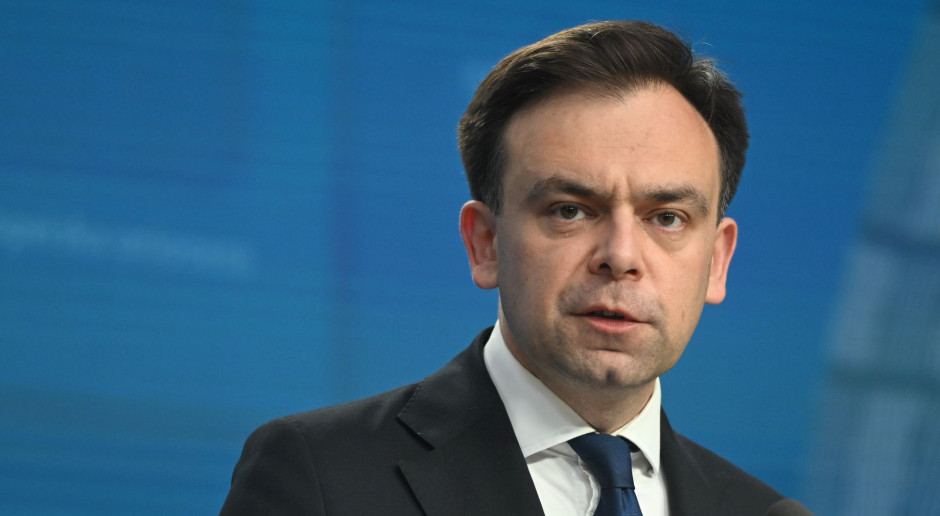
Finance Minister Andrzej Domański referred to this scenario even before Moody’s decision. On September 8, when asked on the “Gość Radia ZET” program whether the estimate of PLN 10 billion to PLN 15 billion in lower revenues was realistic, he replied: “These are realistic estimates.” He also said that the number of presidential vetoes was being monitored by rating agencies. Several days later, Moody’s did indeed point in its rationale to political constraints on the government’s ability to carry out fiscal consolidation.
The government signals calm, but It must answer the question of a contingency plan
Following Moody’s decision, Andrzej Domański stressed that the downgrade should be taken seriously but without overreaction. He pointed to economic growth and the fundamentals of the Polish economy while also emphasizing the need to continue strengthening public finances.
– We take this decision seriously, but calmly – Andrzej Domański wrote on his X profile.
The minister also highlighted the factors that Moody’s identified as reasons for lowering Poland’s rating.
– Today, the rating agency Moody’s downgraded Poland’s rating to A3, while simultaneously raising the rating outlook from negative to stable. Until now, Moody’s had the highest assessment of Poland among the three major agencies; following the downgrade, it has aligned it with the ratings assigned by Fitch and S&P. We take this decision seriously, but calmly. The agency explicitly points to persistently high deficits, rapidly rising debt, increasing debt-servicing costs and weakened fiscal policy effectiveness. Moody’s expects the general government deficit to remain at around 7% of GDP in both 2026 and 2027. This is not an abstract assessment by analysts: a lower rating may mean a higher cost of borrowing for the state – the minister wrote.
The government’s declaration of cooperation among state institutions does not, however, answer the question of the specific mechanism for replacing lost revenues if some tax changes fail to take effect. This is also important because the budget draft was constructed on the basis of specific macroeconomic assumptions. The Ministry of Finance forecasts GDP growth of 3% and inflation of 2.8% in 2027, meaning that the budget depends both on legislative decisions and on whether economic forecasts are realized.
The Ministry of Finance has not presented, in the source material, a separate scenario assuming both a PLN 10 billion to PLN 15 billion loss of revenue and 10-year bond yields remaining above 6%. It is precisely the combination of these two factors that matters more than either figure considered separately. Lower revenues mean greater financing needs, while higher debt costs mean that raising that money will be more expensive.
Presidential vetoes increase the importance of the revenue side of the budget
The Chancellery of the President, in the response cited in the material, does not dispute the government’s responsibility for fiscal policy, but stresses that, in its assessment, the vetoed legislation was poorly prepared and raised legal concerns. From the budget’s perspective, however, the important point is that regardless of the dispute over the quality of individual regulations, rejecting a tax bill can have a measurable impact on revenues.
– The laws vetoed by the President were poorly prepared and, in many cases, raised serious concerns regarding their compliance with the Constitution and applicable laws. Assessing their impact on the state budget cannot disregard the flaws in these regulations and the potential consequences that their entry into force could have – the Chancellery said.
The Chancellery also stressed that responsibility for preparing and adopting legislation rests with the government and the parliamentary majority.
– Responsibility for the state of public finances and the conduct of fiscal policy lies with the Council of Ministers, in particular the Minister of Finance, as well as the Prime Minister. President Karol Nawrocki is watching the current state of public finances with great concern and expects the government to take decisive, responsible and lawful action – the Presidential Chancellery said.
The dispute over individual laws is therefore part of a broader fiscal problem. The 2027 budget is expected to generate PLN 47.8 billion more revenue than the 2026 plan, while tax revenues are projected to increase by PLN 57.8 billion compared with the expected 2026 outturn. The draft includes, among other measures, a higher CIT rate for the largest taxpayers and changes to the taxation of certain types of business activity.
Economists: the rating matters, but the credibility of the fiscal path matters more
Prof. Paweł Wojciechowski, chief economist at BCC and a former finance minister, says Moody’s decision should not be interpreted as a direct penalty for specific presidential vetoes. In his view, the agency is primarily assessing the state’s ability to carry out a broader correction of public finances.
– Yes, but only partly. It is not a punishment for specific vetoes, but an assessment of a broader problem: the state has an increasingly limited ability to agree on and carry out consolidation. According to the Ministry of Finance, the six vetoes issued so far have reduced this year’s revenues by around PLN 8 billion. Meanwhile, together with Ludwik Kotecki and Marek Skawiński, we estimated in our report ‘Threats of Excessive Public Debt, 2026’ that the scale of the adjustment needed to stabilize the debt is around PLN 166 billion. That means at least 0.5 percentage points of GDP annually, or roughly three times PLN 8 billion at present — and for several years – Wojciechowski says.
The difference in scale is crucial. If the fiscal adjustment required is measured in tens or hundreds of billions of zlotys, a one-off loss of PLN 10 billion to PLN 15 billion does not determine the stability of public finances. It can, however, accelerate debt accumulation at a time when the state is already financing a large deficit. The rating is therefore primarily a signal concerning the government’s ability to conduct fiscal policy, rather than a simple conversion of one political decision into the cost of a single bond issue.
Every 10 basis points matter, but not immediately for the entire debt
The cost of higher risk is best illustrated by the mechanism of government bond issuance. The state does not refinance all of its borrowing needs on a single day, and new securities have different maturities. If yields rise by several dozen basis points, the additional cost initially applies primarily to subsequent issuances. Only as older bonds mature and are replaced with new securities does the higher interest rate begin to affect a growing share of the debt portfolio.
With gross borrowing needs of around PLN 565 billion, mechanically applying a change in yields to the entire amount illustrates the potential scale of the cost, but it is not a forecast of the actual increase in interest expenditure in the following year. A 10-basis-point increase applied to the entire amount would correspond to approximately PLN 0.6 billion a year, 25 basis points to around PLN 1.4 billion, and 50 basis points to approximately PLN 2.8 billion. The actual effect, however, would be spread over time because the higher rate does not apply simultaneously to the entire stock of government debt.
– An additional PLN 10 billion to PLN 15 billion in potential deficit would not trigger a crisis, but it would increase debt, raise interest costs and further limit the room for maneuver in the event of a slowdown or an external shock – Wojciechowski says.
Piotr Arak, chief economist at VeloBank, draws attention to precisely this time lag. In his view, Moody’s decision alone does not necessarily require an immediate change in assumptions concerning debt-servicing costs, because the key factor is the path of bond yields. However, if 10-year yields remain above 6%, the risk to those assumptions becomes greater.
– The decision itself does not require an adjustment to assumptions concerning debt-servicing costs, because these depend on the path of yields, and those have already deteriorated radically in response to the fuel shock and weak fiscal data. With 10-year yields above 6%, however, the risk to these assumptions is rather on the upside. That is why the Ministry of Finance should create some safety buffers that are not visible in next year’s assumptions. The problem will be passed on to the government that emerges after the elections – Arak says.
A plan B is needed even if the gap is manageable
According to Arak, a potential revenue gap of PLN 10 billion to PLN 15 billion is not an amount that the state would be unable to finance. The problem is that any additional debt financing increases borrowing needs at a time when the cost of debt is already high. The alternative is to cut some spending or find other sources of revenue, which also requires political and legislative decisions.
– From the outside, it is difficult to assess whether the Ministry of Finance has a ready Plan B. It should have one and show it to the market. The scale is manageable. Compensatory measures could include reviewing and reprioritizing spending, including defense-related expenditure, as well as improving tax collection. According to the assumptions, the deficit is not falling. It is worth remembering that it could increase if economic conditions are weaker than expected – Arak says.
The difference between his calculations and a simple calculation applying the entire borrowing requirement to a change in yields stems precisely from the pace at which higher financing costs are passed through. If yields permanently increase by 15 basis points, the full impact on the cost of the entire debt portfolio would only emerge over time. In the first year, the effect is significantly smaller because most previously issued bonds remain subject to the terms established when they were issued.
– A permanent 15-basis-point increase in yields means several billion zlotys a year only after the change has been fully passed through to the entire portfolio, and that takes years. In 2027, the effect will concern mainly new issuances. With gross borrowing needs of PLN 565 billion, we are therefore talking about roughly PLN 1 billion to PLN 2 billion. Polish yields, which are high, depend on a number of risks, and Poland’s weak fiscal position is already priced into them – the VeloBank chief economist calculates.
This means that for the budget, the duration of elevated financing costs is just as important as an individual move in yields. A short-lived spike can be absorbed to a large extent by the existing debt structure. A permanent shift in financing costs to a higher level, by contrast, will gradually increase interest expenditure and reduce the funds available for other government priorities.
The market may price in the problem before rating agencies do
Marcin Mrowiec, chief economist at Grant Thornton, points out that the bond market does not have to wait for a formal rating agency decision before it begins to price in fiscal risk. Investors can change their expectations earlier regarding the deficit, debt, economic policy and future issuance. In this sense, the rating is one element of the risk assessment rather than the moment when the market first learns about the problem.
– It is a bad signal for the markets: the money will not be there in the budget, and secondly, even more importantly, tensions between the Presidential Palace and the government may torpedo a serious discussion about the gravity of the situation in public finances – Mrowiec warns.
The risk premium is important in this mechanism. The additional return investors expect for buying Polish government bonds compared with assets considered safer. If investors conclude that the probability of persistently high deficits is greater, they may demand higher yields on new issuances. The state then pays more not because the rating itself has simply changed from A2 to A3, but because the market’s assessment of the future path of public finances has changed.
– Country risk is rising, and so is the ‘risk premium’ visible in bond yields. That translates into concrete current and future debt-servicing costs – Mrowiec says.
Monday’s correction does not close the case
Following Friday’s rise in yields, Monday did not bring a sustained, sharp sell-off in Polish government bonds. This reaction suggests that some investors may have already priced in the possibility of a rating downgrade. It does not mean, however, that the risk has disappeared, as the market will now be watching budget execution data, the scale of new issuance and decisions concerning the revenue side of public finances.
The fact that the budget draft assumes 3% economic growth in 2027 is also important. If the economy grows more slowly, tax revenues may fall short of projections while some expenditures could rise faster. In that case, a potential gap resulting from the failure of some planned tax changes to take effect would be compounded by the ordinary risks inherent in budget forecasts.
Data for the first eight months of 2026 show that state budget revenues amounted to PLN 387.2 billion, while the deficit reached PLN 151.1 billion. Tax revenues totaled PLN 343.1 billion, up 6.8% from the same period in 2025. CIT revenues increased by as much as 29.9%, while PIT revenues were negative. These figures illustrate how important individual revenue sources are to budget execution and how difficult it can be to replace a shortfall in one source with another tax.
The rating is lower. Now the numbers will be put to the test
Moody’s downgrade alone does not determine how much Poland will pay to finance its debt in 2027. Nor does it operate as an automatic mechanism in which changing a single letter or number in an agency’s rating immediately raises the interest rate on every bond outstanding. The actual cost will depend primarily on how the market assesses the state’s ability to reduce the deficit, stabilize debt and maintain a credible path for revenues and expenditures.
That is why a potential PLN 10 billion to PLN 15 billion loss of revenue should be considered together with financing costs. The gap itself is relatively small compared with the overall budget, but financing it through debt increases borrowing needs, while persistently high yields raise the cost of subsequent issuances. If the government has to finance a larger deficit while borrowing at a higher risk premium, the room for responding to an economic slowdown or another external shock will become narrower.
The 2027 budget draft has already been adopted by the government and submitted for further legislative work, and its key parameters are known. Revenues are expected to amount to PLN 695 billion, expenditures to PLN 977.6 billion and the deficit to PLN 282.6 billion. Following Moody’s decision and with bond yields remaining high, the question facing the market is therefore much more specific than the agency’s rating itself: does the state have enough fiscal room to finance its planned spending, cover any potential revenue shortfall and prevent debt-financing costs from shifting permanently to an increasingly higher level?
The key budget figures cited in the article are consistent with the current 2027 budget bill published by the Ministry of Finance. The ministry puts revenues at PLN 695 billion, expenditures at PLN 977.6 billion and the maximum deficit at PLN 282.6 billion, with planned tax revenues of PLN 622.4 billion. The data on budget execution for January-August 2026 come from the Ministry of Finance.




