
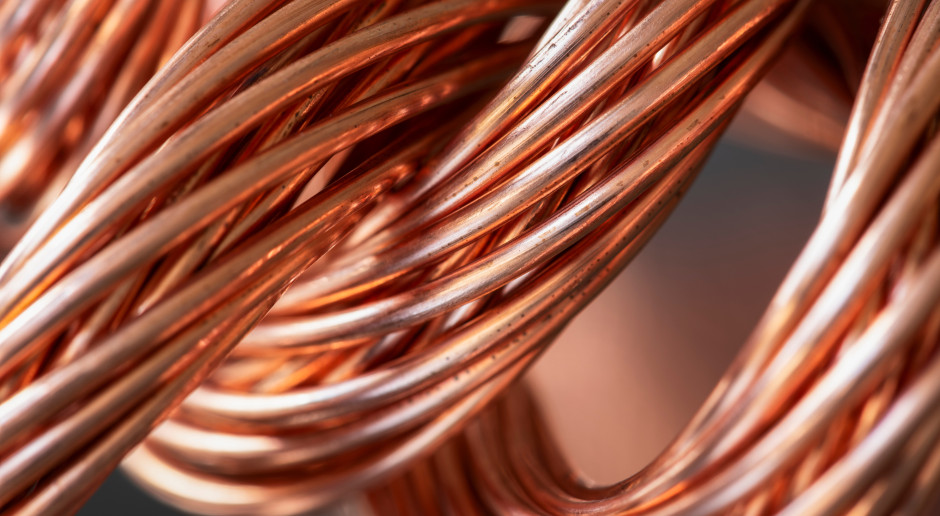
Chile is the undisputed leader in terms of copper reserves, with 190 million tonnes of the metal, which according to the United States Geological Survey (USGS) 2025 report accounts for about 19 percent of global reserves. In second place is Australia with 100 million tonnes, and third is Peru, which holds about 10 percent of global copper reserves (approx. 100 million tonnes). The top five also includes Russia and the Democratic Republic of the Congo, each with about 80 million tonnes of reserves, while Poland, with its prospective resources, ranks in the second tier of the world’s largest copper players.
The United States Geological Survey (USGS) in its „Mineral Commodity Summaries 2025” confirms that Chile holds 190 million tonnes of copper reserves, representing about 19 percent of the world’s resources. This figure is staggering compared to the competition – Chile’s reserves alone are almost equal to the combined resources of Australia and Peru, which rank second and third. To grasp the scale: at current extraction rates, Chile’s deposits would last more than 100 years.
Chile not only has the largest reserves, but is also the absolute leader in mining – in 2024 it produced 5.3 million tonnes of copper, accounting for about 23–25 percent of global production. This phenomenon is mainly due to the Andean mountain range, which on Chilean territory contains some of the world’s richest porphyry deposits. In the province of Antofagasta lies the Escondida mine, the world’s largest copper mine, operated by Australian company BHP (which holds a 57.5% stake). The remaining shareholders are Rio Tinto (30%) and the Japanese consortium JECO Corp (12.5%). Escondida produces more than one million tonnes of copper annually, about 5 percent of global supply.
The second largest Chilean mine is Collahuasi, which delivers about 570,000 tonnes of copper per year. It is worth noting that Chilean copper mining is largely controlled by the state-owned company Codelco, which itself accounts for about 27–30 percent of national production and is the world’s largest copper producer.
Copper is fundamental to the Chilean economy – the sector accounted for about 49–50 percent of the country’s export value in 2024. According to data from the Central Bank of Chile and the Chilean Copper Commission (Cochilco), in 2024 copper generated export revenues of approximately US$ 49.5–50.9 billion (depending on estimates). In 2025, this value rose to about US$ 55 billion, with Chile’s total exports reaching a record US$ 107 billion. This makes Chile highly dependent on global copper prices, as any significant change in market conditions immediately affects the entire economy.
Second‑largest player with huge growth potential
Australia ranks second in the world for copper reserves, holding 100 million tonnes according to the USGS. That represents about 10 percent of global resources, putting Australia just behind Chile but ahead of Peru, with which it competes fiercely for second place. According to Australian government data (Australia’s Identified Mineral Resources 2025), the country also has significant „resources” estimated at about 105 million tonnes, further demonstrating huge mining potential.
The most important copper mining region in Australia is South Australia, home to the Olympic Dam mine. It is not only one of the world’s largest copper mines, but also the second largest uranium producer globally and a major source of gold and silver. This mine is unique on a global scale because it combines such a diverse range of minerals in one location, making it an extremely valuable strategic asset.
Other important mining areas include Mount Isa in Queensland, operated by Glencore, as well as regions in Western Australia and New South Wales. Unlike Chile, where state‑owned Codelco dominates, Australia has many private players such as BHP, Rio Tinto, Glencore and the Australian company OZ Minerals (now part of BHP). This ownership diversity makes the Australian copper sector highly competitive and well integrated into global financial markets.
Australia ranks sixth or seventh in global copper production (about 0.9–1.0 million tonnes), but the sector’s prospects are promising. The Australian government forecasts that copper export revenues in the 2025/2026 financial year will reach about A$ 162 billion, up from A$ 153 billion in the previous season. Australia has an opportunity to significantly increase its share of global mining, and the estimated life of its reserves at current extraction rates is about 145 years – one of the highest in the world.
Third‑largest player with growing importance
Peru ranks third in global copper reserves, holding about 10 percent of the world’s resources, i.e. about 100 million tonnes according to the USGS. Estimates of reserve size vary – some sources, including Peruvian authorities, put the figure at about 120 million tonnes, which would mean the country has resources comparable to Australia. Regardless of these discrepancies, Peru remains a key player on the global copper map.
In 2025, Peru’s copper production reached about 2.77–2.8 million tonnes, an increase of about 1.2 percent year‑on‑year, representing about 11 percent of global output. Peru is the second or third largest copper producer in the world (depending on methodology). The main mining regions are in the south of the country, in the provinces of Arequipa, Apurimac and Moquegua, where giant mines such as Las Bambas (owned by China’s MMG) and Quellaveco (controlled by Anglo American) operate.
Unlike Chile, the Peruvian mining sector faces serious social and political challenges. Protests by local communities, roadblocks and tensions over the distribution of mining profits regularly disrupt operations. In recent years, protests in Peru have significantly affected the global copper market, demonstrating how fragile supply from this strategic region can be. Despite these difficulties, Peru remains a highly attractive investment destination for international mining companies.
Copper dominates Peruvian exports – China is the largest buyer of Peruvian copper, and in the first half of 2025 the value of copper exports to China exceeded US$ 9 billion. Mining investment in Peru reached US$ 6.23 billion in 2025, up 24.3 percent from the previous year, and infrastructure spending rose 40 percent, indicating strong investor optimism about the future of mining in the country.
Russia and the Democratic Republic of the Congo
According to USGS, Russia and the Democratic Republic of the Congo rank fourth and fifth in copper reserves, each with about 80 million tonnes (Russia ~80 million tonnes, DRC ~80–90 million tonnes depending on the source). Russia’s main copper deposits are in the Norilsk region of Siberia, where the Norilsk Nickel (Nornickel) group operates – not only a copper giant but also the world’s largest producer of nickel and palladium.
The DRC is not only a copper giant but also the world leader in cobalt production – according to USGS, the country holds about 70 percent of global cobalt reserves. Congolese copper deposits are concentrated in the Copperbelt in the Upper Katanga province, which also extends into neighbouring Zambia. In 2025, DRC copper production reached about 3.2 million tonnes, representing about 14 percent of global supply and making the country the second largest copper producer in the world (behind Chile and ahead of Peru). The largest copper mine in the country is Kamoa‑Kakula, which according to operator Ivanhoe Mines plans to increase production to more than 500,000 tonnes per year from 2028 onward.
It should be emphasised that the reserve ranking differs from the production ranking. While Chile remains the leader in both reserves and production (about 5.3 million tonnes in 2024), the Democratic Republic of the Congo, with output of about 3.2 million tonnes in 2025, has overtaken Peru (about 2.77 million tonnes) and is now the world’s second largest copper producer.
A significant European player with untapped potential
Poland is outside the top five copper powers, ranking about seventh or eighth in terms of copper reserves. According to an EY report „2025 – A Breakthrough Year for Poland’s Raw Materials Policy”, commissioned by Lumina Metals and Electrum Group, Poland’s prospective resources (i.e. potential, not fully identified quantities of ore) are estimated at about 165 million tonnes, of which about 98 million tonnes are at depths that allow profitable extraction using current technology and prices (so‑called economic reserves). For comparison, current balance reserves (confirmed and documented) in KGHM’s operating deposits stand at about 8.1 million tonnes of copper.
The main mining centre is the Legnica‑Głogów Copper Belt, where KGHM Polska Miedź has operated mines for decades. The largest facility is the Rudna mine, not only Europe’s largest copper mine but also one of the world’s largest by output. In the first quarter of 2026, KGHM Group’s payable copper production was 176,000 tonnes. According to earlier data, KGHM is one of the world’s leading copper producers and the world’s second largest silver producer (according to the World Silver Survey 2025/2026).
In recent years, new deposits have been discovered, including Nowa Sól, Żary and Sulmierzyce Północ, which could significantly increase national resources in the future. In addition, potential deposits of molybdenum, tungsten and copper estimated at up to 550 million tonnes have been identified near Myszków, though these are preliminary estimates requiring further exploration. Experts emphasise that Poland has a historic opportunity to increase production and strengthen its position, but this requires changes in national raw materials policy, including a review of the mining tax.
Important note: In 2023, KGHM sold its stake in the Chilean Sierra Gorda mine and no longer holds any shares in that mine.
A processing giant, not a mining giant
Although often associated with dominance in global critical raw material supply chains, China is not among the top countries in terms of copper reserves. According to the USGS, China holds about 41 million tonnes of reserves, about 4.2 percent of global resources, placing it outside the top five. China’s copper deposits are scattered mainly in Jiangxi, Yunnan, Gansu and Tibet, but their quality and size do not match the giant porphyry deposits of the Andes.
Paradoxically, China is the world’s largest consumer of copper – the country accounts for more than 50 percent of global demand. To meet the needs of its industry – including battery production for electric vehicles, power grids and construction – Beijing pursues an aggressive policy of securing copper supplies from abroad. Chinese companies such as MMG, Zijin Mining and CMOC are acquiring stakes in mines worldwide – from Peru and Chile to the DRC and Australia.
At the same time, China is striving to increase domestic production, aiming to grow its own copper reserves by 5 to 10 percent over three years. In 2025, China’s domestic copper production was about 1.9 million tonnes, making it the world’s fourth largest producer. However, the scale of imports is incomparably larger – China imports about 30–31 million tonnes of copper concentrates annually (2025 data), accounting for about 50–55 percent of global trade in this raw material (according to SMM and TradeMap). This makes China much more dependent on global commodity markets than its own reserves would suggest – a key strategic vulnerability.


