
Kyiv has advised residents to keep at least three days’ worth of food at home, as Ukrainians brace for a winter of expected blackouts and further Russian strikes on the energy system. In the capital, people are filling up on drinking and technical water, canned meat, groats, pasta and gas for camping stoves.
Artem, who was met by PAP at a water pump in Kyiv’s Obolon district, has been keeping emergency supplies at home since the first days of the full-scale war.
– I have about 100 litres of water at home for flushing the toilet, all of it lying under the sofa since the beginning of the war. We take drinking water from the spring anyway – he said.
The recommendation to hold three days of food is tied to the power cuts that the authorities expect in the coming months. Ukraine’s energy infrastructure has been a priority target for Russian missile and drone strikes, and there is little expectation that the campaign will ease.
Three killed in Kharkiv
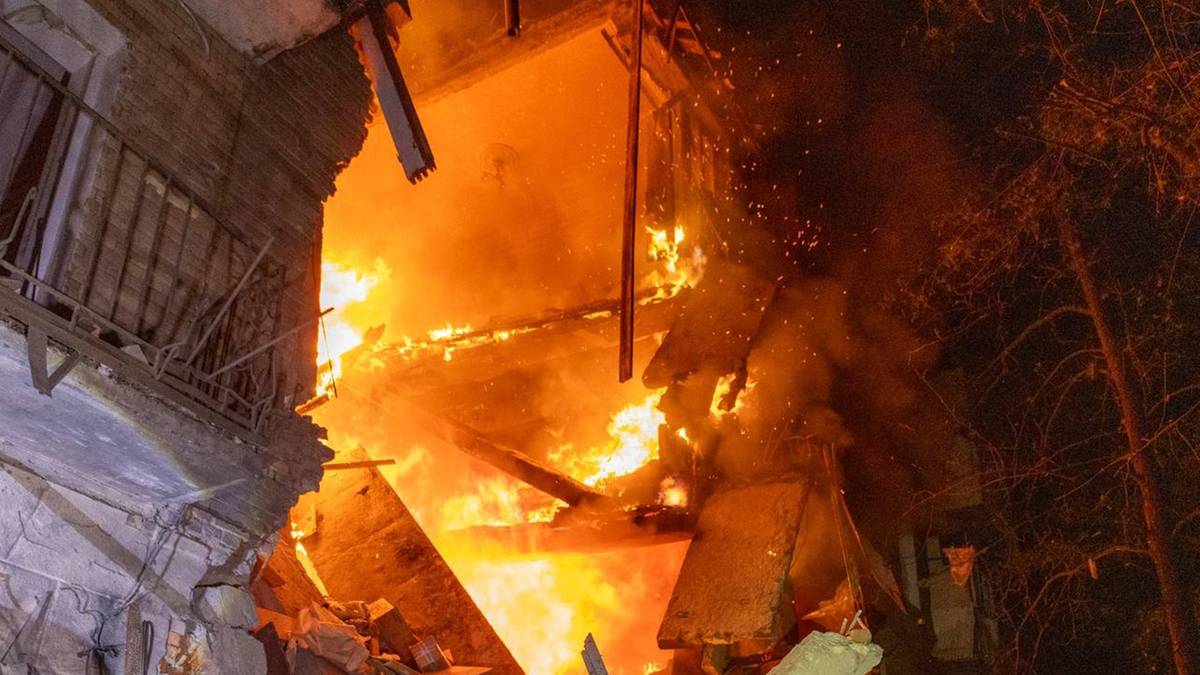
In the night from Monday to Tuesday, three people died in an attack on Kharkiv. Explosions triggered fires in residential buildings and in areas where civilians live, and one of the missiles caused part of a residential block to collapse. Dozens of people were injured.
Serhiy Sukhomlyn, until recently the head of the State Agency for Reconstruction and Infrastructure Development, told Ukrainska Pravda that the best hope rests on a mild winter and on Russian strikes lacking precision.
– In such forecasts we can rely only on previous experience: last year Russia did not yet use such a large number of jet-powered Shahed drones and practically did not attack civilian infrastructure until the autumn – he said.
– In September last year we saw Russia destroying relatively small transformers that supply electricity to housing estates, hospitals or critically important enterprises – he added.
Resilience programmes and a home battery
Sukhomlyn described the preparations as a positive sign, while admitting that nobody can say with confidence what the coming months will bring.
– We see the results of the work already done: the Kherson, Kharkiv and Zaporizhzhia regions and Kharkiv itself survived last winter, although the enemy shelled them constantly. In Sumy, a large combined heat and power plant supplies part of the city. It was attacked with dozens of guided aerial bombs and Shaheds, but the city survived – he said.
– This gives hope that, provided all the resilience programmes approved by the National Security and Defence Council and the government are implemented, we will get through another heating season without districts left without heating and hit by frost – he said.
In an electrical equipment shop, Stepan has just ordered an inverter with a battery that will automatically switch the supply from the grid to the battery when power fails. The device cost him about 65,000 hryvnias, roughly 5,600 zlotys, and the installation is still ahead of him.
– It cost about 65,000 hryvnias (around 5,600 zlotys), but I still have to wait for a specialist to install it. There is a shortage of specialists. Once I install it, in ideal conditions it is supposed to work for up to 20 hours without power – he said.
Stepan wants to keep the lights on and to run his fridge, washing machine and internet router during outages. He is counting on a gentle season.
– This year’s onion has a thin skin, which means winter will be mild – he said.
Źródło: Polsat News, Fot. Polsat News




