
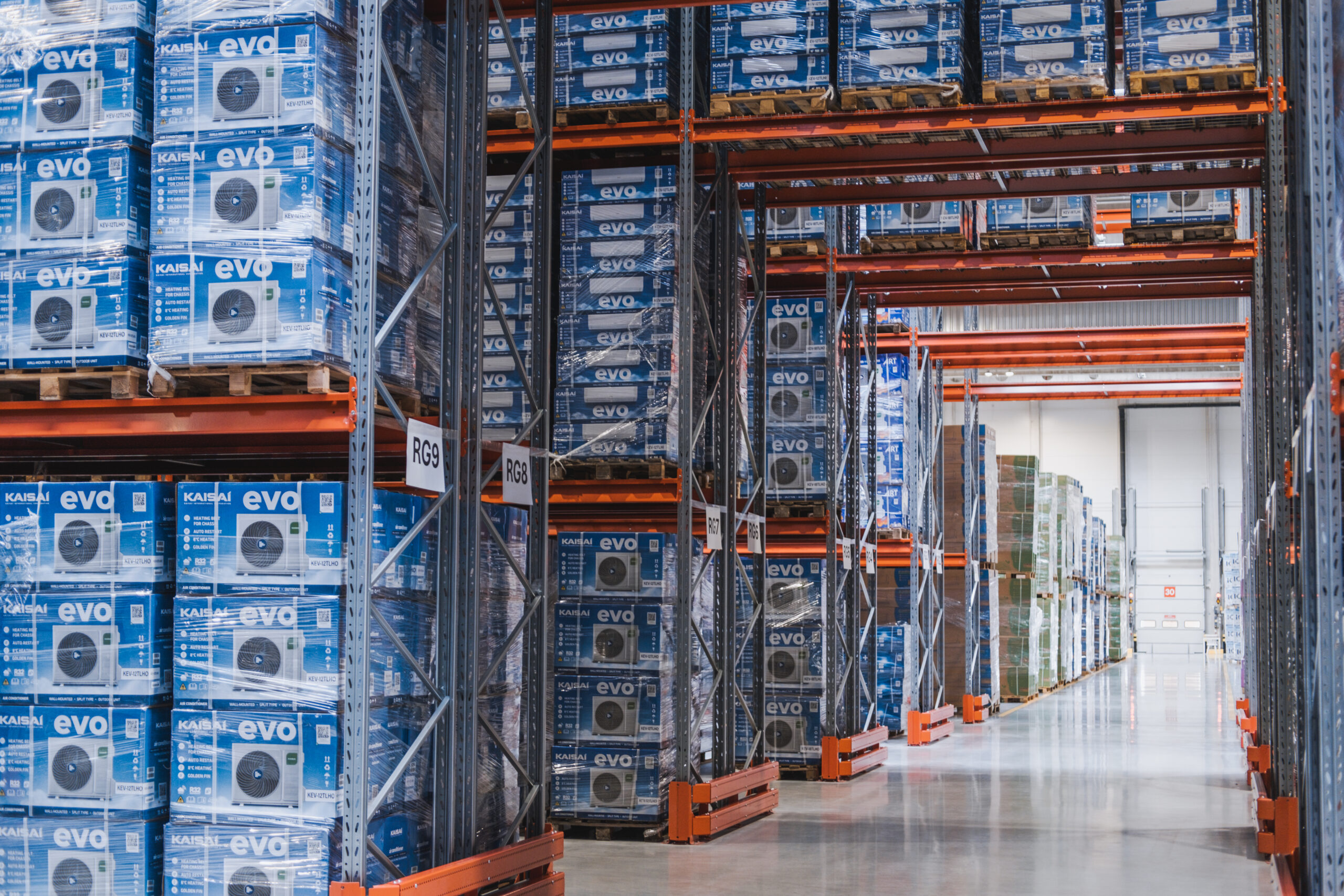
Nearly 22,000 square metres of floor space and a volume of 274,000 cubic metres. In warehouses of this size, gas boiler rooms traditionally dominated, but Klima‑Therm opted for a complete shift away from fossil fuels. At the heart of the installation is a cascade of seven monoblock air‑to‑water heat pumps from KAISAI, series KCOP, which use the natural refrigerant R290 (propane). The total heating capacity of the system is 374.5 kW.
Klima‑Therm is a Polish company in the HVACR sector (heating, ventilation, air conditioning, refrigeration), celebrating its 30th anniversary in 2026. The new investment – a large‑scale logistics hub at Azymutalna Street in Gdańsk – is located in the immediate vicinity of the Lech Wałęsa Airport, as well as the city’s main arteries and roads leading to the seaports. The facility, with an area of nearly 22,000 square metres, is a strategic distribution centre enabling deliveries and shipments on an entirely new scale.
Precise heat demand
The high insulation and tightness of the hall resulted in an exceptionally low heat demand of 367.3 kW. This required extremely precise system design and installation. With such a limited power reserve, there was no room for design or execution errors. Klima‑Therm’s goal was to create a zero‑emission, energy‑independent and economically viable facility.
– The goal was to create a facility that would become a reference for the entire industry – zero‑emission, energy‑independent and economically justified – the company said in its release.
Heat pump system
The heart of the installation is a cascade of seven monoblock air‑to‑water heat pumps from KAISAI, series KCOP. The units use the natural and environmentally friendly refrigerant R290 (propane), which underscores the pro‑ecological nature of the investment. The total heating capacity of the system is 374.5 kW, more than covering the hall’s demand and ensuring stable temperatures even during the most severe frosts.
The heating system is an integral part of a broader, intelligent energy architecture. The hall’s roof has been prepared for a photovoltaic installation with a target capacity of 1 MWp. The system is complemented by a large‑scale battery energy storage system (BESS) with a capacity of 1,576 kWh and a continuous power output of 800 kW, consisting of eight standalone battery cabinets – each equipped with two 50 kW hybrid inverters. An overarching energy optimisation system ensures the efficient cooperation of all components, maximising the use of renewable energy and minimising costs.
Economic and environmental benefits
Internal comparative analyses showed that the heat pump system generates approximately PLN 77,500 net in annual operating savings compared to traditional gas heating. The seasonal coefficient of performance (SCOP) for the Azymutalna facility reached approximately 3.6, demonstrating the system’s exceptional energy efficiency.
Thanks to integration with the photovoltaic installation and the energy storage system, the warehouse achieves a state of near‑zero emissions in terms of heating – most of its heat needs are covered by its own renewable sources. Eliminating on‑site gas combustion also translates into a significant reduction in carbon dioxide emissions, aligning the facility with the latest standards in green industrial construction.
Klima‑Therm did not disclose the total capital expenditure for the project or the expected payback period. The company also did not provide details on its plans for further development of heat pump technology in large commercial facilities. What is known, however, is that the Azymutalna warehouse is a practical example of how to combine operational scale with environmental and economic responsibility. The 1 MWp photovoltaic installation and the 1,576 kWh energy storage system enable maximum utilisation of renewable energy. The energy optimisation system manages the cooperation of all components, keeping operating costs to a minimum.
Fot. Klima-Therm




