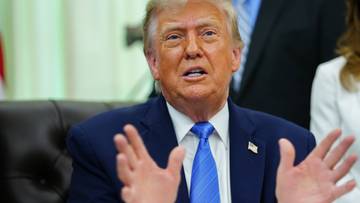
President Donald Trump sparked controversy on Thursday when he told reporters at the White House, „I love inflation,” just as new data showed U.S. consumer prices rose 4.2 percent over the last year – the fastest pace in three years. The remark, made during an impromptu press briefing, prompted immediate backlash and forced the president to clarify his words, accusing the media of taking his statement out of context.
The U.S. Bureau of Labor Statistics reported that the annual inflation rate for May reached 4.2 percent, driven largely by rising energy costs linked to the ongoing conflict in the Middle East. The war, initiated by the United States and Israel against Iran, has disrupted global oil supplies and pushed prices higher. Trump’s initial reaction was exuberant. „I love it. The numbers were great. You know what I really love? I love inflation,” he told reporters.
But when questioned by the New York Post later, Trump insisted his words had been misinterpreted. He explained that his enthusiasm was not for inflation itself, but for the fact that the rate was lower than expected given the wartime conditions. – I love the inflation data precisely because of what I’m saying – the American president stated. – The numbers will be phenomenal because they show that, even though we are in a state of war, the numbers are much lower than predicted, and when we exit this war, the numbers will be lower than they were before it started – he added.
Economic context and the war in the Middle East
The sharp rise in prices is largely attributed to the military campaign against Iran, which began earlier this year. Trump has previously claimed that U.S. forces conducted night operations to seize „millions of barrels” of Iranian oil, helping to stabilize prices. – When this conflict ends… You will see oil fall back to its previous level – he assured correspondents at the White House.
Despite these assurances, the inflation figures present a significant political challenge for Trump. The cost of living has become a central issue for American households, and the president’s approval ratings reflect growing discontent. According to a recent Reuters/Ipsos poll, only 35 percent of voters approve of Trump’s performance, while 70 percent of all respondents disapprove of his handling of household costs.
Political fallout and public opinion
The „I love inflation” gaffe has only deepened skepticism about the administration’s economic policies. Critics argue that Trump’s initial comments reveal a disconnect between the White House and ordinary Americans struggling with higher prices for groceries, gas, and rent. The president’s attempt to spin the data as a positive sign of resilience has been met with widespread disbelief.
Trump’s defense – that he was actually celebrating the lower-than-expected inflation rate – failed to convince many observers. The incident highlights the fragility of his economic messaging at a time when the Federal Reserve is under pressure to act. With midterm elections approaching, the administration faces an uphill battle to restore confidence in its handling of the economy.
The White House has not issued any further statements regarding Trump’s comments, but the president is expected to address the topic again during his upcoming campaign rallies. For now, the phrase „I love inflation” has become a rallying cry for his opponents and a cautionary tale in political communication.
Źródło: Polsat News, Fot. Polsat News