
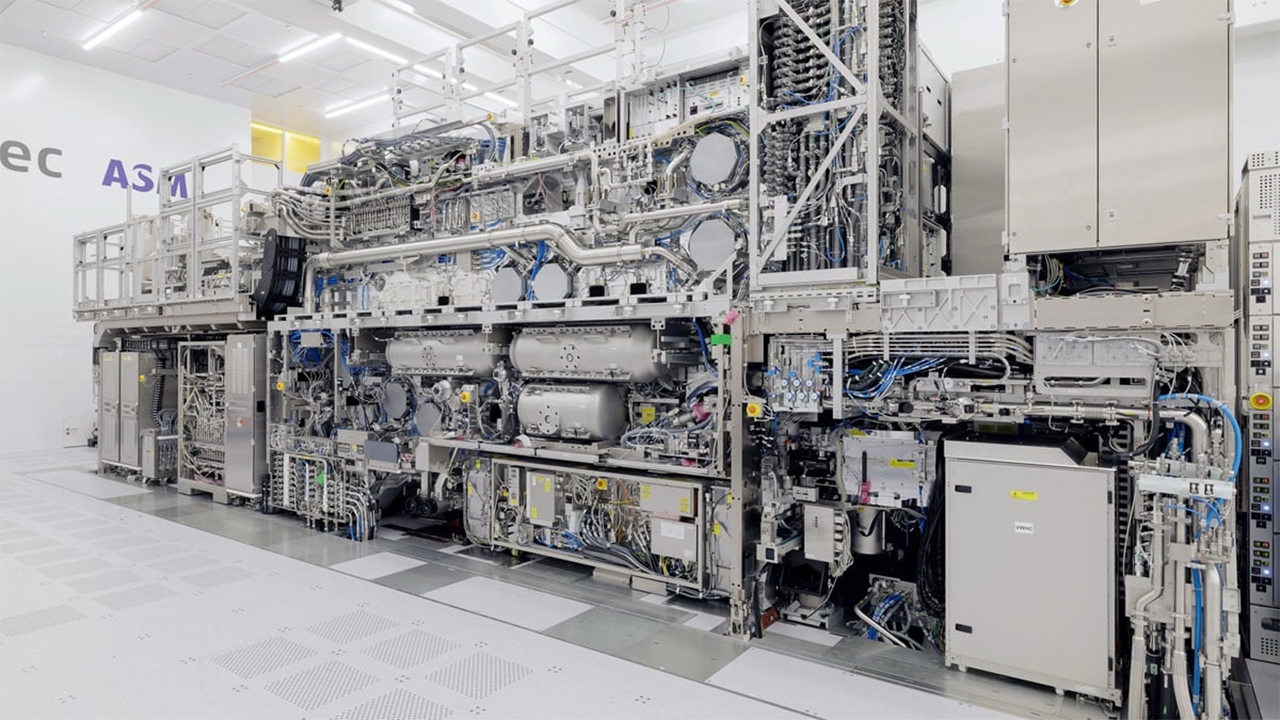
Hyper NA technology could eventually enable the production of integrated circuits with structures measuring around 5 nanometres. This is a direction in lithography development that could be significant for future generations of processors used in artificial intelligence. However, commercial deployment of the technology is likely to remain around a decade away.
The new technology is intended to push the boundaries of precision in semiconductor manufacturing. Shrinking structures on chips is one of the industry’s main development priorities, as it needs increasingly powerful processors to handle artificial intelligence workloads. Hyper NA is expected to pave the way for further improvements in lithography, although for now it remains a solution being developed with future generations of manufacturing in mind.
The development of artificial intelligence is increasing demand for advanced computing chips. Designing and manufacturing them requires technologies capable of creating increasingly complex structures while maintaining high levels of precision. Hyper NA fits into this trend, offering the prospect of further reducing the size of integrated circuit components.
The ability to print structures measuring around 5 nanometres could be important for future generations of AI processors. However, the ability to achieve this scale does not automatically mean that new chips will reach the market quickly. Further technological development will be necessary, along with preparations to adapt the technology for industrial semiconductor manufacturing.
Commercial deployment is still around ten years away
According to Reuters on 8 October 2026, commercial deployment of Hyper NA could be around a decade away. This means the technology will not address the current needs of the AI processor market, but could influence the development of chips designed further into the future.
Such a long time horizon illustrates how early work begins on technologies intended to define the next stages of semiconductor industry development. Before Hyper NA can be used commercially, it will need to progress from technological development to solutions ready for integration into manufacturing processes.
At this stage, Hyper NA should therefore be viewed as a direction for the further development of lithography rather than a technology that will transform the processor market in the near future. Its significance will depend on whether its anticipated capabilities can be translated into an efficient and commercially viable industrial process.




