
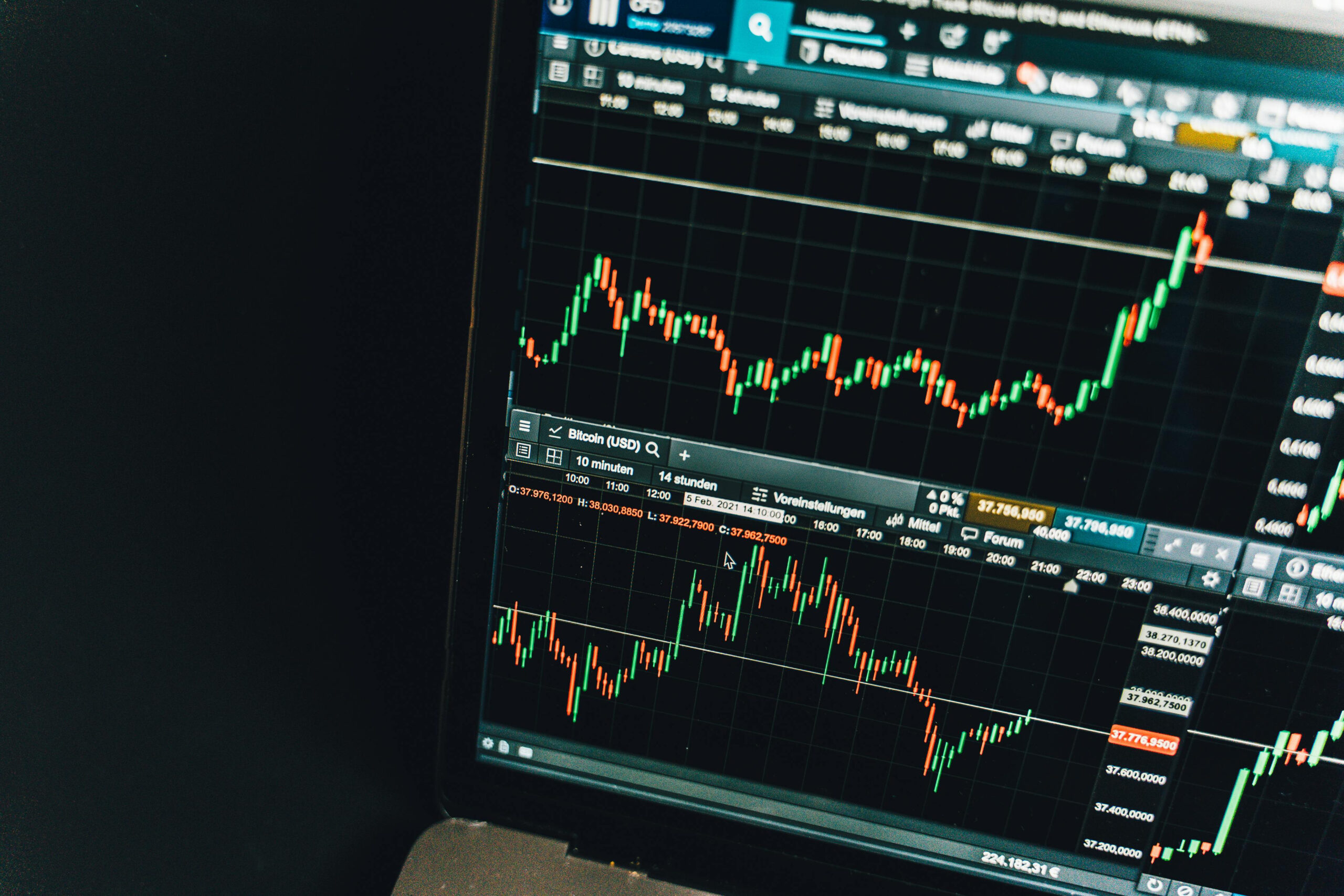
For many people, the stock market still feels mysterious. Some associate it with enormous fortunes and financial success, while others see it as a world of risk, crashes, and speculation. In reality, today’s stock market looks very different from the image popularized by movies showing traders shouting across crowded trading floors. Modern financial markets operate almost entirely through digital systems, where transactions are executed in fractions of a second by computers and algorithms.
Despite the technological revolution, the basic principle has remained unchanged. The stock market is a place where buyers and sellers meet. Some investors want to grow their capital and profit from rising asset prices. Others want to sell shares, secure profits, or reduce losses. The constant interaction between these groups is what creates the prices visible every day on trading platforms around the world.
For the global economy, the stock market is far more important than simply a place to invest savings. It is one of the central foundations of capitalism and one of the primary mechanisms that allows companies to raise enormous amounts of money for growth and expansion.
The stock market is a marketplace for ownership in companies
At its core, a stock represents a small piece of ownership in a company. When investors buy shares, they become partial owners of the business and participate in its financial success or failure.
If a company grows, increases profits, and expands its operations, investors are usually willing to pay more for its shares. As a result, the stock price rises. If the company struggles financially or loses investor confidence, the share price falls.
This is why the stock market is so closely connected to expectations about the future. Investors are not simply buying a company’s current value. In many cases, they are buying their belief in what the company could become years from now.
Companies go public to raise capital
For businesses, the stock market provides access to vast amounts of money from investors. Instead of relying entirely on loans, companies can sell part of their ownership and use the capital to finance expansion.
This process is known as an initial public offering, or IPO. During an IPO, a company’s shares become available for public trading for the first time.
For many firms, going public represents a turning point. The money raised can fund technological development, international expansion, acquisitions, or large scale investments.
At the same time, becoming a public company comes with major responsibilities. Publicly traded firms must regularly publish financial reports, disclose important information to investors, and operate under far greater market scrutiny.
Stock prices are constantly changing
One of the defining features of the stock market is continuous price movement. Share prices can rise or fall every second during trading hours.
An enormous number of factors influence valuations. Company earnings, economic growth, interest rates, inflation, geopolitical tensions, and central bank decisions all shape market behavior.
Sometimes markets react even to a single statement from a politician or the CEO of a major corporation. Modern financial markets are extremely sensitive to information and expectations.
This constant movement is what makes investing both attractive and risky. Stock prices do not simply reflect the current condition of businesses. They also reflect investor emotions, speculation, and predictions about the future.
Investors make money in two main ways
The most obvious way investors profit is through rising stock prices. If someone buys shares at a lower price and later sells them for more, they generate a capital gain.
The second source of income comes from dividends, which are portions of company profits distributed to shareholders. Not every company pays dividends, but for many long term investors they are an important part of overall returns.
In practice, the stock market attracts very different types of participants. Some investors build portfolios designed to grow over decades. Others focus on short term price fluctuations and may execute multiple trades within a single day.
Emotions play a major role in financial markets
Although markets are built on numbers and financial analysis, psychology remains one of the most powerful forces driving stock prices. Fear and greed have influenced markets for centuries.
When investors believe economic growth will continue, stock prices often rise rapidly. When fears of recession or financial instability appear, markets can fall just as quickly.
Financial history repeatedly shows that emotions can push prices far away from economic reality. Speculative bubbles and market crashes are permanent features of the financial system.
Social media has accelerated this process even further. News, rumors, and investor sentiment now spread globally within seconds, often triggering emotional reactions and sudden volatility.
Large financial institutions dominate the market
While individual investors receive most of the public attention, the real power in financial markets belongs largely to institutions.
Investment funds, pension funds, banks, and global asset management firms control trillions of dollars. Their decisions often drive the largest market movements.
In recent years, algorithmic trading has become increasingly important as well. Many transactions are now executed automatically by computer systems capable of analyzing data and reacting faster than any human trader.
For retail investors, this means operating in a financial environment that has become far more complex than it was even a decade ago.
The stock market is deeply connected to the economy
Stock markets are often viewed as indicators of economic sentiment. When investors believe the economy will grow, stock indexes usually rise. When fears of crisis or recession emerge, markets tend to fall.
That does not mean markets always reflect economic reality perfectly. Sometimes stock prices rise even during economic weakness, while in other situations markets decline despite strong economic data.
Modern markets are also deeply interconnected globally. A crisis in one part of the world can quickly affect companies and investors thousands of kilometers away.
Investing is never completely safe
One of the biggest myths surrounding the stock market is the belief that guaranteed profits exist. In reality, every investment involves risk.
Stock prices can collapse, companies can fail, and financial crises can erase billions of dollars in market value within days.
That is why experienced investors emphasize diversification, patience, and long term thinking. The stock market is not a system for effortless wealth. It is a place where the possibility of reward is inseparable from the possibility of loss.
At the same time, over long periods the stock market has remained one of the most powerful tools for building wealth and financing economic growth.
The stock market has become part of everyday life
Several decades ago, investing was largely reserved for professionals and major financial institutions. Today, almost anyone can buy shares using a smartphone.
As a result, financial markets have become deeply woven into everyday life. Pension systems, personal savings, business investment, and even national economies are heavily connected to stock market performance.
That is why the stock market is no longer just the world of Wall Street traders or financial elites in London and New York. It has become one of the defining mechanisms of the modern global economy and one of the places where the struggle for wealth, influence, and economic power unfolds every day.
Photo: Pexels


