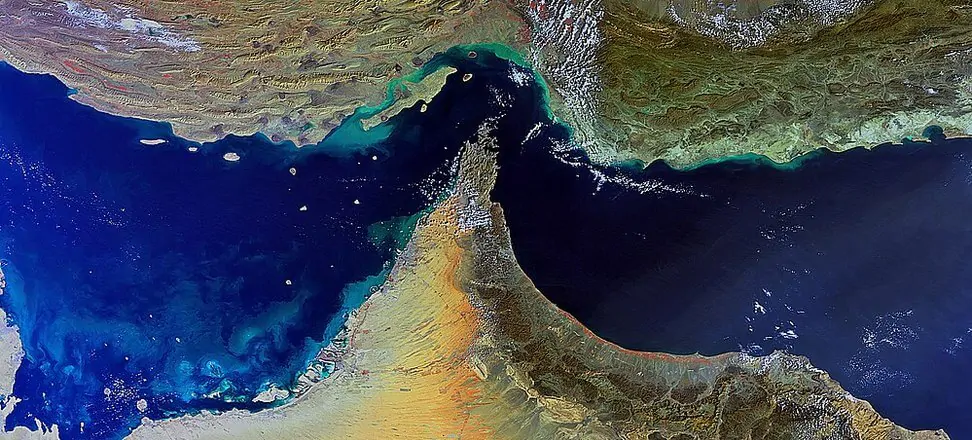
The Strait of Hormuz blockade, in place since March 2026, has cut off one‑fifth of global oil supply. According to Rapidan Energy Group, if the blockade lasts until August, the world faces a slowdown on the scale of 2008. JP Morgan and the EIA warn that commercial oil stocks in OECD countries could fall below minimum operating levels as early as August, signalling a physical shortage that cannot be fixed by raising output elsewhere.
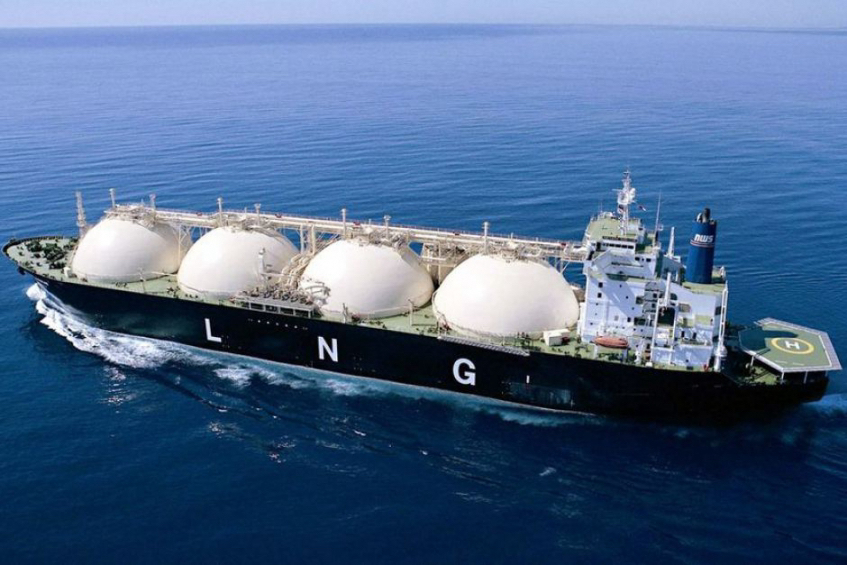
The Strait of Hormuz, located between the Persian Gulf and the Gulf of Oman, is the world’s most important oil transit chokepoint. According to the US Energy Information Administration, about 20–21 million barrels of oil flow through the strait every day, roughly one‑fifth of global demand. In addition, the strait is a key corridor for liquefied natural gas from Qatar and the United Arab Emirates.
Blocking this route is not a local incident but a strike at the very heart of global energy supply chains that power modern industry, transport, agriculture and heating. In the 1970s, the capacity of pipelines, ports and tankers was not the target of mass attacks. Now the infrastructure is physically damaged, meaning that even after a political truce, restoring full throughput will take weeks or months.
The clock is ticking
Global oil inventories are shrinking at an unprecedented rate. According to Goldman Sachs, in May 2026 the global stock drawdown reached 8.7 million barrels per day – nearly twice the average rate seen at the start of the conflict. For comparison, in the week ending 15 May, US inventories fell by 9.9 million barrels, the largest weekly drawdown of strategic reserves in the country’s history.
Analysts at JPMorgan Commodities Research point to a dramatic and record‑fast decline in total visible global oil stocks. The operational stress level – marked by a yellow line on the institution’s charts – is 7.6 billion barrels. At the current drawdown rate, that level will be reached as early as June 2026. This signals the market entering a state of extreme logistical tension, where commercial reserves begin to drastically limit supply flexibility.
The critical threshold, marked in red, is according to JPMorgan analysts the absolute operating minimum required for pipelines to maintain pressure and function physically. According to the forecast, that level will be crossed in September 2026. Meanwhile, the US Energy Information Administration estimates that commercial stocks in OECD countries and key storage hubs could fall below minimum operating levels in August.
It is worth noting the asymmetry of this shock. Among producers in the Persian Gulf, stocks are rising to maximum operating limits, but regional storage capacity is estimated at just 25 days. Shutting down an oil well that normally operates under enormous pressure carries huge technological risks. A sudden drop in flow and pressure changes in the reservoir can damage the well, and in extreme cases lead to permanent loss of production capacity.
A surge in exports from outside the Gulf and deep import cuts by major Asian countries have temporarily masked the physical shortage
Chinese imports alone fell by 6.6 million barrels per day, and Chinese refineries resold cargoes, including from West Africa. That demand reduction was precautionary and speculative, not structural. Beneath the surface of apparent stability lies a record‑fast depletion of oil‑in‑transit – the oil flowing to physical markets.
Countries such as China, Japan, South Korea and India import not only oil and gas through the Strait of Hormuz but also a wide range of petrochemical feedstocks that underpin their industries. As soon as the fear of further disruptions subsides and demand returns, a sharp rebound in purchases will collide with depleted inventories, triggering a sudden price spike and potential supply interruptions.
Macroeconomic scenarios
As early as March 2026, when the conflict was just beginning, a Dallas Fed survey indicated that a six‑month (two‑quarter) blockade of Hormuz would cut annual global GDP growth by 0.3 percentage points. In the case of a blockade lasting at least until the end of 2026 (three quarters), it would reduce growth by as much as 1.3 percentage points.
According to International Monetary Fund forecasts from before the war, global economic growth in 2026 was expected to be 3.3 percent, later revised down to 3.1 percent in April. A slowdown of 1.3 percentage points would bring global GDP growth down to about 1.8–2.0 percent – a figure close to a technical global recession, especially after accounting for multiplier effects and the spill‑over to other sectors.
From a consumer perspective, analysts say plainly that all options are on the table – from slowdown to recession. Rising prices combined with demand suppression lead to stagflation, one of the worst nightmares for central banks. Historical oil shocks in 1973, 1979 and 1990 each time pushed the developed world into economic trouble. The deeply ingrained belief among ordinary people that oil shortages and high prices mean economic trouble is highly significant from a psychological standpoint – people postpone life and financial plans, and such a change in behaviour can do more damage to the economy than the physical price of oil itself.
Prices are no longer the main problem
The scenario of slowdown and even recession outlined by the Rapidan Energy Group report and the opinion of Ken Griffin (founder of Citadel) is based not on high oil prices but on a physical shortage of the commodity on the market. Price is in this context merely a consequence, not a cause. The time remaining before that shortage is felt is growing shorter.
Ken Griffin stated outright that keeping the blockade in place for 6 to 12 months would trigger an inevitable global recession on a scale comparable to the 2008 financial crisis. Recall that the financial market collapse in the second half of 2008 brought global real GDP growth to about 2.9–3.0 percent in 2008 – a significant slowdown from the over 4 percent seen in 2005–2007. The full force of the crisis hit in 2009, which was the first year since the end of World War II that global GDP recorded an annual decline, of 1.3–1.4 percent.
Developed economies experienced a deep recession in 2009 with GDP falling by about 3.4 percent, while developing economies saw a sharp deceleration from about 8.2 percent growth in 2007 to 1.6–1.7 percent in 2009. The only worse year after WWII was 2020, when the COVID‑19 pandemic swept the world. The current crisis has this additional dangerous feature: it strikes directly at physical supply volumes, not just prices.
The shock spreading through the entire economy
The impact of the Strait of Hormuz blockade is not limited to fuel prices. The functioning of the modern economy depends on a wide range of oil‑based and petrochemical products, as well as commodities whose transport is blocked along with oil. The high‑tech industry is facing a shortage of helium, a critical element for producing memory chips, processors and many other electronic components. The shutdown of Qatar Energy has removed about one‑third of global helium supply.
The industry’s biggest players – TSMC, Samsung, SK Hynix – have managed to stockpile enough to last a few months, but they are already forced to recycle used materials and turn to more expensive imports from the US and Canada. Memory chips require more helium than standard logic chips, making them particularly vulnerable to shortages. In addition, chip production requires solvents such as ether acetate or ethyl lactate, which are also petrochemical products; their absence could paralyse entire production lines.
The fast‑moving consumer goods industry is also feeling the effects. Up to 99 percent of conventional plastics are made from petrochemical feedstocks derived from oil and gas refining. A sharp jump in oil prices automatically raises the cost of producing polyethylene, polypropylene and PET resins. The packaging sector immediately passes these costs on to cosmetics manufacturers, who pay significantly more for tubes, jars and bottles.
An example of adaptation to the new reality is the Japanese company Calbee, which has started packing its chips in black‑and‑white packaging. The reason is surprising: shortages of naphtha, a key raw material for printing ink. Where such cuts are not possible, prices rise regardless of the underlying cost of food or chemical ingredients.
Agriculture is particularly exposed because of the link between synthetic fertiliser production and natural gas. Gas costs account for 70 to 90 percent of the cost of producing ammonia, the basic feedstock for nitrogen fertilisers. The blockade and destruction of production infrastructure in Qatar and Iran have immediately removed nearly 12 percent of global nitrogen fertiliser supply.
Goldman Sachs Research analysts point to two direct consequences for agriculture. First, delayed or reduced fertilisation will translate into lower yields in subsequent seasons. Second, high‑yield crops such as corn give way to more nitrogen‑efficient plants, such as soybeans, which affects livestock farming, where corn is the main component of animal feed.
The construction sector and the property market are not immune either. The inflationary pressure that seeps deeply into various industries – as described above – affects the property market through the interest rate channel. Fears of higher interest rates from the Federal Reserve, which may be forced to tighten monetary policy further in response to rising inflation, are already feeding into mortgage costs, even though rates have not formally been raised – because of the direct link between mortgage rates and government bond yields.
Supply response and changes within the OPEC+ cartel
The departure of the United Arab Emirates from the OPEC+ cartel is an event of great significance for the global oil market. The UAE is the only country – besides Iran and Saudi Arabia – that has access to the Persian Gulf and at the same time possesses alternative connections to open waters, independent of the situation in the Strait of Hormuz. The decision to leave the cartel increases the risk of even greater price volatility and supply‑decision chaos, as the UAE is no longer bound by OPEC+ production limits.
The UAE is already accelerating the construction of a second pipeline to allow oil exports bypassing the Strait of Hormuz. This is a response to the revealed vulnerability of the region’s entire logistics model to a blockade of this strategic chokepoint. However, building such infrastructure takes time – at least a dozen or so months – and will not solve the problem in the near term. In the meantime, the market remains dependent on available stocks and limited alternative supply routes.
An asymmetric shock and the absence of easy solutions
The global economy is entering a phase of energy rationing. This is already most visible in Asia, the region most dependent on Persian Gulf commodities – and not just energy commodities. Countries such as China, Japan, South Korea and India import through the Strait of Hormuz not only oil and gas but also a wide range of petrochemical feedstocks that are the foundation of their industries.
The only realistic path to defusing the crisis and avoiding a global economic collapse remains not just a ceasefire between the United States and Iran, but above all the reopening of the Strait of Hormuz. Without that, regardless of political and military decisions, the world will have to face the consequences of a physical shortage of the commodity that powers modern civilisation. And as the analyses from Rapidan Energy Group, JPMorgan and the EIA show, those consequences could be felt as early as August 2026.