
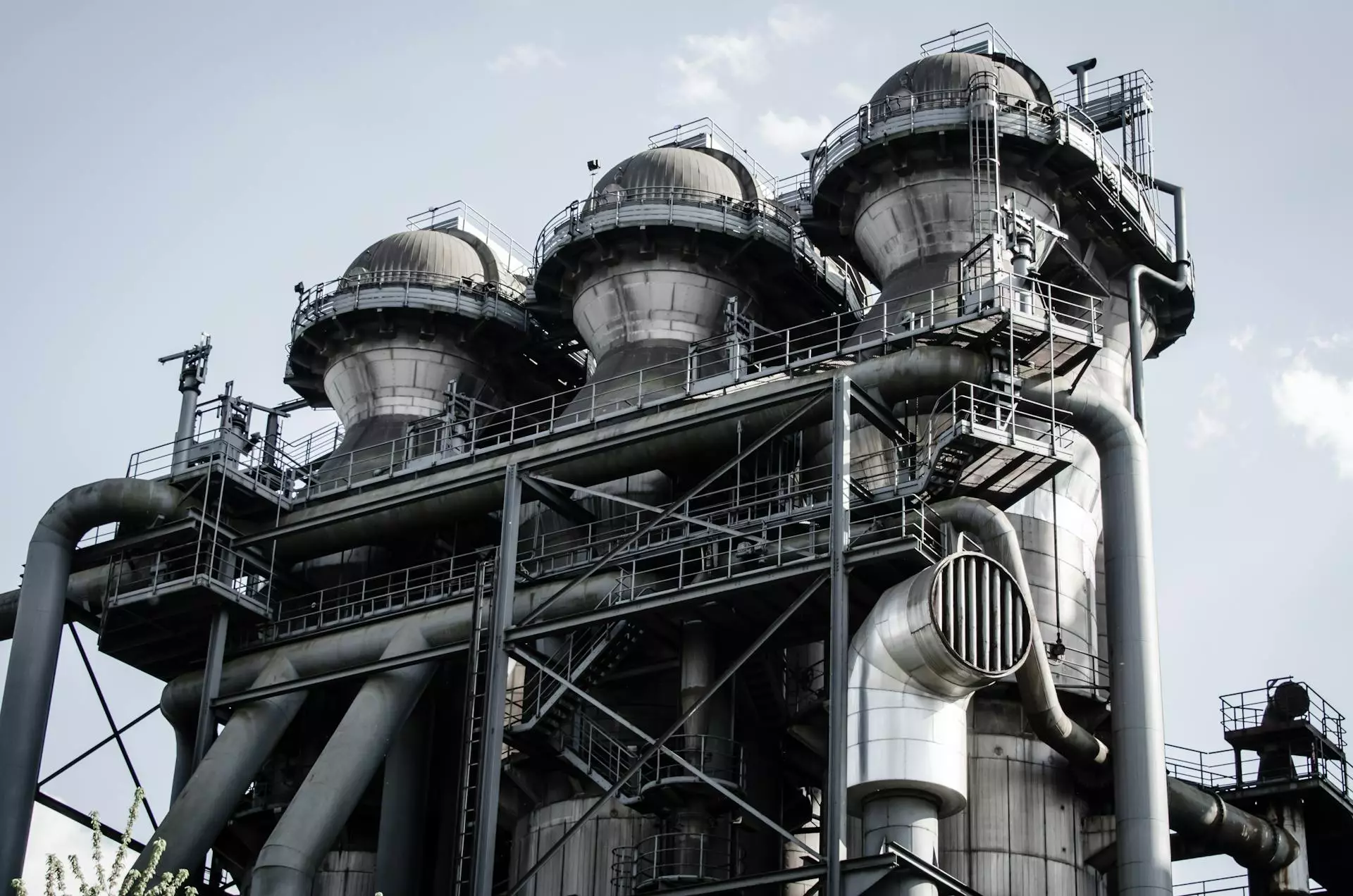
For decades, heavy industry was the backbone of Europe’s economic power, supplying raw materials, components and finished products across the continent. Today, faced with rising energy prices, tightening environmental regulations and competition from Asia and America, sectors such as steelmaking, chemicals and cement production face an existential challenge. In 2026, the question about the future of heavy industry in Europe is no longer just about competitiveness but about survival itself. Will the old continent manage to keep its factories and jobs, or will it witness their systematic relocation to where costs are lower and regulations less restrictive?
Over the past five years, European heavy industry has experienced a series of shocks that have undermined its position in the global market. The sharp rise in natural gas and electricity prices, triggered by the war in Ukraine and the crisis in the Middle East, has made production in many energy-intensive sectors unprofitable. According to data from the Polish Economic Institute from April 2026, industrial electricity prices in the European Union were more than twice as high in the first half of 2025 as in the United States and China.
This cost differential has fundamentally changed the economic calculus for producers of steel, aluminium, fertilisers and plastics. EU regulations, such as the Emissions Trading System (ETS) and the Carbon Border Adjustment Mechanism (CBAM), while designed to protect the climate and level the playing field, in the short term add to the burden on European producers. Many companies have faced a dramatic choice: modernise and pay, or leave Europe. Poland, one of the largest steel producers in the region, feels these changes particularly acutely.
Energy costs in Poland are among the highest in the EU, and the industrial structure still relies on coal and outdated technologies. Over the past two years, several large production plants in Poland have announced job cuts or temporary production halts. At the same time, voices are emerging that this difficult situation could be an impulse to accelerate the transition towards more modern and sustainable technologies, which in the long term could restore competitiveness to European industry.
The energy crisis as a catalyst for structural change
High energy prices hit heavy industry with double force. Directly, they increase production costs because processes such as steel melting, cement production and chemical synthesis require enormous amounts of heat and electricity. Indirectly, they affect the competitiveness of entire supply chains, as higher costs of raw materials and semi-finished products ripple through to later stages of production. European products become more expensive than their counterparts made in regions with lower energy prices, leading to a decline in exports and a rise in imports.
According to data from the European Steel Association (EUROFER) from June 2026, EU crude steel production fell by 2.9 percent in 2025, reaching its lowest level on record. At the same time, imports of steel products from Asia surged, and for certain product categories, such as finished goods from China, the increase was as high as 150 percent year-on-year. European steel mills, which a decade ago were world leaders, now have to compete with products whose prices are often 30-40 percent lower. Many plants are operating at the edge of profitability, and some are being forced to cut production or close entirely.
The energy crisis could, however, become a catalyst for positive change, forcing companies to seek more efficient and sustainable solutions. Some enterprises, instead of cutting production, are investing in new technologies such as electric arc furnaces powered by renewable energy, carbon capture and storage systems, and hydrogen production from renewable sources. These innovations, while costly, could in the long term restore competitiveness to European industry and open new markets for low-carbon products. Swedish steel producer SSAB, together with LKAB and Vattenfall, is implementing the HYBRIT project to produce steel using hydrogen instead of coke.
The first commercial deliveries of steel produced with this technology began in 2025, and the process is ultimately expected to reduce CO₂ emissions by 95 percent. Similar initiatives are emerging in Germany, France and Poland, where ArcelorMittal officially launched hydrogen furnaces at its Krakow plant in June 2025. These projects show that transformation is possible, though it requires enormous financial outlays and state support to create the right conditions for investment and guarantee a stable legal framework.
An additional challenge for European industry is uncertainty over future energy prices. Unlike China or the United States, which have access to cheap energy sources, Europe is largely dependent on imports, making it vulnerable to price fluctuations and supply disruptions. The war in Ukraine demonstrated how quickly and dramatically energy market conditions can change, prompting many companies to consider relocating production to more stable regions.
In response to these concerns, the European Union has taken steps to increase energy independence, including accelerating the development of renewable energy sources and diversifying gas supplies. These processes, however, are long-term and will not bring immediate results. In the coming years, European industry will continue to struggle with high energy prices, which could further weaken its competitiveness internationally.
A double-edged sword for European industry
EU climate policy, while necessary from a global perspective, puts European industry in a difficult competitive position. The Emissions Trading System, designed to limit greenhouse gas emissions, in practice means additional costs for producers. CO₂ emission allowance prices reached over 100 euros per tonne in 2025, significantly raising production costs in sectors such as steel and cement. In 2020, prices were around 20-30 euros per tonne, meaning that in just five years, emission costs increased fourfold. For an average steel mill producing 2 million tonnes of steel annually, this means an additional cost of around 200 million euros per year, which with margins often not exceeding 5-10 percent is a huge burden. Many European steel mills are beginning to consider relocating production to countries with less stringent regulations, such as China, India or Turkey, where emission costs are much lower or non-existent. At the same time, the CBAM mechanism, designed to prevent carbon leakage by imposing tariffs on imported products from countries with less ambitious climate policies, is still being implemented and its effectiveness remains a subject of debate.
On the one hand, CBAM is meant to level the playing field and encourage other countries to tighten their climate policies. On the other hand, critics point out that the mechanism could be easily circumvented, and its introduction could lead to a trade war with the EU’s largest trading partners, such as China and the United States. Rushing new regulations without careful consideration could lead to an exodus of industry from Europe, harming both the economy and the climate, as production would move to countries with lower environmental standards. This is why it is so important that the implementation of CBAM be gradual and carried out in close cooperation with international partners to avoid negative side effects. In response to growing pressure, the European Union proposed in 2025 doubling steel tariffs from 25 to 50 percent to protect European producers from unfair competition from Asia, especially China, which already controlled 27 percent of the EU steel market in 2025.
EU regulations can also become an impulse for innovation and modernisation. Companies that invest in clean technologies can gain a competitive advantage in markets where sustainability expectations are rising. More and more customers, both individual and institutional, are paying attention to the carbon footprint of products, making green steel or cement potentially premium products. The European automotive market is a good example. Car manufacturers are increasingly demanding that their steel suppliers confirm the low emissions of their production processes. Volkswagen, BMW and Mercedes-Benz have announced that by 2030 they will only use suppliers who meet certain emission standards, forcing steel mills to invest in green technologies. Environmental regulations, while costly, can open new market opportunities for those who can adapt. At the same time, voices are emerging that public support for the transition should be more targeted and predictable so that companies can plan long-term investments without fear of sudden changes in regulatory policy.
New technologies and automation as a response to the crisis
Many heavy industry producers are focusing on automation and digitalisation of production processes. Advanced control systems, artificial intelligence and robotics make it possible to optimise energy consumption, reduce waste and increase labour productivity. Steel mills and cement plants are increasingly using IoT sensors to monitor process parameters in real time, enabling rapid responses to changes and avoiding downtime.
At ArcelorMittal’s plants in Poland, predictive maintenance systems have been introduced that analyse data from machine sensors and predict failures in advance, avoiding costly downtime and increasing production efficiency. In the chemical industry, a continuous production model is being developed in which the entire process is controlled by advanced algorithms, optimising the use of raw materials and energy. These innovations, while requiring significant capital investment, can in the long term bring substantial savings and improve competitiveness, especially compared with countries where labour costs are lower and automation is less advanced.
Automation also brings changes to the employment structure. On the one hand, it eliminates some low-skilled jobs; on the other, it creates new, highly specialised positions for engineers, programmers and data analysts. According to market analyses, by 2030, up to 200,000 new jobs related to digitalisation could be created in European heavy industry, while around 100,000 traditional production jobs could disappear.
This change, however, requires proper preparation of the workforce and an education system capable of supplying qualified personnel. In Poland, where the vocational education sector is undergoing transformation, the challenge will be to balance labour market needs with the capacity of the training system. Companies are increasingly investing in retraining programmes for their employees to adapt their skills to new requirements, but the scale of these efforts is still insufficient. The development of automation raises questions for trade unions and governments about the future of jobs in traditional trades, requiring a new model of social dialogue and social protections for workers affected by change.
The development of new technologies also requires significant investment in research and development. European companies, to keep pace with global competitors, must continually improve their production processes and seek new, more efficient solutions. Collaboration between industry and research institutions plays a key role, enabling the transfer of knowledge and technology from universities to production plants. The Horizon Europe programme funds research projects in clean technologies, and initiatives such as the European Battery Alliance aim to develop a European supply chain for lithium-ion batteries. These actions show that Europe has the potential to become a leader in green technologies, but this requires a coordinated effort at both national and EU levels to ensure adequate funding and conditions for innovation.
Asian competition and trade wars as new challenges for Europe
The growing competition from China and other Asian countries, which until now mainly affected low-processed products, is beginning to extend to more advanced industrial sectors. Chinese manufacturers, thanks to lower labour and energy costs and less restrictive regulations, are able to offer products at prices with which European companies cannot compete.
At the same time, China is heavily investing in new technologies such as electric mobility, batteries and semiconductors, which in the future could further weaken Europe’s position in global markets. In 2025, China produced over 30 million cars, nearly 40 percent of which were new energy vehicles (electric and plug-in hybrids), making it the world leader in this field, ahead of Europe and the United States. European companies such as Volkswagen and Stellantis are investing billions of euros in developing their own electric vehicles, but they still lag behind their Chinese competitors in terms of production scale and costs. The European Union must decide whether it wants to protect its industry through tariffs and trade barriers, or whether to focus on innovation and cooperation with new partners.
Trade wars that have intensified in recent years between the United States and China, and between the US and Europe, are also affecting the condition of European industry. The imposition of tariffs on steel and aluminium by the Trump administration in 2025, followed by retaliation from the European Union, led to disruptions in supply chains and increased uncertainty. Many producers, fearing further tariffs, began relocating their plants to other regions, further weakening the European economy.
The trade agreement between the EU and Mercosur, concluded in December 2024, offers some hope for new export markets for European products, but its effects are still difficult to predict. Rising geopolitical tensions between the US and China mean that Europe must navigate between the two blocs, trying at the same time to protect its economic and political interests. This complex situation requires European leaders to think strategically and build alliances that go beyond traditional divisions.
In response to these challenges, the European Union has begun work on a new industrial policy aimed at strengthening the competitiveness of European industry and reducing its dependence on imports from third countries. Key elements of this policy include increasing investment in research and development, support for small and medium-sized enterprises, and the promotion of green technologies.
At the same time, the EU is seeking to conclude new trade agreements with partners in Asia, Africa and Latin America to diversify its export markets and sources of supply. These actions are essential for Europe to maintain its position as a global industrial leader, but their effectiveness will depend on the ability to respond quickly to changing market and geopolitical conditions.
The future of European heavy industry
The future of European heavy industry is closely tied to the pace of the energy transition and the ability to adapt to new market realities. Much suggests that traditional, energy-intensive industries will shrink, and in their place new, more sustainable and technologically advanced sectors will emerge. This process will be long and painful, especially for regions that have based their economies on heavy industry for decades.
Regions such as the Ruhr in Germany, Upper Silesia in Poland and northern France, where heavy industry was the main employer for decades, will have to undergo a profound economic transformation. Governments and European institutions must support the transition through investment in infrastructure, research and development, and education. Only in this way can Europe maintain its position as a global industrial leader in the post-fossil era, while creating new, highly skilled jobs.
Some forecasts point to the possibility of a renaissance of European heavy industry based on new technologies and the principles of the circular economy. Rising primary raw material prices and growing environmental awareness are making recycling and material reuse increasingly cost-effective. European production plants that invest in modern resource recovery technologies can gain a competitive edge in the global race.
The aluminium industry is a good example. Recycling used cans and profiles saves up to 95 percent of energy compared with primary production. Similar solutions are being developed in plastics, steel and cement, where increasing sustainability requirements are creating new opportunities for companies that can seize them. In this way, Europe can not only reduce its dependence on raw material imports but also become a leader in sustainable development, which in the longer term could translate into tangible economic benefits.
The ultimate shape of European heavy industry in the coming decades will depend on many factors, including the pace of the energy transition, the direction of regulatory policy and the ability to compete with Asia and America. One thing is certain. This industry will not return to its former pre-energy crisis state. It faces a profound transformation that may be painful but can also open new opportunities for those who can adapt to changing conditions. Finding a balance between environmental requirements and industry needs will be key, so that the transition does not come at the cost of jobs and the competitiveness of the European economy. Europe faces a choice that will determine its place in the global division of labour for decades to come.




