
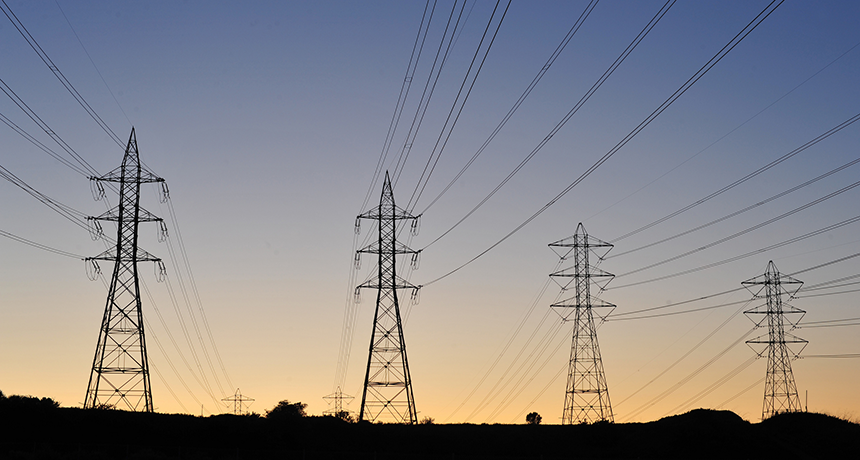
An increase in installed renewable energy capacity does not guarantee that all potentially available electricity will be used or that new projects will generate their expected returns. Grid capacity, energy storage availability, demand flexibility and the ability to balance the power system are becoming increasingly important. In Poland, these factors could have a growing impact on the economics of new investments in the coming years, particularly in areas where renewable energy development is outpacing the modernisation of electricity infrastructure.
Installed capacity is one of the most frequently cited indicators of the energy transition. It shows how quickly new installations capable of generating electricity are being added, but it does not reveal how much electricity will actually reach consumers, when it will be needed or whether the grid will be able to transmit it. In a power system with a large share of weather dependent sources, the difference between potential generation and electricity that can actually be used can have direct financial consequences.
The problem arises when many installations generate electricity at the same time and the local grid cannot accommodate all of that output. A similar situation occurs when generation is high but electricity demand remains low, while the system lacks sufficient storage capacity or consumers able to shift their consumption to more favourable hours. Under these conditions, some of the available electricity may go unused, even though it could technically have been generated.
For investors, this means that project profitability can no longer be determined solely by installation construction costs, projected output and the average electricity price. The connection location, hourly generation profile, ability to sell electricity during periods of surplus and the risk of production curtailment by the system operator are also becoming important.
Grid constraints can change the economic equation
For solar and wind farms, the key consideration is not only how much electricity an installation can generate over the course of a year, but also whether that electricity can be taken by the grid during periods of peak generation. If grid constraints force production to be curtailed, actual electricity sales may fall below the levels assumed in the financial model.
Generation curtailment, also referred to as non market based redispatch, means an instruction to reduce output for reasons related to the operation of the power system, rather than necessarily because the installation itself is unable to generate electricity. It may be required, among other circumstances, when grid or system balancing constraints prevent the safe acceptance of all available generation.
If such situations occur only occasionally, their impact on a project’s financial performance may be limited. However, if they become more frequent or affect a substantial share of potential output, investors must account for the risk of lost revenue, the cost of risk mitigation and uncertainty about future cash flows. As a result, even an installation with low generation costs may deliver weaker financial performance than a straightforward comparison between production costs and the market price of electricity would suggest.
The significance of this phenomenon depends not only on the overall scale of curtailment across the country, but also on where it occurs. Two installations with similar capacity and technology may face different risk profiles if one is connected at a location with available grid capacity and the other is in an area where renewable generation has expanded faster than the infrastructure needed to accommodate it.
The scale of curtailment shows that the problem already exists
Curtailment of renewable generation is not merely a risk for the end of the decade. Data for 2024 show that the phenomenon was already occurring on a noticeable scale in the Polish market. According to the Energy Regulatory Office (URE), Polskie Sieci Elektroenergetyczne (PSE), Poland’s transmission system operator, ordered non market based curtailment of photovoltaic generation amounting to 597.26 GWh that year, along with approximately 125.1 GWh from wind power plants. For both technologies, the main reason was balancing the national power system, rather than local grid constraints alone. Distribution system operators also ordered curtailments, including in response to overloaded lines and transformers and excessively high voltage.
This distinction is important when assessing the profitability of new investments. Curtailment caused by grid constraints indicates that electricity cannot be taken from a particular location under the prevailing operating conditions of the infrastructure. Curtailment resulting from system balancing, by contrast, may occur when electricity supply exceeds demand at a given time or when generation and consumption must be kept in a safe balance.
For a generator, the financial impact depends on the settlement rules applicable to the particular case, the terms of the contract and the possibility of selling electricity during other hours. Not every curtailment results in the same loss, and data on curtailed generation volumes are insufficient to calculate the impact on the profitability of every wind or solar farm. They do, however, show that forecasts assuming all potential output can be sold may need to be treated with greater caution.
Public institutions have also taken notice of the problem. In March 2026, the Office of Competition and Consumer Protection announced that it had launched an explanatory investigation into how PSE applies the redispatch mechanism. The authority referred to complaints from companies claiming that their installations were curtailed more frequently than those of competitors. The investigation concerns, among other things, whether the mechanism was applied proportionately and without discrimination. The launch of the investigation does not itself establish that any infringement occurred.
The grid will be expanded, but infrastructure projects take time
Expanding transmission and distribution infrastructure is one response to these constraints, but it cannot be assumed that all problems will disappear as soon as new projects begin. Building high voltage lines, new substations and connections between regions requires funding, documentation and the completion of administrative procedures.
PSE’s transmission grid development plan for 2025 to 2034 provides for the construction of approximately 4,700 kilometres of new 400 kV line circuits, the commissioning of 28 new substations and the modernisation of another 110. The estimated investment exceeds PLN 64 billion. The expansion is intended to enable electricity to be transmitted from new generation sources, including offshore wind farms, large photovoltaic installations and onshore wind farms, while also accommodating future consumers and a nuclear power plant.
The scale of the plan demonstrates that integrating additional capacity requires not only the construction of generation sources, but also the transformation of the system that must accommodate their output and deliver it to consumers. At the same time, investment plans do not mean that grid capacity will immediately become available in every region. Even if the transmission network is strengthened, constraints may persist at distribution level or at specific connection points.
As a result, 2026 to 2028 could be a period in which grid related risks are increasingly reflected in investment decisions, while some of the larger infrastructure projects are still under construction. This is not a definitive turning point for the entire country, but a reasonable timeframe for assessing risk: constraints already exist, and grid expansion is a multiyear undertaking.
Energy storage and flexible demand can reduce losses
Grid expansion is not the only way to make better use of renewable electricity. Energy storage can play an important role by shifting some supply from periods of surplus to times of higher demand. If electricity generated at midday can be stored and discharged in the evening, the pressure to use all generation immediately when it is produced is reduced.
However, storage does not solve every problem. Its effectiveness depends on charging and discharging power, capacity, efficiency, costs and location. If a constraint results from an inability to transmit electricity through a particular section of the grid, a storage facility installed in the right location may help, but a facility elsewhere will not necessarily remove the bottleneck. The number of storage facilities across the country is therefore not the only consideration. Their geographical distribution and how they are used also matter.
Demand flexibility is another tool. Some industrial plants, heating systems and other consumers can shift electricity consumption to hours when renewable generation is high. This requires the relevant industrial processes to be adaptable, appropriate price signals and contracts that reward consumers for providing flexibility. Not every type of consumption can be shifted, but where this is possible, better alignment between demand and generation can reduce surplus electricity.
Dispatchable sources, which can supply electricity when weather dependent generation falls, will also be important. The energy transition therefore requires not only a growing share of renewables, but also an appropriate combination of grids, storage, flexible consumers and resources that support system balancing. The absence of any one of these elements can limit the usefulness of the others.
When will constraints start determining investment viability?
There is no single date from which grid constraints and generation curtailment will begin to affect every new investment in Poland. Their significance is already apparent for some projects. In the coming years, the risk could become even more important, particularly in locations where generation capacity is growing rapidly but grid expansion is failing to keep pace.
Projects most exposed to this risk are those whose profitability depends on selling a large proportion of their output during the same hours as competing installations. This applies especially to generation sources with similar operating profiles concentrated in regions with limited grid capacity. Investors in these projects should analyse not only the average annual electricity price, but also prices during generation hours, potential curtailment, connection conditions and the availability of local consumers.
Business models combining generation with storage, direct sales to consumers or flexible electricity use will also matter. Such solutions may reduce exposure to certain risks, but they require separate cost assessments and do not automatically guarantee higher profitability.
Three indicators will be crucial when assessing the situation through to the end of the decade: whether the volume of generation curtailment continues to rise, how quickly grid investments are delivered, and whether storage and flexible demand develop in the locations where they are most needed. Installed capacity figures alone will not show whether the system is ready to accommodate additional generation sources.
The most justified conclusion is that grid constraints do not need to wait until a particular year to begin affecting the economics of renewable energy. They are already an operational risk, and during 2026 to 2028 they could increasingly determine how new projects are assessed in regions where the grid is under pressure. By 2030, the scale of this impact will depend on the pace of grid modernisation, the development of energy storage and the ability to shift electricity consumption. The energy transition will not come to a halt solely because infrastructure cannot keep pace, but its economic viability will increasingly depend on whether the wider system develops as quickly as new generation capacity.




