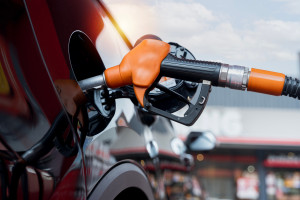
France has not introduced tax cuts on fuel like many other EU countries. Instead, the government extended a direct subsidy of 100 euros for low-income workers who commute by car. In May 2026, fuel consumption dropped 12% year-on-year as high prices pushed more people to trains and public transport.
According to the French Ministry of Economy, Finance and Industrial Sovereignty, the decline in petrol and diesel sales deepened in May, with a 12% drop compared to May 2025. In April the annual decrease was around 11%. Consumption has been falling for several months straight, hitting tax revenues hard.
Prime Minister Sébastien Lecornu announced an extension of the targeted support scheme for another month. The programme covers only employees with low incomes who use their car to get to work. – We are extending the support for another month to help those most affected – declared Prime Minister Sébastien Lecornu. By June 2, the ministry had received applications from 636,500 citizens eligible for the 100-euro payment.
Spike in train bookings and public transport use
The high fuel prices are reshaping travel habits. In May, train reservations jumped by 16% compared to the same month last year. More people also turned to urban public transport and carpooling schemes. The average price of SP95-E10 petrol in France ranged from 1.987 to 2.02 euros per litre (around 8.75 PLN). Diesel prices were between 1.99 and 2.05 euros (around 8.90 PLN).
The government’s decision to avoid broad tax cuts on fuel, unlike some neighbouring countries, means the relief is strictly targeted. Only those who can prove low income and regular commuting by car benefit from the state handout.
Budget gap widens as fuel tax revenue shrinks
The shrinking consumption directly affects public finances. The French treasury loses about 300 million euros every month in fuel tax revenues. This poses a serious challenge to the government’s goal of cutting the budget deficit to 5% of GDP this year. Analysts warn that if fuel prices stay high, the drop in consumption could persist, further straining the budget.
The extension of the 100-euro subsidy provides short-term relief for the most vulnerable drivers, but does not address the structural loss of tax income. The Ministry of Economy is closely monitoring the situation, but no measures to lower excise duties or VAT on fuel have been announced.
Źródło: WNP.PL, Fot. jittawit / Shutterstock