
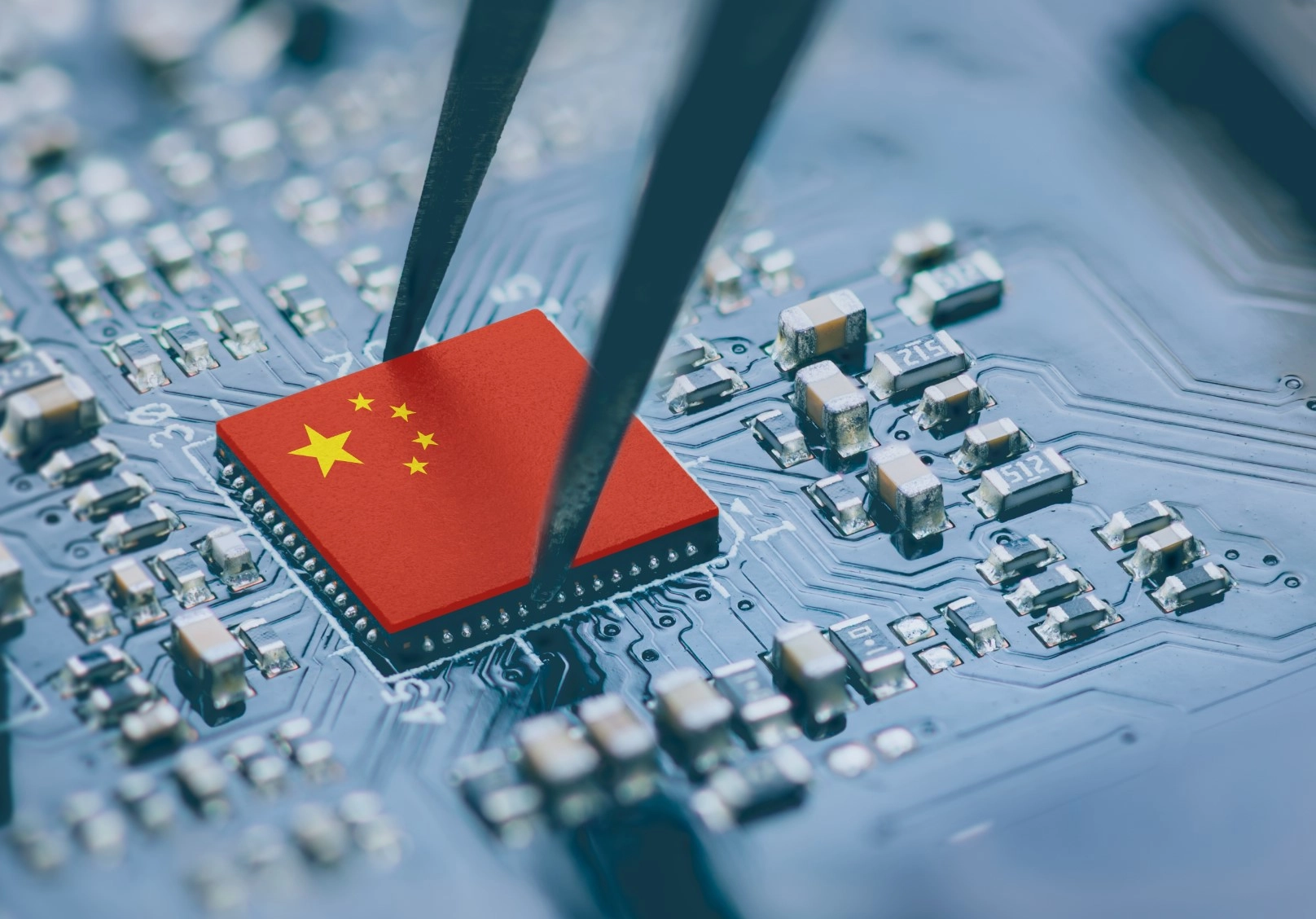
On May 4, 2026, the European Commission confirmed immediate action to restrict EU funding for clean energy projects using inverters supplied by high‑risk third‑country suppliers – effectively targeting Chinese manufacturers, including Huawei. Brussels argues that inverters are not just a technical component of a solar PV installation, but part of digital infrastructure that could enable remote interference with electricity grids. The decision will hit prosumers using Chinese equipment, who may lose access to subsidies under programmes such as Poland’s „My Electricity” (Mój Prąd).
The first to report on these plans at the end of April 2026 was the well-informed Chinese daily South China Morning Post. According to its sources, the European Commission had already internally approved a plan in April to restrict funding for projects using inverters from so-called high-risk suppliers. The newspaper cited a conversation with an EU official who said that Brussels is collecting information by May 15 from institutions responsible for distributing EU funds for photovoltaics – in Poland, this is the National Fund for Environmental Protection and Water Management. The aim is to determine which programmes are too advanced to introduce new rules during their implementation.
– The Commission is taking immediate action to limit the use of EU funds for clean energy projects that use inverters supplied by high-risk third-country providers – confirmed Siobhan McGarry, spokesperson for the European Commission, on May 4, 2026.
As the spokesperson stated, urgent action is necessary because dependence on third-country suppliers for this key component exposes European energy grids to the risk of remote shutdown by foreign entities. Brussels argues that inverters are not merely a technical component of photovoltaic installations but an element of digital infrastructure that could potentially enable remote interference with the operation of electricity grids. The Commission points out that reliance on suppliers from outside the European Union may create a risk of remote shutdown of installations or destabilisation of the electricity system.
In Beijing they press a button and switch off our power
Spokesperson McGarry did not speak of an outright ban on the use of Chinese inverters, but rather of limiting the possibility of financing them through EU programmes such as „My Electricity” (Mój Prąd). Meanwhile, some politicians are even calling for a formal ban on the use of Chinese inverters in the European Union. A group of MEPs from various factions sent a letter at the end of 2025 to European Commission Vice-President Henna Virkkunen and Energy Commissioner Dan Jørgensen concerning the threat posed by Chinese inverters.
The authors of the letter pointed out that just six Chinese manufacturers control more than two-thirds of the European market for photovoltaic inverters, and that in 2024 as much as 80 percent of newly installed inverters in Europe came from China. The situation is not symmetrical. While Europe remains open to Chinese energy technologies, Beijing has for years applied regulatory solutions that favour local producers. In China, the share of European inverters is negligible – there is no official ban on their use, but in practice regulatory mechanisms favour local suppliers and make it difficult for foreign technologies to enter critical infrastructure.
Pressure at lower levels
Concerns about the security of energy infrastructure are no longer merely an element of political debate in Brussels. More and more EU member states and national cybersecurity institutions are beginning to take concrete action. The Lithuanian parliament passed legislation in 2024 concerning the security of control systems for energy devices, which limits the possibility of remote management of installations by entities from countries considered a threat to national security – in practice, this refers mainly to China. Czech and German cybersecurity agencies have warned of the risks associated with technologies linked to China in critical sectors.
In Poland, the discussion about Chinese inverters began with work on the implementation of the EU NIS2 directive and the amendment to the law on the national cybersecurity system, which was signed by the president and came into force on April 3, 2026. The amendment introduces a mechanism for identifying High-Risk Suppliers, making it possible to limit the use of technologies deemed a potential threat to state security – including devices used in the energy sector, such as inverters and energy storage systems.
Chinese manufacturers emphasise that no public evidence has yet been presented to confirm the possibility of using inverters for sabotage activities. They argue that Europe is trying to repeat the model known from the 5G sector and restrict competition under the pretext of security.
– Discrimination based on origin violates the principles of fair trade – read a statement from Huawei cited by the South China Morning Post. The company demands the introduction of uniform standards for all inverter manufacturers.
The Chinese Chamber of Commerce in the European Union has accused the European Commission of unleashing a witch hunt. The Chamber cites a report commissioned by it from the consultancy firm KPMG, which has not yet been published in full, according to which discrimination against Chinese manufacturers in key sectors such as energy, telecommunications and logistics could cost the European Union as much as 367 billion euros.
What Chinese inverters could be used for?
The most publicised incident to date was the discovery revealed by Reuters in the United States that some Chinese inverters and energy storage systems contained undocumented communication devices, including radio receivers, which could potentially allow remote changes to settings or shutdown of devices. US services have not, however, publicly presented evidence that these devices have ever been used to carry out an attack.
Experts point out that, theoretically, an inverter connected to the internet can be remotely hacked, but this risk applies to all manufacturers, not only Chinese ones. In practice, modern inverters have security features such as communication encryption and firewalls, but no security measure is absolutely foolproof. The European Commission argues that in the case of suppliers from countries with different political systems, the risk of deliberate action is higher because the authorities of those countries may exert pressure on manufacturers.
China’s dominance in the inverter market is now very clear. According to the analytical firm Wood Mackenzie, the global leaders remain Huawei and Sungrow, which for several years have controlled a significant share of global supplies. Also in the forefront are Growatt, Ginlong Solis and GoodWe – all of these companies come from China.
European manufacturers such as Germany’s SMA Solar Technology and Italy’s Fimer have systematically lost market share in recent years, mainly due to price pressure from Chinese competition. At the same time, some Western companies maintain technological competencies and production capacities that could potentially serve part of European demand – but at higher costs. According to industry estimates, Chinese inverters are on average 30-40 percent cheaper than their European counterparts.
Restricting Chinese inverters could become one of the most serious challenges for the European photovoltaic market. Chinese devices dominate today not only because of the scale of production, but above all thanks to very competitive prices and wide availability. A sudden reduction in their market share could mean higher costs and longer project implementation times. Independent experts warn that in the short term European manufacturers cannot replace Chinese production capacity. Building a new inverter factory in Europe takes about 2-3 years and requires investment running into hundreds of millions of euros.
Other technologies in line
Inverters may only be the prelude. Work is underway in Brussels on amendments to the Cyber Security Act aimed at restricting the installation of other Chinese technologies as well. Energy storage systems are specifically mentioned in the draft provisions.
The Chinese Chamber of Commerce in the European Union has already warned that such actions could trigger a spiral of mutual retaliation. – This is a witch hunt – said a Chamber representative speaking to journalists. The Chamber emphasises that restrictions will hurt not only Chinese manufacturers but also European consumers, who will be forced to pay higher prices for European alternatives or wait longer for deliveries.
The European Commission has not yet responded to the Chinese Chamber of Commerce’s allegations. The guidelines on restricting financing for projects with Chinese inverters have not yet been officially published. According to the South China Morning Post, Brussels usually first internally determines what it would like to include in the guidelines and then submits them for consultation, during which the draft often changes. The discussion is just heating up, and the final shape of the regulations remains unknown.
Meanwhile, in Poland, the National Fund for Environmental Protection and Water Management is preparing for changes. The budget of the „My Electricity” programme for 2026 has allocated 1.2 billion zlotys for co-financing photovoltaic installations and energy storage systems. If the EU guidelines come into force, prosumers using Chinese inverters may lose the possibility of receiving subsidies. For many of them, this means having to choose more expensive European equipment or forgo co-financing. The Polish government has not yet issued an official position on the matter. The Ministry of Climate and Environment has only stated that it is analysing the potential effects of the EU regulations.


