
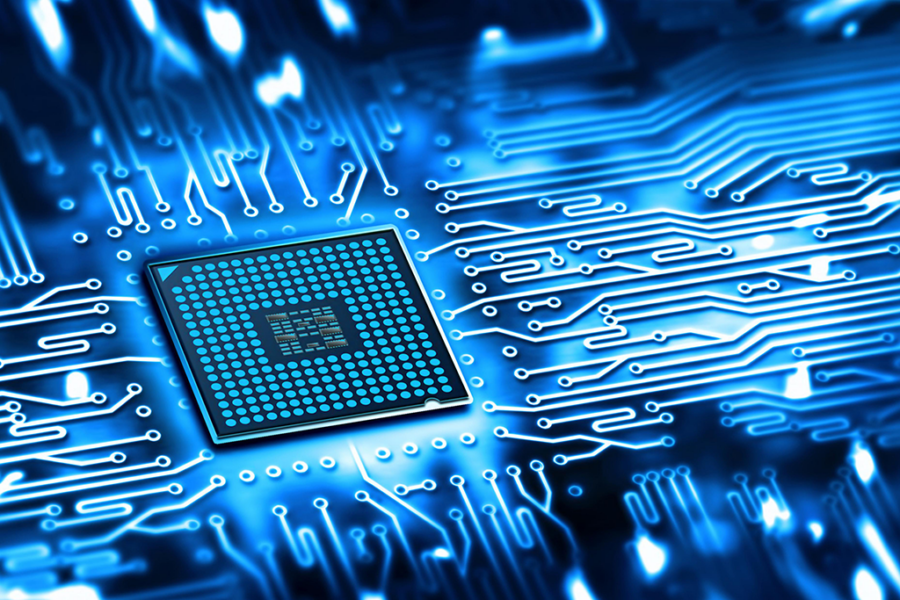
Semiconductors have become one of the most important resources of the modern economy. Without chips, automotive, industry, energy, telecommunications and the defence sector cannot function today. Europe is trying to rebuild its own production capacities, but competition with the US and Asia will be exceptionally difficult.
Just a few years ago, semiconductors were treated mainly as an element of the global technology supply chain. However, the pandemic and subsequent logistical disruptions showed that access to chips can determine the functioning of entire economic sectors.
The automotive industry felt this most acutely. The lack of semiconductors led to production stoppages in European factories and billions in losses. It turned out that even the largest industrial corporations are heavily dependent on supplies from Asia.
This was a turning point for industrial policy. Europe understood that semiconductors are not merely a technological product. They have become strategic infrastructure, similar to energy, transmission networks or critical raw materials.
Asia dominates the global chip market
Europe’s biggest problem is the scale of its dependence on the Asian semiconductor market. The production of the most advanced chips is concentrated mainly in Taiwan and South Korea. A key role is played above all by Taiwan’s TSMC, which accounts for a significant part of global production of modern semiconductors.
Such concentration means enormous geopolitical risk. A possible escalation of tensions around Taiwan could lead to a global industrial and technological crisis. For Europe, this would mean problems in automotive, industrial automation, energy and defence.
At the same time, China is intensively developing its own semiconductor sector, treating it as a foundation of technological security. The United States is responding with huge support programmes for domestic chip production and export restrictions against China.
In practice, the global semiconductor market is increasingly becoming an element of economic and strategic rivalry between the largest powers.
Europe tries to rebuild its own competencies
The European Union’s answer is the European Chips Act, which aims to increase Europe’s share in global semiconductor production. Brussels wants to attract investment, develop research and increase supply security for European industry.
The problem, however, is that modern chip production is one of the most capital-intensive sectors in the world. Building an advanced semiconductor factory costs tens of billions of euros and requires access to specialised technologies, competencies and stable energy supplies.
Europe has a strong technological and research base, but over the years it has lost its share of global production. Today it is trying to catch up with the US, Taiwan and South Korea.
Attracting investment from the largest chip producers is becoming particularly important. Germany, France and Italy are intensively competing for new production plants, offering public support and investment incentives.
The importance of chips today extends far beyond consumer electronics. Modern industry is becoming increasingly digital and data-driven. Electric cars, industrial robots, data centres, power grids and AI systems require ever larger numbers of semiconductors.
This means that control over chip production is becoming one of the foundations of economic competitiveness. Countries without access to modern semiconductors risk weakening their entire industrial sector.
This is particularly important for Europe, because the EU economy remains strongly based on industry. Without stable chip supplies, maintaining the competitiveness of automotive, automation or modern manufacturing will become increasingly difficult.
Poland can benefit from market restructuring
Although Poland is not among the largest semiconductor producers, it can play an important role in the European technology ecosystem. The country has a developing electronics sector, research and development centres, and engineering facilities.
Investments related to chip testing, industrial electronics, automation and data centre development may become increasingly important. Poland can also benefit from the expansion of European supply chains for the technology sector.
However, energy and digital infrastructure will be crucial. Semiconductor production and AI development are among the most energy-intensive sectors of the modern economy. Countries able to provide stable and competitively priced energy will have a better chance of attracting technology investments.
Technology becomes new industrial policy
The most important change is that semiconductors have ceased to be an ordinary market commodity. They have become a strategic resource determining the economic position of states.
This is why the US, China and the EU are increasingly engaged in developing their own technology sectors. States are returning to active industrial policy because they recognise that the market alone will not guarantee technological security.
In the coming years, competition for semiconductors will be one of the main elements of global economic rivalry. For Europe, the stakes are not only the development of the technology sector, but also maintaining modern industry and strategic economic autonomy.


