
In August 2026, the Hungarian Paks nuclear power plant, which had been operating continuously for 44 years, faced a complete shutdown. The cause was not a technical failure, human error, or a cyberattack. The cause was the Danube. The water level in the river, from which the plant draws cooling water, dropped to a level that made further reactor operation impossible. Of the four units, only one is operating, and its output has been reduced to about 10 percent of its nominal capacity.
For the past dozen or so years, European policymakers and the public have focused their attention on climate change primarily in the context of rising temperatures, melting glaciers, and increasingly frequent extreme weather events such as heatwaves and violent storms, which during the summer months have become increasingly severe and destructive. Meanwhile, the year 2026 brings a completely new quality of threat, as extreme drought strikes the energy and industrial sectors, which until now were seen as relatively resilient to such phenomena. The water in rivers, which just a few months ago seemed like an endless resource, is now a scarce commodity, competed for by nuclear power plants, refineries, steel mills, and chemical plants, as well as inland waterway transport, which in many regions of Europe forms the backbone of efficient supply chains. What seemed like an abstract scenario a decade ago is now the daily reality facing governments and businesses across Central and Western Europe, forced to make drastic decisions to cut production or even temporarily halt operations. This shows that the water crisis has ceased to be solely an environmental problem and has become one of the most serious challenges to the energy and economic security of the entire continent.
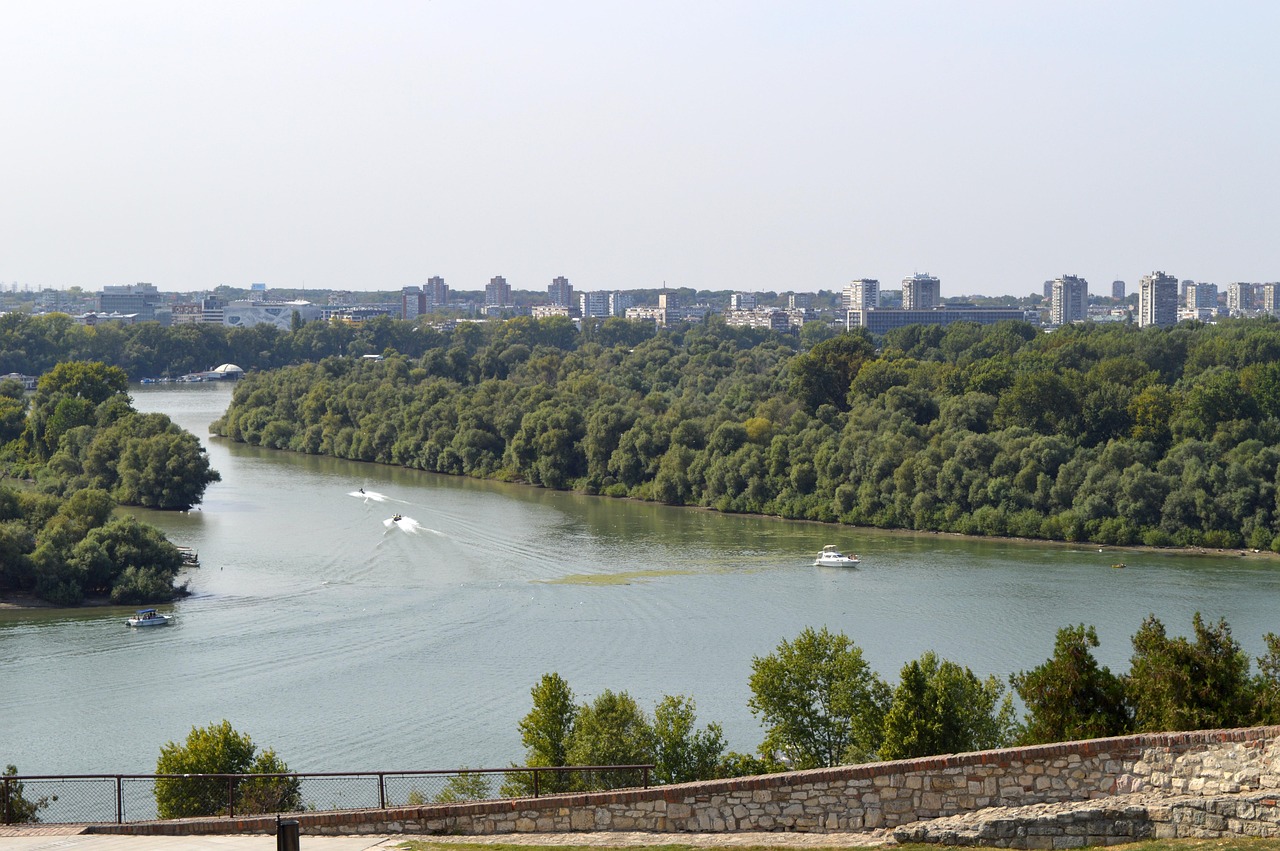
The Danube, Europe’s second-longest river, flowing through ten countries and serving as the economic lifeblood of the entire region, reached levels in August 2026 not seen for generations. In Budapest, the water gauge showed just 24 centimeters, breaking the previous record from 2018. In Romania, the Danube’s flow dropped to 1,600 cubic meters per second, compared to the long-term average of 3,900, a drop of more than half compared to normal hydrological conditions. In the town of Bezdan, on the border of Serbia, Croatia, and Hungary, the river reached its lowest level in over half a century. The effects are visible to the naked eye: shipwrecks from World War II have emerged in the riverbed, sandy shoals have appeared, and in Budapest, a rocky islet has surfaced, becoming a popular spot for photos, although the mayor of the Hungarian capital, Gergely Karacsony, warned that this is not a tourist attraction but a serious warning about the city’s water resources.
The mayor of the Hungarian capital wrote on social media that we must protect water because our lives and the quality of life in the city depend on it. This reflects a growing awareness that the drought problem does not only affect remote rural areas but directly impacts the functioning of Europe’s largest urban centers. The problem is not limited to the Danube. The Rhine, a key artery of the German economy, fell below the critical level of 30 centimeters at the gauge in Kaub, effectively cutting off the Upper Rhine from the Amsterdam-Rotterdam-Antwerp trading hub. This year’s drought started two months earlier than in 2022, indicating an acceleration of the negative trend that may become the new norm in the coming years if decisive remedial actions are not taken.
Power plants are shutting down because there is not enough water for cooling
The most spectacular and alarming effect of the drought is the paralysis of nuclear energy in Central Europe. The Paks plant in Hungary, which supplies about half of the country’s electricity demand, has shut down three of its four reactors. The cause is the record-low level of the Danube, from which cooling water is drawn. Without sufficient cooling water, the reactors cannot operate safely, and continued operation would pose a risk of overheating and serious accidents. Prime Minister Peter Magyar warned that the country faces critical days, and a complete shutdown of the plant is still a real scenario.
This means Hungary could face severe energy shortages, forcing the government to impose further restrictions on electricity consumption. On Sunday, it was possible to keep the last turbine running thanks to a reduction in energy consumption of 700 megawatts, but the situation remains dire. According to forecasts, the Danube’s water level will continue to drop, and the plant could remain offline for several weeks, forcing Hungary to increase energy imports from neighboring countries that are facing similar problems. This could lead to higher energy prices on wholesale markets and push the costs of the crisis onto end consumers.
The problem does not only affect Hungary. In Romania, due to the record-low Danube level, one of the two reactors at the Cernavoda nuclear power plant, which produces about 20 percent of the country’s electricity, was shut down. To save the cooling of the second reactor, the Romanian army carried out an unprecedented operation, detonating 180 kilograms of explosives on the riverbed of the Danube on Monday, attempting to divert the river’s current towards the power plant. This is a desperate but necessary action in the face of the escalating crisis.
The defense minister deemed the operation a success but admitted that given the extreme heat, a complete shutdown of the entire plant must be considered, which would mean the loss of another 700 MW of capacity and further deepen the energy shortages in the region. In France, the EDF group shut down three nuclear reactors and reduced output at eight others due to the excessively high temperature of the rivers used for cooling. Nuclear output restrictions in France reached a new record, totaling 9.2 gigawatts, or 14.56 percent of installed capacity. This shows that the drought problem affects all of Europe, from south to center, and that no country is immune to it.
Water transport on the brink. Why barges are not sailing?
The low water levels on the Rhine and Danube are hitting not only the energy sector but also transport, which plays a crucial role in the functioning of the economy in Western and Central Europe. About 80 percent of German inland waterway transport takes place on the Rhine and its tributaries. When the river level drops below the critical point, barges cannot take on full loads, leading to a drastic increase in transport costs and longer delivery times.
At Kaub, a key measuring point on the Rhine, the water gauge fell below the critical level of 30 centimeters, effectively cutting off the Upper Rhine and the Main from the Amsterdam-Rotterdam-Antwerp trading hub. This has catastrophic consequences for German industry, which relies heavily on water transport. Many industrial plants, especially in the Ruhr Valley, have no alternative transport connections with comparable capacity. Inland vessels cannot pass the bottleneck at Kaub, and those that can still sail must reduce their loads to a minimum. As a result, transport times double, and costs are skyrocketing. Freight rates have increased by 40 to 60 percent, which directly translates into higher prices for end products and undermines the competitiveness of European industry on global markets.
In the chemical and petrochemical industries, the costs of inland waterway transport have risen to record levels. Many companies are struggling with delays in raw material deliveries. For plants operating continuously, this can lead to shutdowns and enormous financial losses, as well as disruptions to supply chains for other sectors of the economy, such as automotive, construction, and fertilizer production, which depend on timely deliveries of chemical and petrochemical raw materials. Thyssenkrupp Steel, one of Europe’s largest steel producers, has cut production and suspended its own barge fleet. The industry speaks of a drop in transport capacity of up to 40 percent. This means the crisis has already affected not only small and medium-sized enterprises but also the largest players in the European industrial market, who must adapt their production plans to changing hydrological conditions.
The situation on the Danube is equally serious. Barges that just a few weeks ago could carry 1,600 tons of cargo are now only able to take on 400-500 tons. Their draft has dropped from 2.2 meters to 1.2 meters. This has forced operators to drastically reduce shipments and seek alternative land transport routes, which are more expensive and less efficient, further burdening already congested roads and railways, which cannot absorb the entire volume of goods traditionally carried by water. Inland waterway transport, long considered the most environmentally friendly and cost-effective way to move goods over long distances, is now becoming increasingly unreliable. Its future under conditions of intensifying drought is questionable, forcing businesses and governments to seek new logistical solutions and invest in alternative infrastructure that is less vulnerable to fluctuations in river levels.
Agriculture without water. The drought that kills crops
The water crisis is also hitting agriculture, which has long been the first and most direct recipient of drought impacts. Lack of rainfall and drying rivers mean crops do not receive enough water for proper growth. Yields in many regions of Europe are already tens of percent below the multi-year average, leading to rising food prices and shortages in European markets. According to the European Drought Observatory, in August 2026 about 40 percent of the territory of the European Union is in a state of drought warning. For cereal crops, maize, and oilseed plants, losses could reach 30-40 percent in the hardest-hit regions, such as eastern Germany, western Poland, the Czech Republic, and northern Hungary. Hungarian farmers warn that this year’s groundwater levels are the lowest in 50 years. In many places, wells that just a few years ago provided enough water for irrigation are now completely dry, forcing farmers to reduce their cultivated area and abandon the most water-intensive crops.
Farmers in Central and Eastern Europe face a dramatic choice: either cut production or bear huge costs associated with purchasing water and irrigation systems, which in many cases exceed the financial capabilities of small and medium-sized farms. In Poland, the drought has particularly affected the western and southwestern provinces, where maize and grain yields are 30-50 percent lower than last year.
Farmers fear that without rapid government intervention and the release of EU funds for agricultural aid, many will not survive the next growing season. Animal husbandry is also feeling the effects of the drought. Lack of drinking water for animals and feed, whose prices have risen sharply due to lower harvests, is forcing farmers to reduce their herds or slaughter early. In the long term, this could lead to a decrease in meat and milk production across Europe, and consequently to further increases in food prices.
In regions where crops are heavily dependent on artificial irrigation, such as Spain, Italy, and Greece, the situation is even more dramatic. In many places, groundwater levels have dropped to levels that make further use impossible. The lack of water threatens a complete collapse of agricultural production, which in these countries represents a significant part of the economy and exports. EU officials warn that the effects of this year’s drought will be felt not only in agriculture but across the entire economy. Higher food prices will hit consumers’ pockets, and a decline in agricultural exports will worsen the trade balance of many member states that traditionally export a significant portion of their agricultural production to other EU countries.
Is this the new normal? What the forecasts for the coming decades say?
Analysts and climatologists agree that such phenomena, which just a dozen years ago were considered extreme and occurring once every few decades, will become more frequent and intense. According to research by World Weather Attribution, conditions favoring such strong evaporation have become, due to climate warming, about 80 times more likely in Western Europe and about 40 times more likely in its eastern part. This means that droughts similar to this year’s could become the new normal in the coming decades. The European Environment Agency warns that without decisive adaptive actions, including investment in water retention, modernization of irrigation systems, and changes in crop structure, Europe could face a permanent water crisis that will affect not only agriculture but all sectors of the economy, from energy to industry and transport.
Europe must adapt its infrastructure to conditions that were considered extreme just a few years ago but are now becoming commonplace. This means that governments and local authorities will have to make difficult decisions about investing in water storage systems, modernizing power plants so they can operate under lower water levels, and creating strategic reserves to survive longer drought periods without paralyzing the economy. Climate change is changing the rules of the game. Europe, which until now has based its economy on stable hydrological conditions, must prepare for a future where water is as valuable and scarce a commodity as oil or natural gas, and its lack can become a source of not only economic but also social and political tensions.
The European Union is working on a new water strategy aimed at increasing the continent’s water security, but the pace of legislative work is too slow to keep up with climate change. Politicians often focus on ad-hoc solutions rather than investing in long-term adaptation programs that could prevent the worst-case scenarios. In the face of the escalating crisis, Europe must confront the question of whether it is ready for a future where droughts are as common as floods, and water becomes the continent’s most valuable resource. The answer to this question will determine whether Europe can maintain its position as one of the richest and most stable regions in the world, or whether it will become a victim of its own inability to adapt to changing climatic conditions.
A call for conservation and a crisis of the decade
In the face of the crisis, the governments of Hungary and Romania have introduced emergency measures to reduce energy consumption and avert the risk of a blackout. The Hungarian Prime Minister appealed to citizens and businesses to reduce electricity consumption during peak hours, between 5:00 PM and 10:00 PM, when demand is highest and the system is most strained. A ban was imposed on watering sports fields and filling swimming pools.
Rail freight transport was suspended during peak hours, and the state administration switched to remote work for the first three days of the week to reduce energy demand in public buildings. Illuminations on buildings were turned off, and over 100 cities and towns were subject to water use restrictions aimed at reducing consumption of this scarce resource. Romania is also appealing to citizens and industry to reduce energy consumption, and large companies such as Dacia and Ford have halted production to relieve the system. This represents a significant, voluntary contribution to reducing energy consumption and shows that the crisis has already affected not only the public sector but also the largest employers in the region.
The Romanian Prime Minister thanked the companies that have already mobilized and confirmed that individual adjustment plans have been agreed with major industrial consumers, involving temporary production stoppages during peak demand hours. This is an example of responsible business behavior in the face of the crisis. The economic effects are already being felt. The crisis could cost Hungary between $315 million and $630 million due to rising prices of imported electricity.
The drought in 2025 cost the European Union around €29.4 billion, and this year’s losses could be even greater, as the water crisis moves from fields and forests to the most critical links of the economy. The European Drought Observatory indicates that conditions remain critical across much of the continent. Researchers from World Weather Attribution point out that the current drought is not solely due to a lack of rain. Extreme temperatures accelerate evaporation from the soil, plants, rivers, and reservoirs, meaning that even a similar rainfall deficit now leads to faster surface drying than in a cooler climate.
Conditions favoring such strong evaporation have become, due to climate warming, about 80 times more likely in Western Europe and about 40 times more likely in its eastern part. This means such phenomena will occur more frequently and with greater intensity. This, in turn, requires adapting infrastructure, energy systems, and logistics to conditions that were considered extreme just a few years ago but are now becoming the everyday reality. The water crisis is moving from fields and forests to the most critical links of the economy. This means it is no longer just a problem for agriculture but a problem for the entire European economy, requiring immediate action at both the national and EU levels. The Danube has revealed a problem that Europe has long overlooked, and now it must face it before the consequences become irreversible.
Photo: Pixabay




