
As of 1 July 2026, the long‑standing customs exemption for shipments with an actual value of up to €150 imported from third countries – including China, Turkey, the United Kingdom and the United States – has ceased to apply across the European Union. One of the main objectives of the reform is to level the playing field between EU businesses and sellers from outside the Community, who until now could offer such goods without any customs duties.
The effect of these changes is a fundamental transformation in the distribution model of Chinese e‑commerce platforms. Companies such as Shein, Temu and Aliexpress have found it no longer profitable to send individual, low‑value parcels directly to customers in Europe. Instead, they have begun to rapidly seek out large warehouses in Poland, moving their distribution centres closer to the European consumer. An increasing share of goods now reaches European warehouses in bulk container form, rather than as ready‑to‑ship parcels, and order fulfilment takes place locally. Poland is a natural choice for these companies because it offers good warehousing infrastructure and still competitive rents and labour costs compared to Western Europe.
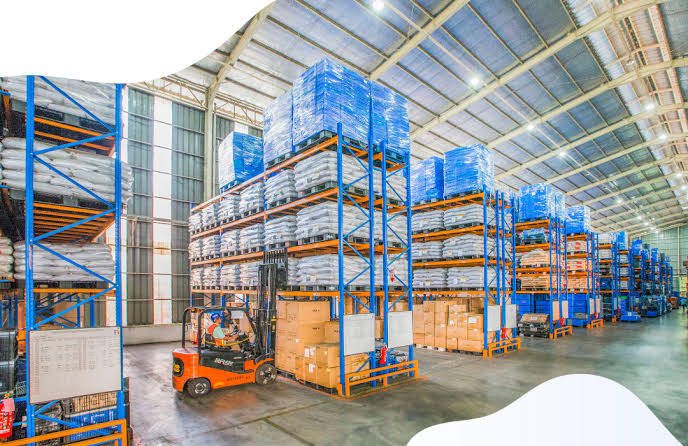
The scale of the phenomenon is impressive. Asian e‑commerce platforms leased over 400,000 square metres of warehouse space in the first half of 2026. As a result, the availability of modules larger than 15,000 square metres fell from 1.54 million to 0.78 million square metres. Demand is emerging precisely in the market segment where space is shrinking fastest. One leading Chinese e‑commerce player already has approximately 800,000‑900,000 square metres of space in various regions of Poland, illustrating the scale of the trend.
– An increasing share of goods reaches European warehouses in bulk container form, rather than as ready‑to‑ship parcels, and order fulfilment takes place locally. Poland is a natural choice for these companies because it offers good warehousing infrastructure and still competitive rents and labour costs compared to Western Europe – said Anna Galas, Director of Business Development at DHL Supply Chain Poland.
Initially, the greatest interest from Chinese platforms was focused on Lower Silesia, where large available warehouse spaces were absorbed very quickly. At first, companies sought facilities of around 50,000 square metres and larger, but as supply shrank, they also began to look at modules from around 20,000 square metres. Other directions that followed were Upper Silesia, the Łódź region and transport corridors along the S3 and A4 routes, including Poznań and Wrocław.
– At this stage, Chinese clients are primarily leasing existing facilities because they need to start operations as quickly as possible, even if the warehouse requires additional investment and adaptation – added Anna Galas of DHL Supply Chain Poland.
The market responds: vacancy rates fall, rents rise
Demand is accelerating at a time when new space is exceptionally scarce. According to AXI IMMO data, at the end of June 2026 the vacancy rate stood at 6.3 percent, and only 1.30 million square metres were under construction – the lowest level in more than nine years. The availability of the largest spaces is declining sharply, and net demand rose by as much as 58 percent year‑on‑year. The vacancy rate fell in the second quarter to its lowest level in three years, and most signed agreements are new contracts rather than renegotiations, indicating genuine absorption of space.
– The vacancy rate fell in the second quarter to its lowest level in three years. At the same time, most of the agreements signed are new contracts, not just renegotiations. This shows that space is being genuinely absorbed. With rising demand and limited new supply in the best locations, we may see upward pressure on rents in the coming quarters – said Marek Dobrzycki, head of Panattoni in Poland.
Chinese e‑commerce companies are becoming increasingly important for the Polish warehouse market. According to Damian Kołata of 7R, they accounted for several percent of demand for warehouse space in the first half of the year. The scale of trade itself is also significant – analyses indicate that three major Chinese platforms may account for as much as 15‑19 percent of Polish e‑commerce turnover.
– The scale of trade itself is also significant – analyses indicate that three major Chinese platforms may account for as much as 15‑19 percent of Polish e‑commerce turnover. This shows that we are no longer talking about a marginal phenomenon, but about a segment that is having a real impact on the logistics and warehouse real estate market – said Damian Kołata, Head of Commercial at 7R.
Is this a lasting boost for the Polish economy
Developers are beginning to respond to rising demand, but they are not willing to bet unconditionally on the Chinese boom. Panattoni currently has over 628,000 square metres of warehouses under construction, and together with projects ready to start – nearly 1 million square metres. The market leader expects further growth and wants to be ready for the next wave of demand, which may also be linked to further tightening of EU customs policy.
– At the same time, we analyse concentration risk, the counterparty’s credibility, its strategy and the security offered, including bank guarantees, for each project. As a rule, we lease our large facilities for at least 10 years, so we will not get involved in many short‑term contracts without appropriate security – declared Damian Kołata of 7R.
In the short term, the beneficiaries of the current situation are developers, warehouse owners, landowners, carriers and logistics operators. The question, however, is how much of this boom will remain permanently in the Polish economy, and the answer is not clear‑cut. The large platforms are followed by their subcontractors – companies handling packaging, returns and other elements of the supply chain. In the longer term, Chinese players often try to bring in their own operators and partners, which means that part of the added value may remain outside the Polish business ecosystem.
– It is important to note that the large platforms are followed by their subcontractors – companies handling packaging, returns and other elements of the supply chain. In the short term, Chinese players use Polish service providers, but in the longer term they often try to bring in their own operators and partners. If the platforms bring their own supply chain and subcontractors to Poland, part of the added value may remain outside the Polish business ecosystem – said Renata Osiecka of AXI IMMO.
For DHL Supply Chain, the growing interest from Chinese platforms has already translated into concrete cooperation. The company has started serving one of the Chinese marketplaces, and its role was not limited to launching the logistics operation – for several months it also acted as a consultant and advisor to the client. Chinese companies have huge experience in running logistics on a large scale, but when entering Poland they need a partner who knows local regulations, labour law and the realities of running operations.
The value of imports from China to Poland in 2025 amounted to approximately €57.9 billion, compared to only about €3.1 billion of Polish exports to China. Thus, China already accounted for about 15.5 percent of Poland’s total imports, while Temu, Shein and AliExpress alone were estimated to have generated approximately PLN 11.6 billion in turnover and about 100 million parcels per year in Poland. In the long term, further customs changes may accelerate the process of locating inventories and distribution operations closer to the European customer, and Poland has very strong fundamentals here: a large economy, growing consumption, good infrastructure, developing ports and a location close to Germany and other major European markets.




