
Events in the Persian Gulf that have limited supplies of cheap crude oil and natural gas to China, as well as many other countries, have resulted in a more than 50 percent price increase. Additionally, this has caused significant shortages on the market. China, as the world’s largest importer of these resources, stood to suffer the most. The United States were the least affected, having become the largest exporter of crude oil and natural gas. China has decided to insure itself against similar events in the future.
For a long time, they have been working not only on diversifying their imports, but have also been conducting research into achieving independence from foreign purchases of these products, regardless of which direction they came from. Symbolic of the difficulties in China’s import policy for these raw materials are the hurdles in concluding the Russian-Chinese agreement for gas from the Yamal Peninsula, via the Siberia-2 pipeline through Mongolia to China.
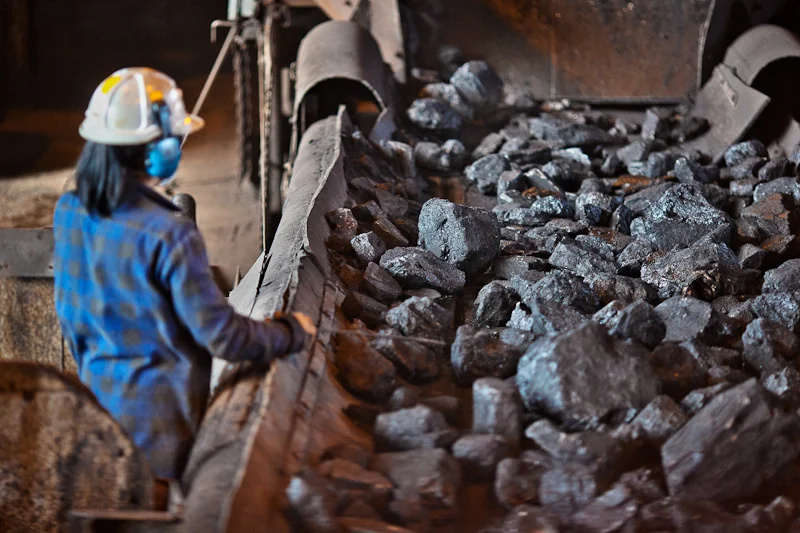
These have mobilized the Chinese chemical industry to improve and modernize the coal gasification process, obtaining synthetic gas, crude oil, and many other valuable chemicals from it. In mid-June this year, the Reuters agency, in correspondence from China, wrote that increased coal mining is a guarantee of energy security – not through simple combustion, but through its processing into other chemicals.
Turning coal into crude oil
Anticipating difficulties in the import of petroleum-based products, a year ago China launched the extensive Ningxia Baofeng Energy complex in the northwest of the country, which can process millions of tons of coal annually into chemical substances used for producing plastics – a part of a growing industry that exists almost nowhere else in the world.
This complex includes a facility worth 48 billion yuan ($6.7 billion), which is the latest investment in the sector, carrying out a valuable alchemy for Beijing: converting abundant coal resources into crude oil, gas, and chemicals, thereby reducing the need to import energy that could be cut off in the event of conflict. These plants are to be powered by green energy, thus limiting carbon dioxide emissions.
The coal processing plants are located in Inner Mongolia, where approximately 1.25 billion tons of hard coal are mined. At the same time, the region is also China’s largest producer of renewable energy, making it a laboratory for the country’s complex energy transition, where alongside a relative abundance of coal, there is a dependence on foreign crude oil.
First successes
Reuters notes that Chinese coal gasification is a constantly developing industry, whose current production is not large and amounts to only 6 percent of China’s imports of these fuels. For China, this is currently of marginal significance, however, with the development of this technology, it is becoming increasingly important for the industry. Most importantly, under local conditions, coal gasification processes are becoming profitable. Two factors favor this. Firstly, the increasingly lower price of coal as an input raw material, and the increasingly higher price of gas and crude oil as end products.
Against this backdrop, it is worth considering similar undertakings in Poland. Especially since Reuters cites the statements of Chinese experts who justify their successes by referring to German installations from the time of the Second World War, which currently belong to Poland as the Kędzierzyn-Blachownia Chemical Plants. Against this background, it is also worth noting that attempts at coal gasification in Poland already have a post-war history, which so far has ended negatively, due to a lack of economic effects.
Return to Coal Gasification
Now, when these effects have been indisputably achieved in China, and in terms of petroleum-based fuels we are in a similar situation to theirs, it is worth revisiting the concept of coal gasification once again. Already, petroleum products obtained from this source in China would, for us, form the basis for energy security. Supplementing in this way the Chinese six percent of imports of these fuels corresponds to approximately 6 billion cubic meters for gas and 30 billion tons for crude oil. These quantities, when added to the country’s supply balance, would guarantee our energy security for many years.




