
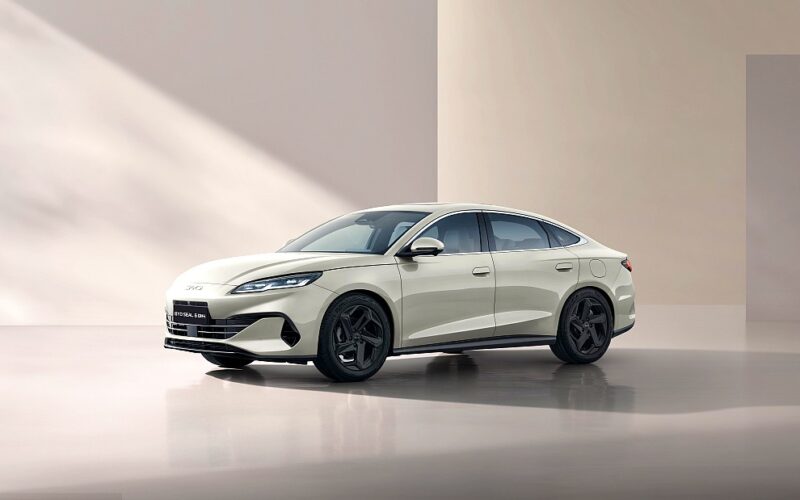
BYD, the world’s largest producer of electric vehicles, is negotiating with Stellantis and other European manufacturers to take over underutilised plants. The company prefers to operate independently rather than through joint ventures.
The Chinese group BYD has dominated the electric vehicle segment for years. In 2025, the company outpaced Tesla, selling 4.2 million cars, including 2.1 million fully electric vehicles. Despite this, the European market remains a challenge – EU tariffs on cars imported from China (reaching 25 percent) push up prices and undermine competitiveness. This is why BYD wants to produce locally.
Stellantis, owner of brands such as Fiat, Peugeot, Citroën, Opel and Jeep, is struggling with excess production capacity. Demand in Europe has not returned to pre-pandemic levels, and the shift to electromobility requires huge investment. The group has already identified four European plants it may sell or make available to partners.
Four factories for sale
According to Bloomberg reports from April 2026, Stellantis is considering selling plants in Rennes (France), Cassino (Italy) and Madrid (Spain). A fourth location remains undisclosed, though speculation points to the Rüsselsheim plant in Germany. Representatives of the Chinese group Dongfeng are said to have already visited these facilities. BYD is not the only interested party – reviving the old partnership between Stellantis and Dongfeng is also a possibility.
Stellantis runs about 20 assembly plants in Europe and is the continent’s second‑largest carmaker, just behind Volkswagen. In April 2026, the group informed the French and Italian authorities that its overcapacity corresponds roughly to four plants. Italy’s industry minister Adolfo Urso has declared openness to foreign investors. In France, where presidential elections will be held next year, any deal with a Chinese partner will face close political scrutiny.
BYD prefers to operate alone
– We are not only talking to Stellantis – we are also talking to other companies – said Stella Li, executive vice‑president of BYD, in an interview with Bloomberg on the sidelines of the Financial Times Future of the Car conference in London. – We are looking at every available factory in Europe, because we want to use that spare capacity.
Li, who is responsible for BYD’s international expansion, stressed that the company would prefer to operate independently, not through joint ventures.
BYD has already built its own factory in Szeged, Hungary, which started production in the second quarter of 2026. Another plant is under construction in Turkey and is expected to open in 2026, with a target capacity of 150,000 cars per year. Taking over existing factories would allow the Chinese group to accelerate its timeline significantly. BYD’s ambition is for all cars sold in Europe to be produced locally by 2028.
At the same time, Stellantis is developing cooperation with Leapmotor – a Chinese manufacturer in which it holds a 20 percent stake. Two Spanish Stellantis factories are to produce Leapmotor electric SUVs. This shows that the European group is not afraid of Chinese partners. The question is whether BYD can take over a factory, hire the workforce and start production faster than it can build its own. And whether politicians in France and Italy will allow Chinese cars under a Chinese flag to be produced in their countries. For now, Stella Li is searching. Stellantis is waiting. And the European car market – divided between supporters and opponents of Chinese capital – is holding its breath.


