
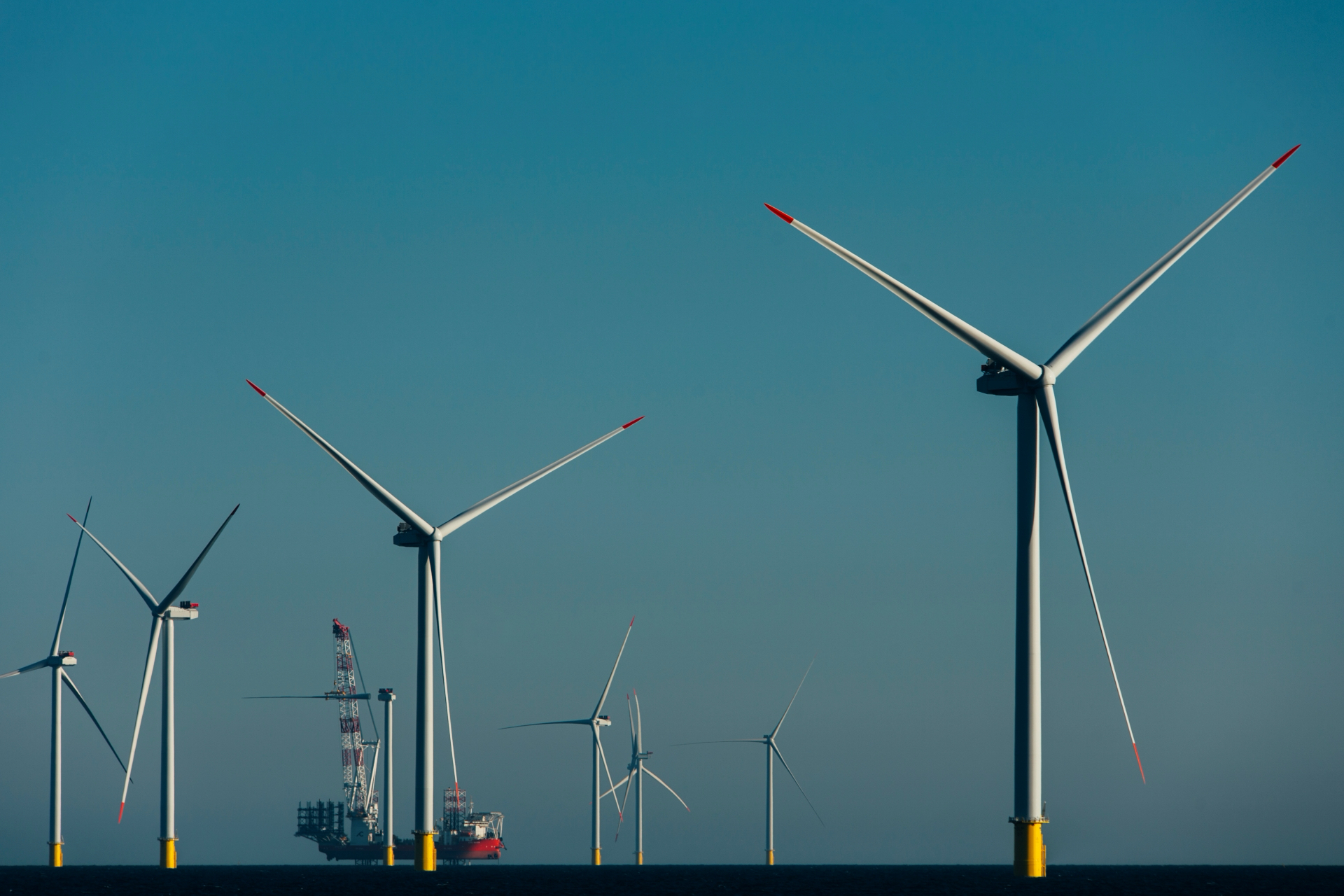
After less than two years of work at sea, the installation of all 76 Baltic Power turbines has been completed. Poland’s first offshore wind farm has entered the commissioning and testing phase, and electricity from turbines that are already being brought online is flowing into the national power system. Once fully operational, the facility, with capacity of up to 1.2 GW, is expected to generate up to 4 TWh of electricity per year, equivalent to around 3% of Poland’s current electricity demand. The project, however, is not only a new power plant. Baltic Power has also created the foundations for a Polish offshore industry, while companies involved in the investment are expected to use the experience they have gained in future projects in Poland and abroad.
A stage has ended in the Baltic Sea that only a few years ago represented an entirely new experience for Polish industry. The installation of the final, 76th Baltic Power turbine has brought the largest offshore campaign in the history of the Polish Baltic Sea to a close. Around 7,000 workers and 110 vessels took part in the work.
The scale of the undertaking is primarily due to the size of the equipment itself. Each Vestas turbine has a capacity of 15 MW. The blades are around 115 metres long, while the rotor swept area is approximately 43,000 square metres, more than six football pitches. The total height of a turbine from sea level to the tip of the blades exceeds 250 metres.
The turbines have been installed on foundations reaching up to 100 metres in length. Some of the upper tower sections were made from recycled steel. According to the investor, Baltic Power was the first project to use such a solution in turbine production, reducing their carbon footprint.
The project uses the largest and most commercially advanced turbine model available on the market. More than one third of the nacelles were manufactured and supplied from Vestas’s factory in Szczecin. Baltic Power was one of the first two projects served by the new facility, which gives the plant significance for the Polish market extending beyond the wind farm itself.
The wind farm is only beginning to generate revenue from electricity production
The completion of turbine installation does not yet mean the end of the investment. The offshore construction site is currently carrying out the commissioning of individual units and their sequential integration with the national power system.
Each turbine has to undergo a series of tests. One of the most important is a 240 hour reliability test. Only after successfully completing it can a given turbine be handed over to the team responsible for the operational phase. This marks the transition from construction to many years of operation.
Electricity from Baltic Power is already entering the grid. This is possible because individual turbine strings are being commissioned and connected to offshore substations before all installation work across the entire wind farm has been completed.
Once fully operational, Baltic Power is expected to have capacity of up to 1.2 GW and generate up to 4 TWh of electricity per year. This corresponds to around 3% of Poland’s current electricity demand. The investment is therefore set to become an energy source of national importance, rather than simply another infrastructure project in Pomerania.
The mechanism allowing production to begin before the full concession is also defined by regulations. During the commissioning phase of a generating unit, electricity can be produced and revenue can be generated on the basis of a special ION permit, after payment of the pre concession fee.
21% of spending is expected to go to Polish companies
For the Polish economy, the significance of Baltic Power does not end with the number of megawatt hours generated. The investor estimates that Polish entities will account for around 21% of spending over the entire life cycle of the wind farm.
This includes supplies of steel structures, cables and turbine components, work on foundations and substations, as well as the construction and operation of the service base. Construction, research and logistics services are also included.
Companies from different parts of Poland are participating in the project. They include Grupa Przemysłowa Baltic, formerly Stocznia Gdańska, Smulders Polska, with plants in Niemodlin and Żary, Protea from Kluczbork, Enprom, Erbud and MEWO. Their participation shows that the construction of an offshore wind farm creates demand not only for turbine manufacturers, but also for a broad range of services and components needed to build and subsequently maintain the installation.
This could be one of the most important effects of the first project. Poland does not yet have an offshore market on a scale comparable with the most developed countries around the North Sea, but companies participating in Baltic Power are gaining references from a large scale project. They can later use these references in subsequent ORLEN investments and in tenders conducted in other European markets.
The Szczecin factory has received a project on which it can build future orders
The Vestas factory in Szczecin is particularly important in this respect. Supplying more than one third of the nacelles for Baltic Power from this facility shows that part of the offshore wind supply chain can be located in Poland.
For Polish industry, what matters is not only the location of production, but also the opportunity to gain experience through serial deliveries for a large project. Offshore requires much more than the production of individual components. It requires appropriate quality standards, logistics for oversized elements, timely deliveries and the ability to cooperate with international contractors.
In this respect, Baltic Power is the first major test for Poland’s industrial base. If companies use the skills they have gained on subsequent wind farms, the impact of the investment will be measurable not only in gigawatts of new capacity, but also in the number of companies capable of fulfilling orders on the offshore market.
ORLEN and Northland Power emphasise precisely this effect.
– Thanks to Baltic Power, every Polish town has gained access to the sea. We will all benefit from electricity generated by Baltic Power. This is an entirely new source of electricity that has given rise to an entire sector of the Polish economy. The companies cooperating with us and our Canadian partner have gained capabilities that allow them to grow, reach further and support the national economy – says Ireneusz Fąfara, President of the Management Board of ORLEN.
Christine Healy, President of Northland Power, points to the broader significance of the project.
– Baltic Power is a landmark project for Poland and an excellent example of what can be achieved through strong partnerships. Together with ORLEN, we are building a safer and more independent energy future for Poland, creating lasting value for future generations – she says.
Łeba is set to gain not only a wind farm, but a permanent business
One of the places expected to feel the effects of the investment for decades is Łeba. This is where the Baltic Power operations and service base is located.
Its importance will not disappear once construction is completed. The wind farm will require permanent operations, inspections, repairs, logistics and transport. According to the investor, the base itself will create around 100 permanent jobs related to operating the wind farm.
The investment’s impact on local business does not end there. Over almost 30 years of Baltic Power’s operation, orders are also expected to go to service, transport, logistics and municipal companies. For a town that has relied primarily on tourism for years, offshore wind therefore creates an additional economic segment associated with year round activity.
Infrastructure associated with the wind farm is also expected to generate tax revenues for local governments as well as income from lease and rental agreements. The most important change, however, is that the project’s economic presence does not end when the final element is installed at sea. That is when the long term phase of maintaining the installation begins.
The biggest impact of Baltic Power may come after construction ends
Baltic Power is Poland’s first large offshore wind farm, but what happens after it is commissioned will be important for the market. The wind farm itself is expected to generate electricity for decades. The effect of the expertise gained by companies involved in its construction could last even longer.
Companies that have learned how to deliver for an offshore project can compete for further orders. This applies both to subsequent investments in the Polish Baltic Sea and to projects abroad. In this sense, the first wind farm is also an investment in an industry that is only beginning to establish a lasting position in the offshore wind market.
This is particularly important because the scale of the future market could be much larger than that of a single Baltic Power project. Every subsequent wind farm will require foundations, cables, substations, turbine components, transport, installation services, research, maintenance and an entire operational support network.
Today, it is already clear that the first stage of this market has been completed. All 76 turbines are standing at sea, some are already generating electricity, and the others are undergoing tests before being handed over for operation. Poland is therefore gaining not only its first offshore wind farm, but also its first major set of domestic references in an industry that could require more suppliers and contractors for decades to come.
Baltic Power is therefore bringing one campaign to a close, the largest offshore energy construction operation yet carried out in the Polish part of the Baltic Sea, while launching another. This time, the question is no longer about installing turbines, but about whether Polish companies can turn their first experience and contracts into a lasting position on the European offshore market.




