
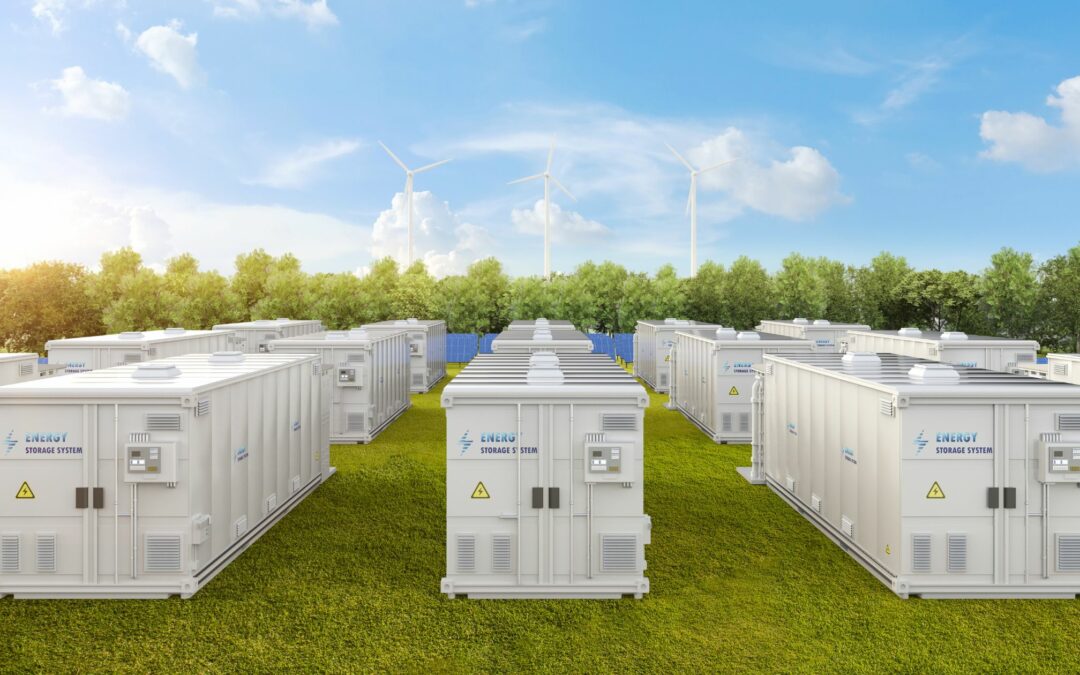
According to an Aurora Energy Research report, the total capacity of co‑located renewable energy and battery storage facilities in Europe will grow from 6.3 GW in 2025 to around 35 GW in 2030 – an increase of over 450 percent. The main driver is mounting losses from energy oversupply. In 2025, Spain, the Netherlands and Germany recorded over 500 hours of negative power prices. For renewable producers, integrating storage is no longer an option – it is becoming a key risk‑mitigation strategy. Germany, the United Kingdom and Bulgaria lead the investment attractiveness ranking.
The transformation of Europe’s electricity system has entered a phase where the key challenge is no longer just adding more renewable generation capacity, but rather managing the growing volatility of supply and demand. As the share of intermittent sources – wind and solar – continues to increase, power systems across the continent increasingly face periods of oversupply, leading to sharp price drops and even negative prices. In 2025, Spain, the Netherlands and Germany each recorded more than 500 hours of negative electricity prices. Other countries such as France, Belgium and Sweden also exceeded 500 negative-price hours. While beneficial for final consumers, negative prices force renewable producers to either pay to offload power or curtail generation – both of which erode revenues.
In response, developers across Europe are increasingly turning to co-location: building utility‑scale battery energy storage systems (BESS) directly alongside solar photovoltaic (PV) or wind farms. These hybrid installations allow renewable operators to charge the battery when prices are low or negative, then discharge the stored electricity during peak‑demand hours when prices are high. The model has become a key financial risk‑management tool, protecting assets from revenue cannibalisation and reducing exposure to curtailment – the deliberate reduction of generation by grid operators to avoid congestion.
Current capacity and growth forecast
According to the Aurora Energy Research report, which covers 20 major European energy markets, co‑located renewable‑plus‑storage capacity reached 6.3 GW in 2025. By 2030, this figure is projected to rise to about 35 GW, representing a growth of more than 450% over the five‑year period. Solar‑plus‑storage projects have been the main driver so far, accounting for over 60% of all co‑located installations. The strong growth is underpinned by both economic logic and regulatory support, as more countries recognise the essential role of energy storage for grid stability and decarbonisation.
The proliferation of negative electricity prices is the most direct market signal pushing renewable operators to invest in co‑located storage. In 2025, Spain, the Netherlands and Germany each recorded more than 500 hours with negative wholesale power prices. Data from various power exchanges indicate that the Netherlands saw 584 negative hours, Germany 576 hours, and Spain 569 hours. France, Belgium and Sweden also logged more than 500 negative hours each. For a solar or wind farm without storage, each negative‑price hour forces the producer either to pay to offload electricity or to stop production entirely – both of which destroy value. With a co‑located battery, the operator can simply divert the renewable output into storage, avoiding the penalty and storing the energy for later sale at a profit.
This phenomenon is not temporary. As Europe continues to add wind and solar capacity – often faster than grid expansion and demand growth – the number of negative‑price hours is expected to increase further. The report emphasises that co‑location with storage is no longer a niche optimisation but a central strategy for safeguarding the financial viability of renewable assets.
Rising curtailment losses
Another major factor driving the co‑location trend is the sharp increase in curtailment – the intentional reduction of renewable output ordered by transmission system operators to prevent grid congestion or overloading. In 2024, total curtailed renewable energy in Europe exceeded 10 terawatt‑hours (TWh). According to Aurora’s projections, curtailment will rise to approximately 33 TWh by 2030 – an increase of more than 200%. Countries such as the United Kingdom, Spain and Italy are expected to account for nearly 22 TWh of curtailed renewable energy by 2030 unless significant investments in storage and grid infrastructure are made.
Co‑located storage directly addresses curtailment. Instead of being forced to shut down, a renewable plant can store the energy that would otherwise be wasted and inject it into the grid later, when the system has spare capacity and prices are higher. This not only recovers lost revenue but also provides flexibility to the grid operator, reducing the need for other expensive balancing measures.
Country attractiveness ranking for hybrid projects
Aurora Energy Research’s report ranks European countries based on expected returns, regulatory clarity, existing support schemes, grid conditions and market maturity. The top three most attractive markets for co‑located renewable‑plus‑storage projects are Germany, the United Kingdom and Bulgaria.
Germany takes the top spot. The country combines a very high penetration of renewables – particularly wind and solar – with a growing need for flexibility. In 2025, Germany added 6.57 GWh of BESS capacity, with the strongest growth in utility‑scale and industrial storage. The government has set a target of 25 GW of battery storage capacity by 2030 and has streamlined permitting procedures for large‑scale storage outside urban areas. Recent announcements include a French energy company’s plan to build 11 storage facilities in Germany with a total capacity of nearly 800 MW. Regulatory stability, high wholesale price volatility, and strong returns on investment make Germany the most attractive market in Europe for co‑located projects.
The United Kingdom ranks second. The UK has set an ambitious goal of a net‑zero electricity system by 2030 and has developed mature markets for ancillary services and wholesale arbitrage. In 2026, the government approved a large 800 MW solar farm co‑located with storage. The grid operator also opened the balancing market to domestic storage systems, increasing flexibility and creating new revenue streams. The Greenlink interconnector between Great Britain and Ireland became operational, enhancing cross‑border power flows and price arbitrage opportunities. These factors, together with supportive regulation and a transparent energy market, keep the UK among the leaders.
Bulgaria unexpectedly took third place. The country has made rapid progress in deploying utility‑scale battery storage. In 2025, Bulgaria commissioned the largest BESS facility in the European Union – a 124 MW/496.2 MWh system in Lovech, with plans to expand it to 300 MW/600 MWh by 2026. The energy ministry aims to reach 10 GWh of operational BESS capacity by the end of 2026. Under the RESTORE programme, Bulgaria contracted nearly 10 GWh of storage capacity, tripling its original 3 GWh target. In a single auction, support was granted to 82 battery storage projects, and the transmission system operator signed connection agreements for over 7 GW of storage capacity. The country’s focused, policy‑driven approach has turned it into a surprising but well‑deserved leader in the region.
Key emerging markets and ongoing regulatory reforms
The Aurora report highlights Spain, Hungary and France as markets to watch due to ongoing regulatory reforms that are expected to significantly boost their attractiveness for hybrid investments over the next few years.
Spain suffers from one of the highest levels of negative‑price hours in Europe (over 500 in 2025), yet it is only now building a comprehensive regulatory framework for energy storage. The country adopted a national energy storage strategy targeting 20 GW by 2030 and 30 GW by 2050. The European Commission approved a €699 million Spanish support scheme for storage, open to all technologies. First projects under this scheme must be commissioned before 30 June 2026. With abundant solar resources and rising curtailment, Spain is poised for rapid growth once the new rules are fully implemented.
France also experienced more than 500 negative‑price hours in 2025. A key reform came into force in August 2026: new grid tariffs for storage facilities, which significantly reduce connection costs and distribution charges, making storage projects more economically viable. However, France’s energy strategy differs from most European countries – the government has reduced its 2035 targets for wind and solar expansion, instead relying more on nuclear power. This may temper the pace of co‑located renewable‑plus‑storage growth, but the reform of grid tariffs will still encourage investment.
Hungary has received over €1 billion in EU funds to build at least 800 MW of energy storage capacity. Photovoltaics already account for about 20% of Hungary’s electricity generation, and the need to store summer and weekend surpluses is becoming acute. The country has adopted a net‑zero emissions target for 2050, and its national energy strategy up to 2030 places energy storage at the centre of grid stabilisation and flexibility enhancement.
Cost trends and economic viability
Falling battery costs are a fundamental enabler of the co‑location boom. In 2026, the total installed cost of utility‑scale containerised BESS systems ranges from $115 to $145 per kWh. The levelised cost of storage (LCOS) for batteries has fallen to about $78/MWh, making it more economical than building new gas peaker plants, whose levelised cost of energy (LCOE) has risen 16% to $102/MWh. For solar‑plus‑storage projects, the LCOE has dropped in many favourable locations to approximately $54–82/MWh, with further declines expected by 2030 and 2035. This means that hybrid renewables are increasingly competitive with conventional generation even without subsidies, a key factor driving private investment.
EU regulations and future outlook
From 2027, the EU will require a Battery Passport for all industrial energy storage installations. The passport will include detailed data on raw material sourcing, manufacturing, carbon footprint and full life cycle. While this will add administrative and verification costs, it will also enhance market transparency and investor confidence in the quality and durability of storage systems.
Furthermore, the number of EU member states that include concrete energy storage targets in their national energy and climate plans for 2030 has increased from only five in 2024 to fourteen in 2026, reflecting growing political awareness that storage is a prerequisite for further renewable expansion. Targets vary from general flexibility objectives to detailed numerical capacity goals.


