
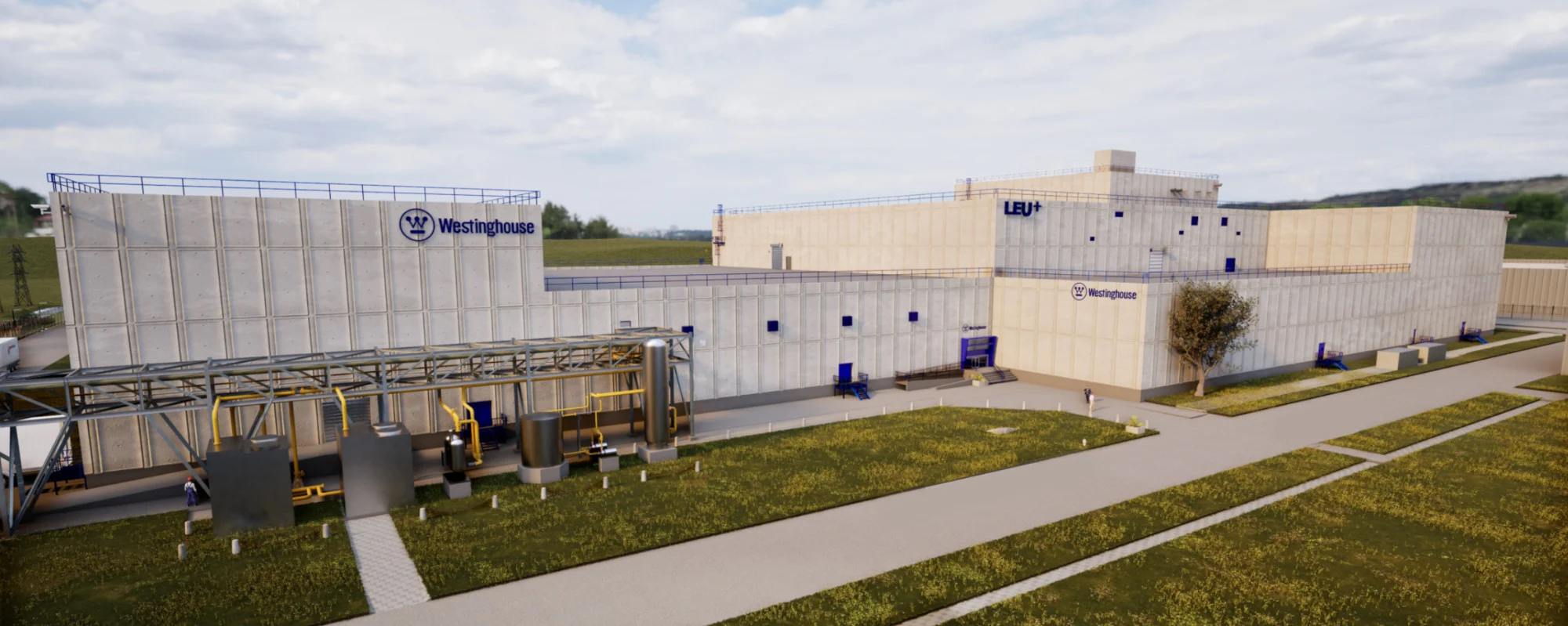
Westinghouse will invest approximately $1 billion in expanding nuclear fuel production in South Carolina. The new facility, being developed within the Columbia Fuel Fabrication Facility complex, will manufacture LEU+ fuel, which uses uranium enriched to between 5 and 8 per cent. The investment is intended to increase the capacity to supply operating nuclear power plants and support the development of AP1000 reactors. Production is scheduled to begin in 2030.
The investment will be carried out at the Columbia Fuel Fabrication Facility complex in Hopkins, Richland County. Westinghouse says this will be the first new nuclear fuel manufacturing facility in the United States in more than 50 years designed for large scale industrial production capable of supplying a fleet of reactors.
Construction is already under way, with operations scheduled to begin in 2030. The new infrastructure will primarily be used to produce LEU+ fuel, meaning low enriched uranium with a higher enrichment level. The technology is intended to enable power plant operators to make better use of existing reactors without being restricted to the fuel specifications currently in use.
– The LEU+ fuel plant in Columbia is our largest single manufacturing investment supporting the fleet of operating nuclear reactors – said Dan Sumner, president and chief executive officer of Westinghouse.
The company chief also emphasised that developing the new fuel would help customers increase nuclear power generation in response to growing demand for reliable energy sources.
Higher uranium enrichment, longer reactor operating cycles
LEU+ fuel uses uranium enriched to between 5 and 8 per cent. This is higher than the enrichment level of conventional low enriched uranium fuel used in many reactors currently in operation. A higher enrichment level can make it possible to extend reactor operating cycles between fuel replacements.
For power plant operators, this could mean fewer shutdowns for refuelling and lower operating costs in some areas. However, the benefits depend on the reactor design, the design of the fuel assemblies and the regulatory approvals obtained. Using fuel with a higher enrichment level does not automatically deliver the same savings at every power plant.
Westinghouse says LEU+ development forms part of the US UPRISE programme, which aims to expand the use of nuclear power. The new fuel is intended to increase electricity generation at existing power plants while also supporting the deployment of AP1000 reactors in additional markets.
In 2025, LEU+ fuel was successfully used in the United States for the first time. The next challenge is to scale up production so that the technology can be adopted more widely in the power sector.
The United States is rebuilding its domestic supply chain
The significance of the investment extends beyond fuel manufacturing itself. Nuclear power development requires an entire industrial infrastructure, from uranium supplies and enrichment to the manufacture of fuel components and the preparation of finished fuel assemblies for reactors.
Ted Garrish, Deputy Assistant Secretary for Nuclear Energy at the US Department of Energy, said the US administration was allocating billions of dollars to rebuild domestic uranium enrichment capabilities, both for conventional low enriched uranium fuel and for HALEU, which is enriched to between 5 and 20 per cent.
– Westinghouse’s investment of nearly $1 billion in South Carolina represents another step towards achieving these objectives – Garrish said.
HALEU and LEU+ are not the same type of fuel. HALEU has a higher enrichment level and is being developed, among other purposes, for certain advanced reactor designs. LEU+, by contrast, is intended to expand fuel options for existing light water reactors. Both approaches require appropriate infrastructure and safety controls.
For the United States, expanding domestic fuel production is also part of its energy security policy. The greater the proportion of the supply chain controlled by domestic industry, the less vulnerable the sector becomes to disruptions in international trade.
The plant has been operating since 1968 and employs more than 1,200 people
The new facility is being developed within the existing Columbia Fuel Fabrication Facility complex, which began operating in 1968. It is one of the largest nuclear fuel manufacturing facilities in the world.
The complex produces fuel pellets, fuel rods, complete fuel assemblies and other components used in reactors. Its products are supplied both to other Westinghouse facilities and to customers around the world.
The facility employs more than 1,200 people. The investment is expected to strengthen its role as a nuclear industry hub and create the conditions for additional specialised jobs.
According to estimates presented by Westinghouse, the project, valued at approximately $1 billion, could generate $4.9 billion in economic benefits for South Carolina over ten years. Of this amount, approximately $3.8 billion is expected to benefit Richland County.
The projected economic impact includes construction work, equipment purchases, the recruitment of additional employees and the development of professional skills. The estimates come from an analysis commissioned by Westinghouse in cooperation with researchers from the Darla Moore School of Business at the University of South Carolina. They are forecasts rather than financial results already achieved.
South Carolina strengthens its position in nuclear power
State authorities view the expansion as an investment that is important both for industry and for the local labour market.
– By expanding domestic nuclear fuel manufacturing capabilities, we are creating new opportunities for economic growth, supporting the creation of well paid jobs and strengthening South Carolina’s position as one of the leaders in the American energy sector – said James E. Clyburn, a member of the United States House of Representatives.
Richland County officials share this assessment. Jessica Mackey, chair of the county council and co chair of the Columbia Area Development Partnership, noted that the facility had provided employment for local residents for generations.
According to local authorities, the expansion is expected to create additional jobs and increase revenue supporting the development of schools and infrastructure. It is also intended to strengthen the position of the southern part of the county as an important centre of the US nuclear industry.
Public incentives are also playing an important role in the project. Westinghouse thanked the Department of Energy for its tax credit programme and state and local authorities for supporting the investment.
The company also says it intends to manage the site responsibly during the project, preserving natural areas that support wildlife habitats and protect water resources.
What does the investment mean for the AP1000 reactor market?
Westinghouse is expanding LEU+ fuel production for both existing nuclear power plants and AP1000 reactors. The AP1000 is a pressurised water reactor design that the company offers in international markets.
Fuel availability is one of the factors determining whether new nuclear units can be commissioned and subsequently operated. Expanding production in Columbia is therefore intended to support not only current fuel deliveries but also Westinghouse’s long term technology development plans.
The investment does not mean that all reactors will be able to switch to LEU+ fuel immediately. Each change must be tailored to the specific reactor design and requires technical analysis and the appropriate approval procedures. Increasing production capacity is primarily intended to create the industrial conditions for wider deployment of the technology wherever it is authorised.
For Westinghouse, the project represents an expansion of one of its core business areas: fuel manufacturing. Without it, nuclear power plants cannot maintain continuous operations, nor can further reactor projects be developed. As interest in nuclear power grows, the ability to supply fuel is becoming just as important as building new nuclear units.




