
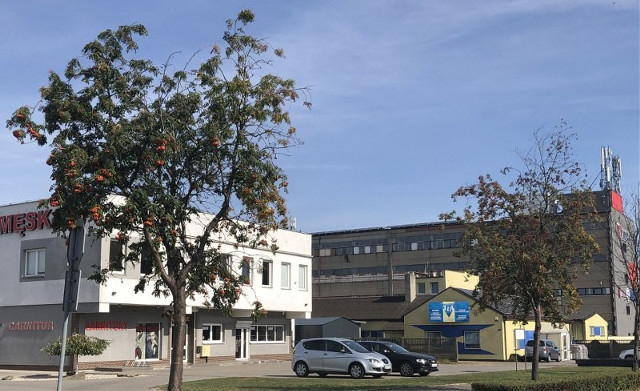
For years, the company manufactured speakers installed in Polish radios, televisions and stereo systems, while its loudspeakers reached customers in France, Germany and the United States. At its peak, the factory in Września employed around 3,500 people and produced as many as 100,000 speaker systems a year. Then came the loss of orders, an unsuccessful restructuring process, ownership disputes and mounting debt. In 2004, Tonsil SA declared bankruptcy. The brand, however, survived its first major disaster and was given another chance.
Tonsil’s history began in March 1945, when the first industrial plants were being brought into operation in war ravaged Poland. At the initiative of the management of Polish Radio in Poznań, a speaker factory was established in Września. Initially, it was housed in old wooden buildings, and production was based on eight types of public address speakers. Materials left behind by German factories were also used. The company started on a modest scale, meeting the basic needs of the radio infrastructure being rebuilt across the country.
In the first postwar years, a speaker was not primarily a component of a home hi fi system. It was part of a system for transmitting information in schools, workplaces, public offices and streets. Expanding radio coverage across the country was one of the tools used to rebuild public life, and the factory in Września supplied equipment needed to extend this network.
Over time, the factory expanded its product range. Microphones, speaker transformers, headphones and other electroacoustic components were added to its speakers. In the postwar years, products from Września found their way into many devices manufactured in Poland. Speakers made at the factory could be found in radio and television receivers, record players and tape recorders. The company did not yet need to sell recognisable loudspeaker systems under its own brand for its components to become an important part of the domestic electronics industry.
The name Tonsil appeared in 1960. Its sound evoked both audio and engines, which were also part of the factory’s history. A year later, the company became part of Unitra, a state owned electronics industry group that brought together many Polish companies in the sector. Under the centrally planned economy, this meant operating within a larger production and distribution system. Individual plants were responsible for specific product categories, supplying both other state owned enterprises and the domestic retail market.
Tonsil was therefore developing expertise that would later prove crucial: designing electroacoustic transducers, manufacturing products in series and supplying components for a wide range of devices. Over time, it ceased to be merely a component supplier. It began establishing itself as a manufacturer of complete loudspeaker systems, opening up a much larger market.
The 1970s and the birth of the Altus legend
The real transformation came in the 1970s, when Tonsil placed greater emphasis on complete loudspeaker systems. The company expanded its factory, invested in machinery and developed its research facilities. An important step was acquiring foreign technology and licences, including cooperation with Japan’s Pioneer and the French conglomerate Thomson Brandt. This made it possible to develop designs, improve production organisation and meet the expectations of customers outside Poland.
The scale of the operation was impressive. At the height of its development, the factory employed around 3,500 people, and annual production of loudspeaker systems reached as many as 100,000 units. A substantial proportion of the products were exported, including to France and Germany, as well as the United States. Accounts of the company’s history indicate that around 90 per cent of the speaker systems produced during this period were destined for foreign markets.
Exports mattered for more than just revenue. They also required the company to meet the expectations of foreign partners, who demanded appropriate design, technical specifications and reliable delivery schedules. For a factory operating within a socialist economy, this offered an opportunity to compete in a market where orders had to be won and products had to meet contractual requirements.
The situation in Poland was different. Good loudspeakers were difficult to obtain, and attractive models quickly became highly sought after. At a time when the choice of audio equipment was limited, Tonsil systems became desirable products. Sound quality was not the only consideration. Appearance, size, power and the possibility of creating a home system resembling equipment seen in the West also mattered. Some models could be purchased in export shops such as Pewex and Baltona, while prices on the second hand market could significantly exceed their original purchase prices.
Altus became the most recognisable symbol of this era. Its large cabinets, distinctive rings around the speakers and bold styling made it difficult to confuse with other systems. In Polish homes, these loudspeakers often occupied a substantial part of the room, but their size was part of their appeal. They were meant to be visible, make an impression and allow music to be played loudly. They found their way into homes, clubs and venues where sound equipment also served as a status symbol.
Altus speakers were more than devices for playing music. They became part of domestic music culture. They accompanied the listening of records, cassettes and radio programmes, home parties and early attempts to build personal stereo systems. Many people remember them as equipment purchased after saving money for a long time, or obtained through personal contacts and patient searching in shops.
It also mattered that Tonsil did not manufacture only complete loudspeaker systems. Transducers made in Września went into a variety of electroacoustic devices, while the factory also developed microphones and headphones. The brand therefore covered a much broader part of the market than its best known range of home loudspeakers. Its technical facilities and manufacturing experience gave the company capabilities that could not be recreated simply by using its trademark.
At its peak, Tonsil also had extensive research and measurement facilities. Accounts of the factory’s history emphasise the importance of its anechoic chamber, which was used for acoustic measurements. Such equipment made it possible to test the characteristics of speakers and loudspeaker systems under controlled conditions. In the audio industry, it is not enough simply to assemble a cabinet and install the drivers. The final performance of a loudspeaker depends on how multiple elements work together, including the drivers, enclosure, crossover and acoustic characteristics of the complete system.
However, expanding the factory, employing thousands of workers and exporting hundreds of thousands of components and systems also created substantial obligations. A large plant needed a steady flow of orders, investment and working capital. The model that had worked in an environment characterised by equipment shortages and a state controlled industrial system was about to face a completely different test after the economic transition.
After 1989, the market Tonsil knew disappeared
The economic transition confronted Tonsil with a problem far greater than replacing machinery or refreshing its catalogue. The rules of the entire market had changed. Products from foreign brands began flowing into Poland, and customers gained access to equipment that had previously been difficult to obtain or had not been available in domestic shops at all. Tonsil lost its position as an almost monopolistic supplier of electroacoustic transducers. It had to compete not only on price, but also on technology, design, marketing and the speed at which new models could be introduced.
Under the centrally planned economy, a large factory had an established place in the system. It supplied components to other manufacturers, fulfilled orders for domestic industry and operated in a relatively predictable environment. Once the market opened, existing relationships no longer guaranteed sales. Buyers could choose from an increasing number of suppliers, while consumers compared products by price, appearance and features.
For a company of such a large scale, this meant that rapid change was essential. Maintaining an extensive plant and thousands of jobs required a large volume of orders. When sales fell, the costs of maintaining the infrastructure did not disappear at the same rate. At the same time, product modernisation, the development of new designs and efforts to win customers required money that the company was increasingly short of.
The scale of the workforce reduction illustrates how dramatically the situation changed. A parliamentary question concerning the factory stated that during restructuring in 1991, the workforce fell from nearly 3,600 people to around 600. This was not an ordinary staffing adjustment, but a profound transformation of the company and its place in the local economy.
These figures reflected tangible consequences for Września. For decades, the factory had provided employment not only for its direct workforce, but also for cooperating companies, suppliers and service providers. Employees often acquired specialised skills at the plant and spent a large part of their working lives there. When redundancies began, the problem extended beyond the company’s balance sheet. For many families, it meant losing a stable source of income, while the town lost strength in one of its most important industrial employers.
Documents concerning the workforce also described wage arrears and successive sacrifices made by employees, who accepted pay cuts, redundancies and unpaid leave in the hope of saving the factory. Under these conditions, restructuring ceased to be an abstract economic term. Workers bore its costs without knowing whether the company would actually regain the ability to operate normally.
The stock exchange, Pioneer and hopes for a fresh start
In 1990, Tonsil underwent ownership changes, and in April 1991 its shares were listed on the Warsaw Stock Exchange. It was one of the first five companies traded on the newly established market. The listing had symbolic significance: a factory originating in the state owned industrial sector was expected to operate as a joint stock company under the new system, raise capital and build its position in a market economy.
Changing the company’s legal form did not, however, solve its fundamental problems. It had to confront competition, adjust the scale of its operations to actual demand and find an investor capable of providing both capital and access to new technologies and orders.
Hope came with the renewal of cooperation with Japan’s Pioneer in 1996. The electronics group gradually increased its stake in Tonsil and became its controlling shareholder in 1998. The partnership offered a chance to modernise production and make better use of the factory. Pioneer brought experience in the audio industry, while Tonsil had an existing plant, a workforce and the capacity to manufacture components.
The cooperation improved production processes and the quality of speaker components. It was not enough, however, to stabilise the company. According to accounts of its history, the Asian economic crisis of the late 1990s dealt it a significant blow. Orders placed by Pioneer declined, and planned investments were not carried out on the intended scale. The partner expected to help Tonsil reach a new level of development did not provide a lasting stream of orders.
This is an important part of the story because it shows that Tonsil’s problems did not stem solely from the arrival of foreign competitors. The company was capable of improving its processes and manufacturing components for an international partner. The difficulty was that technological improvements did not guarantee a stable business model. If production depended on large contracts, any reduction in those orders could quickly affect factory utilisation, revenue and financial liquidity.
Tonsil had to address several questions at once: what proportion of production should be developed under its own brand, how to compete with imported loudspeaker systems, how much of the factory to maintain and where to obtain capital for further investment. In a company with a long history, substantial assets and a large workforce, each decision carried financial and social consequences.
Restructuring, debt and conflict over the factory’s future
By the beginning of the twenty first century, the crisis was apparent not only in the financial results but also in relations between management and employees. In 2003, a conflict broke out between the trade unions, the company’s management and the Industrial Development Agency. The dispute concerned the company’s situation and the direction of the recovery measures being pursued. Behind it lay workforce reductions, financial difficulties and uncertainty over the future of production in Września.
At Tonsil, restructuring was not a single decision after which the company could return to normal operations. It was a process lasting several years, during which successive organisational changes were intended to save the most promising parts of the business. Over time, separate companies were established to handle different areas of production. These included businesses specialising in speakers and home loudspeaker systems, as well as professional sound reinforcement systems.
Such an arrangement could make cost control easier and focus operations on more profitable products. It also had a downside. Organisational separation meant that relationships had to be regulated between companies using the same buildings, machinery and trademarks. Separating production from parts of the asset base did not automatically eliminate liabilities or provide the capital needed for development.
On 7 April 2004, a court declared Tonsil SA bankrupt. At the time, Japan’s Tohoku Pioneer held around 40.25 per cent of the shares, the Industrial Development Agency held around 12.77 per cent, and the State Treasury held around 8.63 per cent. The remaining shares belonged to other shareholders. This structure shows that, in its final phase, the company was no longer simply a state owned factory, but a business with dispersed interests and a dominant foreign shareholder.
The bankruptcy of a listed company did not mean that every product immediately disappeared or that all manufacturing processes came to a complete halt. Subsidiaries established earlier continued some operations, using assets and trademarks associated with the former company. As a result, Tonsil’s history began to split into several separate legal and business histories.
In the following years, attempts were made to consolidate production in the more promising parts of the group. ProTonsil, which specialised in professional sound reinforcement, played an important role. The recovery plan envisaged concentrating operations and gradually winding down the remaining entities. This did not produce a lasting solution, however. ProTonsil also ceased operations and entered liquidation in 2009. Financial problems, disputes over property and difficulties maintaining production undermined successive attempts to continue the factory’s tradition.
From the employees’ perspective, successive restructuring processes meant more than changes in company names and owners. The workforce continued to shrink, along with the factory’s importance as an employer. People who had previously worked in production had to seek jobs at other plants or rely on available benefits. Some of the technical expertise, however, remained with the people who had spent years designing, assembling and repairing electroacoustic equipment.
At the same time, the former factory site itself was changing. Some properties and remaining assets were sold, while new developments, including residential buildings and commercial facilities, began to appear on land associated with the plant. The former industrial complex gradually lost its original function. In a town whose identity had been linked to speaker manufacturing for years, the physical traces of the company’s former scale began to disappear.
Tonsil after bankruptcy: the brand did not die with the company
For many businesses, bankruptcy means losing both the factory and the name under which products were sold for decades. Something different happened in Tonsil’s case. The brand retained value even when the original company could no longer operate under its previous arrangements.
As early as 2009, a group of employees attempted to restart production through Tonsil Technologie. The company used leased machinery and trademarks, and operations were moved to a new location on Czerniejewska Street in Września. In 2010, a related company, Tonsil Acoustic Company, was established to sell products and raise funds for the development of the plant. This attempt also encountered financial difficulties, and production was suspended in 2012.
Another revival began in 2012, when Września entrepreneur Sławomir Wieszczeciński acquired the rights to the Tonsil brand, along with the machinery and documentation needed to continue production. In the following years, he launched operations under the Tonsil name and subsequently developed Tonsil Poland. Production returned to Września, although on a much smaller scale than during the historic factory’s peak years.
The new owner did not attempt to recreate the former enterprise in its original form. Rather than maintaining a factory employing thousands of people, he opted for a smaller organisation, drawing on the expertise that had survived and products that continued to attract customer interest. One of the most important assets proved to be the recognition of the Altus range. Its name, distinctive styling and associations with Polish audio equipment provided a starting point for re entering the market.
Looking to the past did not mean simply selling old designs. Contemporary versions of the loudspeakers retain some of the styling features of familiar models, but their technical solutions can be newly developed. This distinction matters: a brand can draw on the memory of its historic products while adapting its range to current expectations and the components available on the market.
Today’s Tonsil offers loudspeaker systems, individual speakers, subwoofers, wireless headphones and sound reinforcement equipment. The company is also developing products outside the traditional category of large stereo loudspeakers. The modern audio market is different from that of the 1970s and 1980s. It includes classic music listening systems, wireless devices, home cinema systems and equipment designed for installation in public spaces. A manufacturer seeking to remain in the market must serve more than one customer group.
How much of the former empire remains?
The scale of current operations illustrates the difference between historic Tonsil and the company continuing production under the same brand. At its peak, the former factory employed around 3,500 people and produced as many as 100,000 loudspeaker systems annually. Today’s plant is much smaller, but it maintains production in Września and benefits from recognition of a brand that survived the bankruptcy of the listed company.
An article published by Forbes in September 2026 described the further development of Sławomir Wieszczeciński’s business. According to the article, the combined revenue of his two Tonsil related businesses exceeded PLN 19.5 million in the previous year. The article also identified the Altus 380 SX floorstanding loudspeaker as one of the important products in the sales portfolio and noted that the company was expanding into more expensive audio systems.
This is a different business model from the one used in the past. At the height of its power, Tonsil was a major industrial enterprise whose operations depended on large production volumes, exports and cooperation with other electronics manufacturers. Today’s company operates on a much smaller scale and can focus on selected product lines rather than maintaining the extensive workforce and infrastructure characteristic of the former industrial complex.
Preserving the brand therefore does not mean restoring its former industrial power. The name has survived, along with some documentation, experience in speaker manufacturing and customers’ memories of particular models. The former company, its workforce and its position in the Polish electronics industry belong to another era. Modern Tonsil operates in a world of global competition and rapid technological development, where the recognition of a historic brand does not relieve a manufacturer of the need to win orders for every new model.




