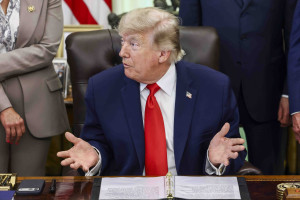
Oil price has fallen below $90 per barrel for the first time since April, as markets increasingly bet on a swift end to the war with Iran. The price of Brent crude dropped more than 4% after President Donald Trump hinted at an imminent peace deal and called off further airstrikes.
The sudden decline came after Trump said signing a peace agreement with Iran is very close and could happen as early as this weekend. He also canceled a previously announced wave of attacks. Market reaction to the positive news was stronger than to earlier negative signals – when Trump announced more strikes, oil rose 2.5%; when he reversed course, it fell over 4%. This suggests that traders are now pricing in a resolution and the reopening of the Strait of Hormuz.
Since late April, Brent crude has lost nearly 30% of its value. Reports indicate that despite the official blockade, some LNG carriers have managed to pass through the strait, re-appearing in the open sea heading to Pakistan, India, and Southeast Asia.
Poland’s fuel subsidy program on the chopping block
The falling oil prices bring closer the moment when the Polish government decides not to extend the CPN program – a set of tax cuts on fuels. Energy Minister Miłosz Motyka said that analyses are ongoing and that the state is preparing to gradually exit the program, which costs about 1.6 billion złoty per month.
– The exit threshold is around $80 per barrel, but it will also depend on diesel prices in ARA ports. – Motyka said. He added that if the budget situation requires it, the exit could begin even sooner. The CPN program reduces VAT on fuel from 23% to 8% and cuts excise duty to the EU minimum, and is currently valid until mid-June with a possible extension to the end of the month.
Meanwhile, the government’s plan to compensate for lost tax revenue with a windfall tax on energy companies is facing headwinds. The Finance Ministry lowered the proposed tax rate from 75% to 60%, reducing expected revenue from 4.75 billion złoty to 3.8 billion. Multiple entities, including the Polish Oil Industry and Trade Organization, law firms, and companies like Unimot and Aramco Fuels Poland, have raised constitutional concerns about the retroactive nature of the tax, which could complicate its adoption.
ECB raises rates, SpaceX makes historic market debut
The European Central Bank raised its main interest rate from 2.00% to 2.25% in response to inflation triggered by the Iran conflict and higher fuel prices. Although expected, the move is seen as controversial because the ECB’s own forecasts show inflation is temporary and the eurozone economy is struggling. Many economists view a single hike as symbolic; a full cycle could be more damaging. Markets expect one or two more hikes, but the next move may depend on oil prices – reportedly, the ECB would need oil above $100 to act in July.
In the US, SpaceX made its public market debut on the Nasdaq with a record-breaking IPO. The company sold over 555 million shares at $135 each, raising $75 billion, easily surpassing Saudi Aramco’s 2019 record of $29.4 billion. Retail investors alone placed orders worth over $100 billion for the 20% allocation. While the massive demand suggests a strong first trading day, some analysts caution that the $1.7 trillion valuation is extremely high and the business model has uncertainties.
The ECB forecasts eurozone inflation at 3% this year, falling to 2.3% in 2027 and 2% in 2028, while GDP growth is expected to remain sluggish at 0.8% in 2026, rising to 1.5% by 2028.
Źródło: WNP.PL, Fot. PAP/EPA/JIM LO SCALZO/POOL